
42 minutes agoAuthor: Swadhin Patel
India’s foreign policy is facing one of its toughest tests in recent years.
From the US-Iran conflict and evolving ties with Washington to tensions with Pakistan after the Pahalgam terror attack, China’s growing influence and political developments in Bangladesh, New Delhi is navigating multiple diplomatic challenges at once, raising fresh questions about its strategic autonomy and global role.
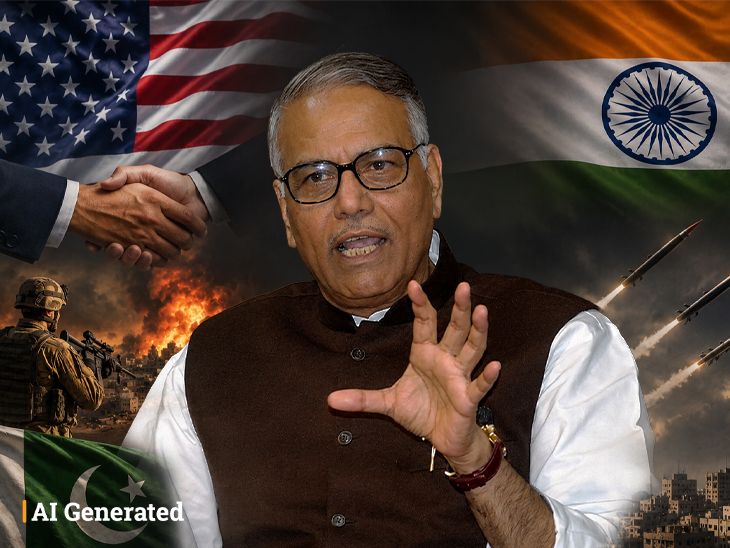
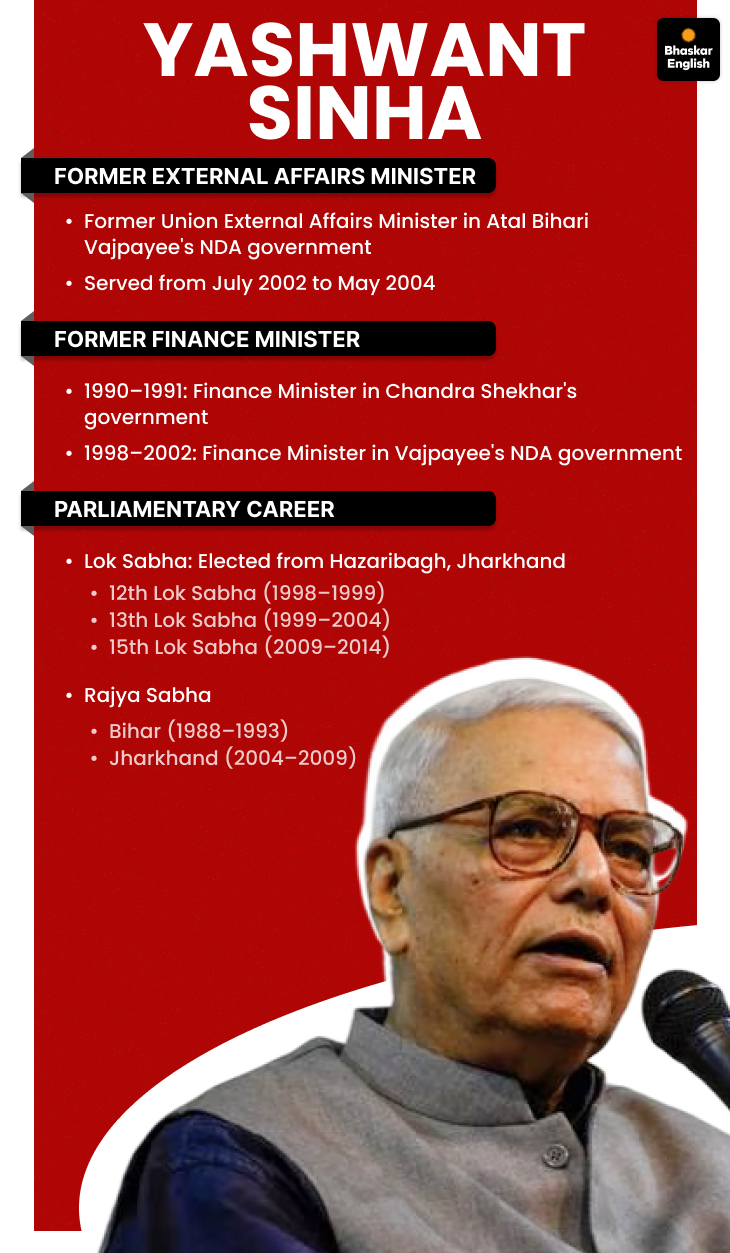
Against this backdrop, former External Affairs Minister Yashwant Sinha, in an exclusive interview with Bhaskar English, delivered a sharp critique of the Modi government’s foreign policy.
He accused New Delhi of becoming a ‘subordinate nation’ to the US. The former BJP senior leader questioned its handling of the Israel-Iran conflict and India’s ties with Pakistan, China and Bangladesh, and argued that the country’s diplomacy has lost direction and substance.
‘India has become a subordinate nation to US’
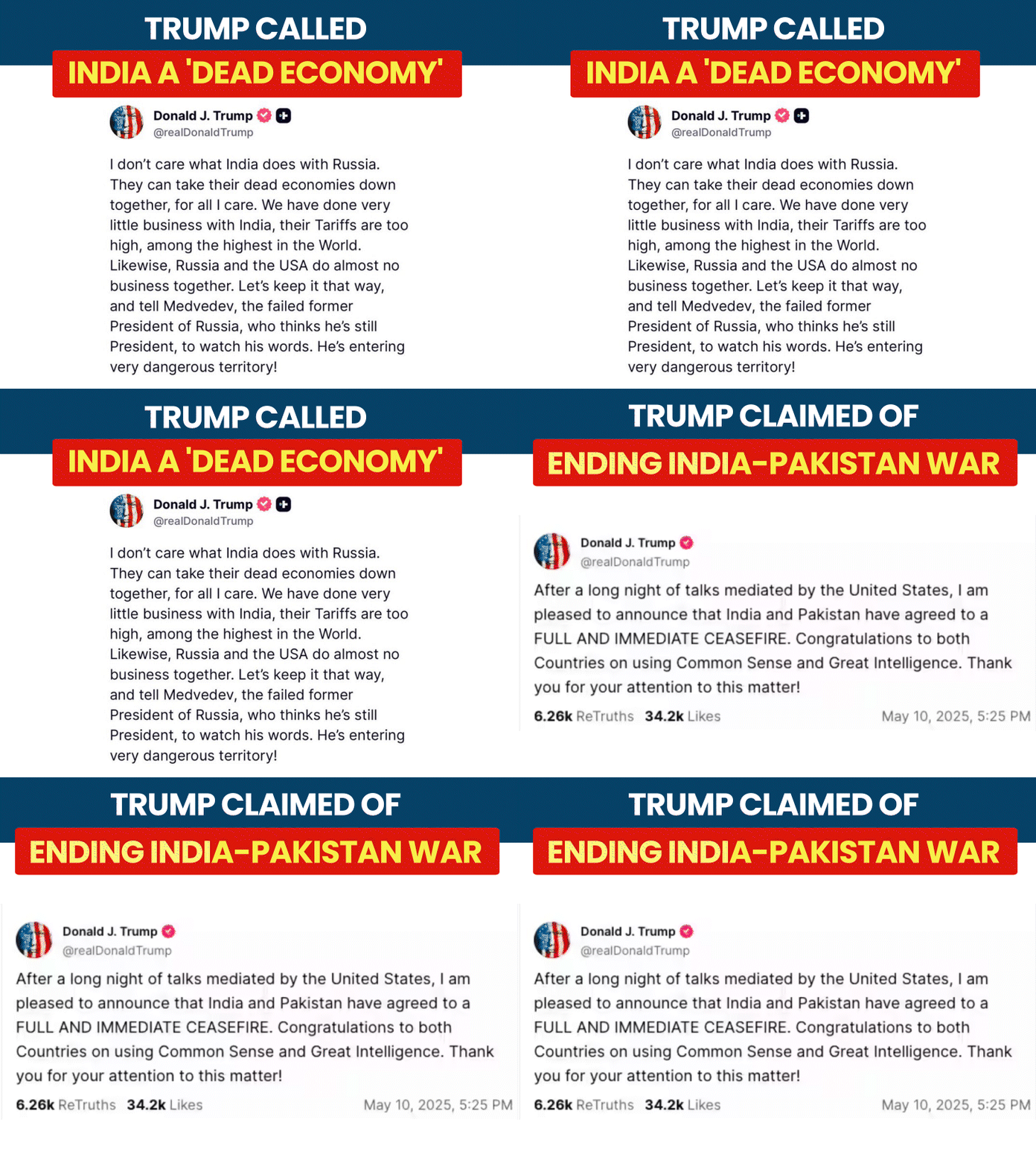
Echoing Rahul Gandhi’s criticism of the Modi government’s diplomacy, Sinha said India has become increasingly dependent on the US and has remained silent despite repeated provocations from Donald Trump.
“We have become a subordinate nation of the US. The country has insulted us at every opportunity, including over Operation Sindoor, imposed tariffs, punished us, and yet we remain silent.”
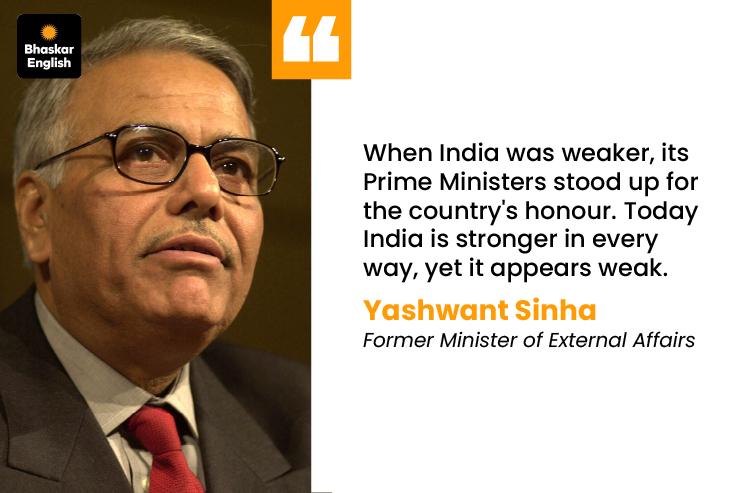
He questioned why India has not responded more strongly despite being in a better position globally.
He also said he does not understand “what the secret is between Prime Minister Modi and Donald Trump” that prevents India from taking a firmer stand.
Questions India’s role in the Israel-Iran conflict
Sinha further questioned India’s role during the US-Israel vs Iran war.
Sinha criticised India’s limited diplomatic role during the war, saying New Delhi missed an opportunity to play the role of a mediator.
He said countries such as Pakistan and Qatar took part in diplomatic efforts, while India, which claims to maintain friendly ties with the United States, Israel and Iran, remained largely absent from peace efforts.
He also noted that Prime Minister Narendra Modi’s visit to Israel shortly before the conflict sent a message internationally that India was leaning towards Israel while neglecting Iran.
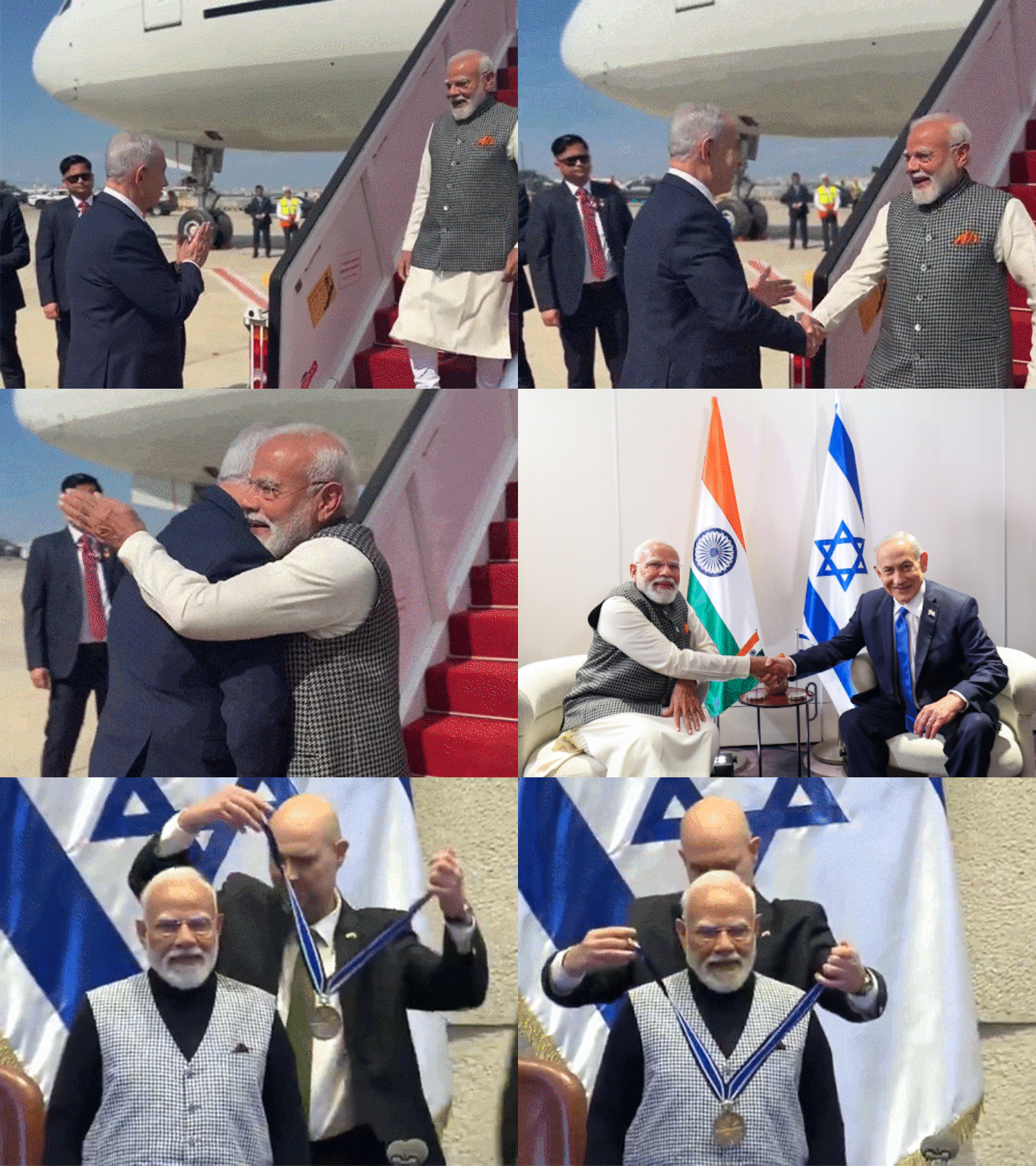
PM Modi visited Israel a week before US-Israel vs Iran war started.
Calling mediation ‘dalali’ shows poor understanding of diplomacy
In the context of the US-Israel war, External Affairs Minister S Jaishankar had earlier told an all-party meeting that “India is not a dalal nation” (broker nation).
Yashwant Sinha strongly disagreed with this framing.
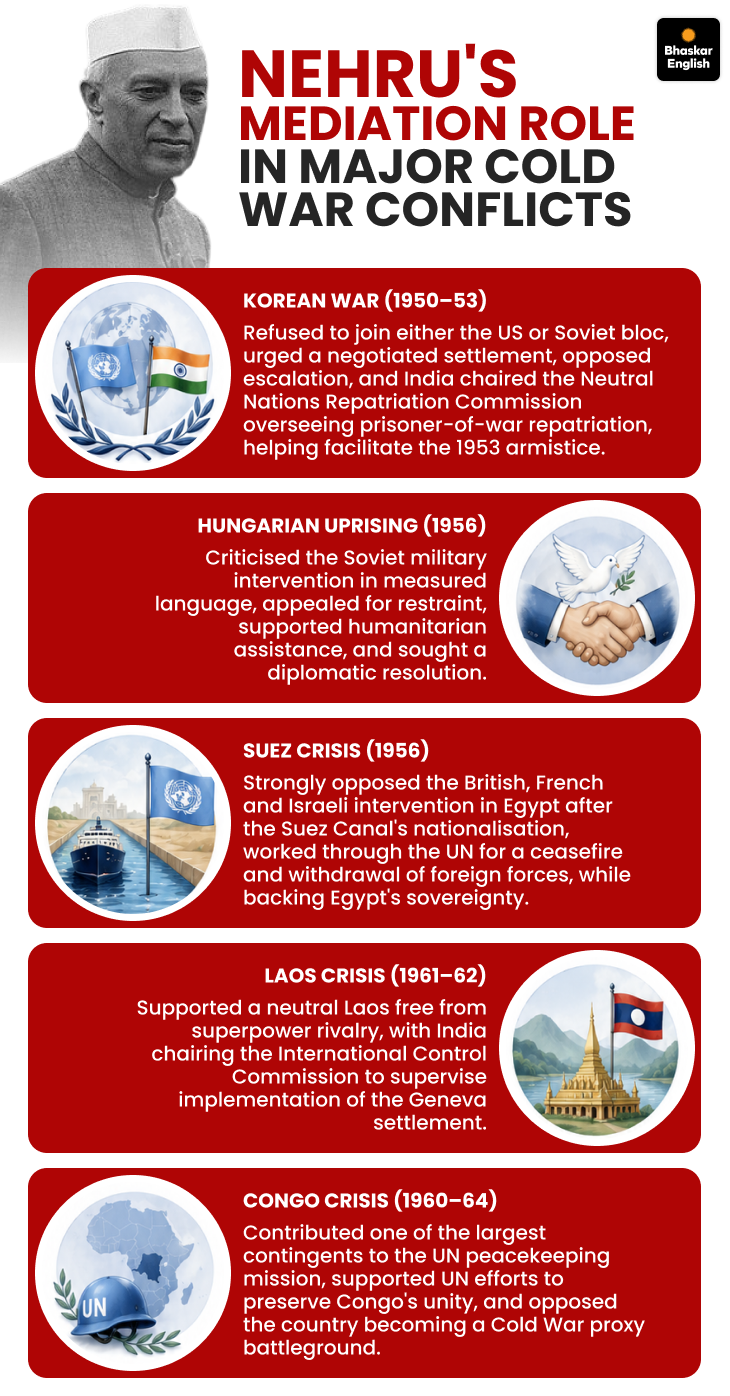
He said describing mediation as ‘dalali’ goes against India’s long diplomatic tradition after Independence.
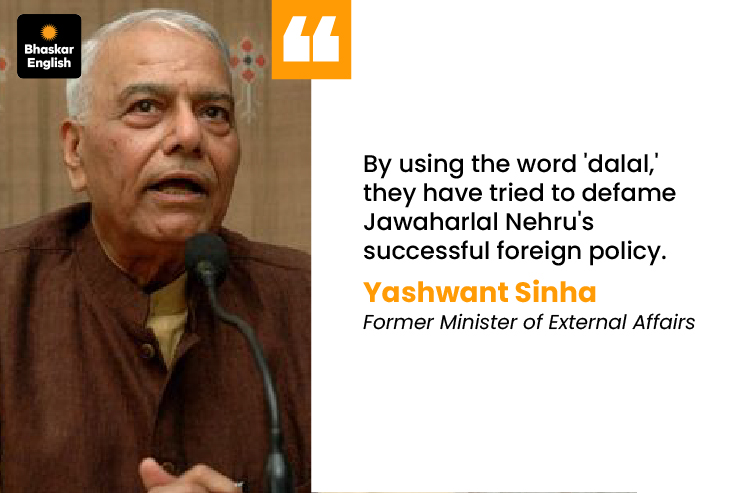
According to Sinha, India played an important role in resolving international conflicts and was a leading voice in the Non-Aligned Movement.
“If two countries are fighting, helping resolve that conflict is diplomacy, not ‘dalali’.”
‘Talks with Pakistan will not produce results’
A group of 117 eminent personalities from both India and Pakistan (including 61 Indians and 56 Pakistanis) recently issued a joint open letter to PM Modi and Pakistan PM Sharif.
Responding to this, Sinha said dialogue alone would not solve the issue.
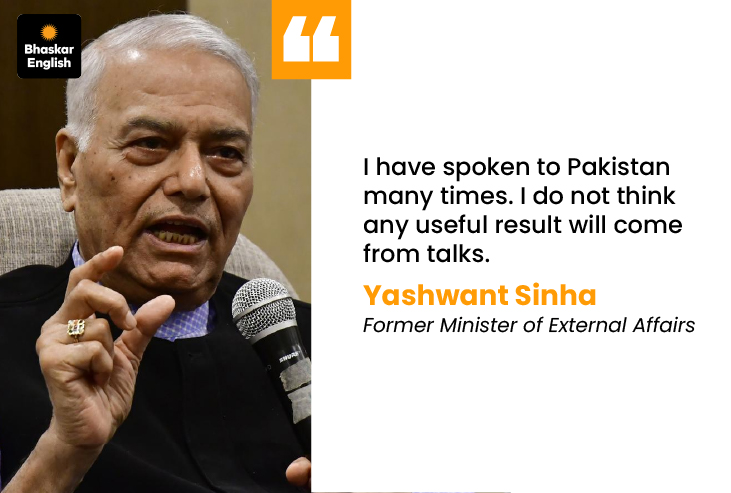
Recalling Vajpayee’s peace efforts, he said they failed because of Pakistan’s conduct.
“Atal Bihari Vajpayee sincerely tried to improve relations with Pakistan. But Pakistan is like a dog’s tail, it never straightens.”
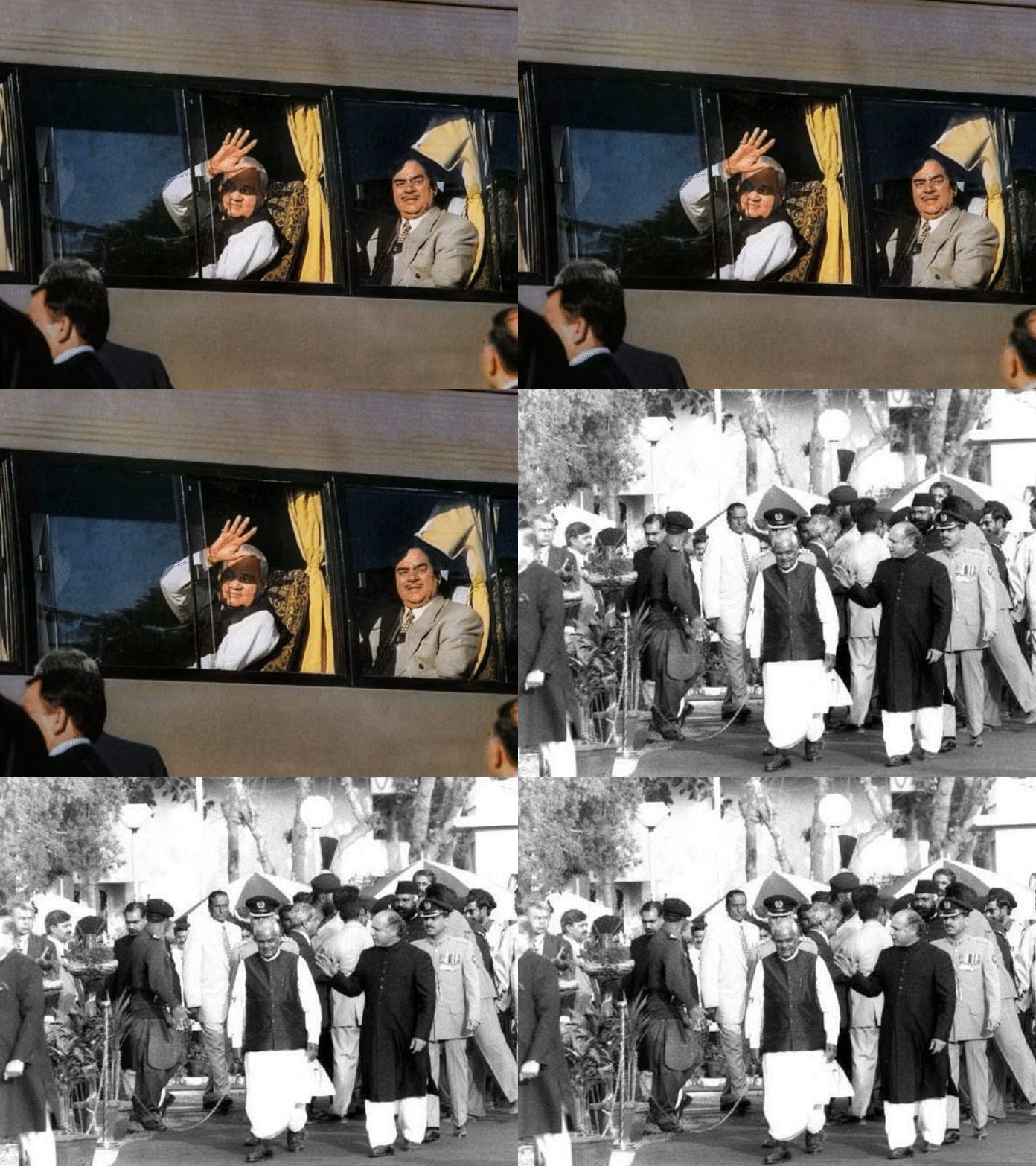
In 1999, former prime minister Atal Bihari Vajpayee at Lahore to attend a Summit in Pakistan
Sinha warns against using water as a weapon
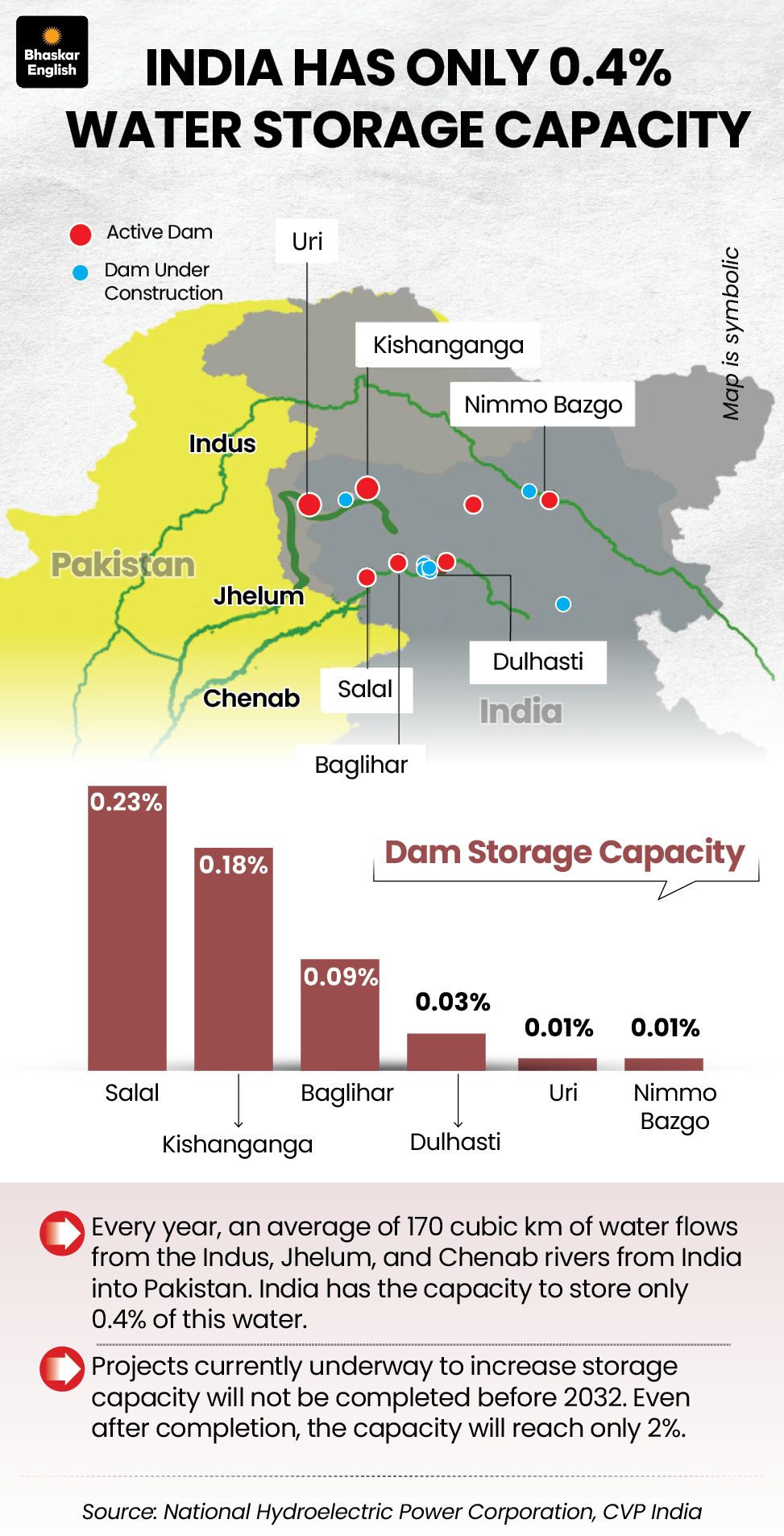
Following the Pahalgam terror attack in April 2025 and Operation Sindoor, India placed the 1960 Indus Waters Treaty in abeyance.
In this context, Sinha urged caution and pragmatism.
He said India currently lacks the infrastructure to immediately stop or significantly divert river waters.
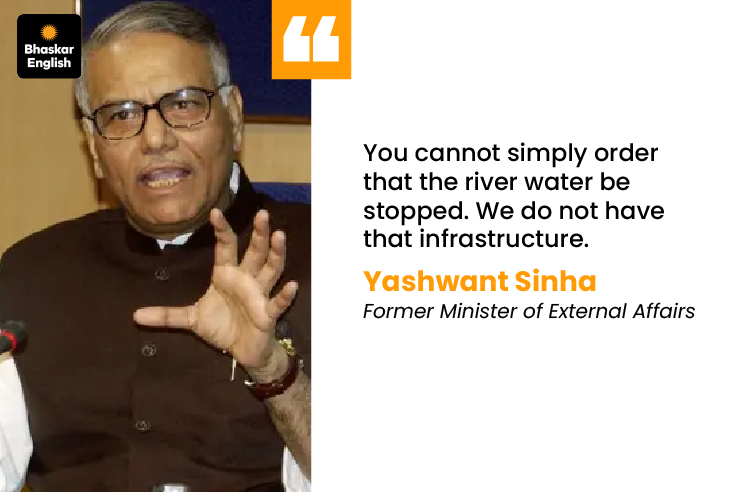
Sinha also warned of long-term risks for India. He noted that China controls the upper reaches of several major rivers flowing into India.
“Just as India is the upper riparian for Pakistan, China is the upper riparian for India. If China adopts the same approach, India will suffer,” he said.
Yashwant Sinha on Sheikh Hasina’s future
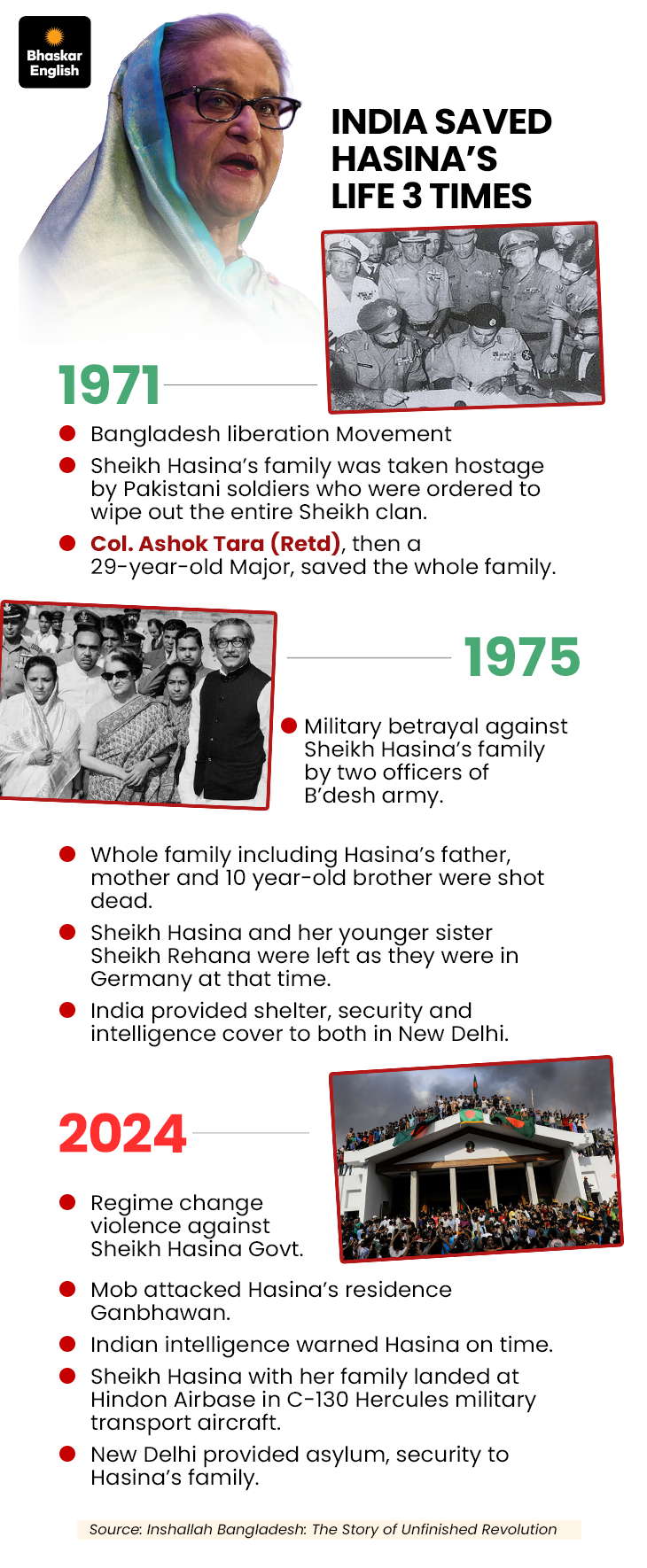
In August 2024, Bangladesh PM Sheikh Hasina stepped down and came to India, where she has remained since.
She faces multiple legal cases in Bangladesh, with death sentences reportedly awarded in some of them. Recently, Hasina announced that she intends to return to Bangladesh by December 2026.
When asked whether Hasina should return to Bangladesh, Sinha said the decision was entirely hers.
However, he expressed concern about her safety if she returned.
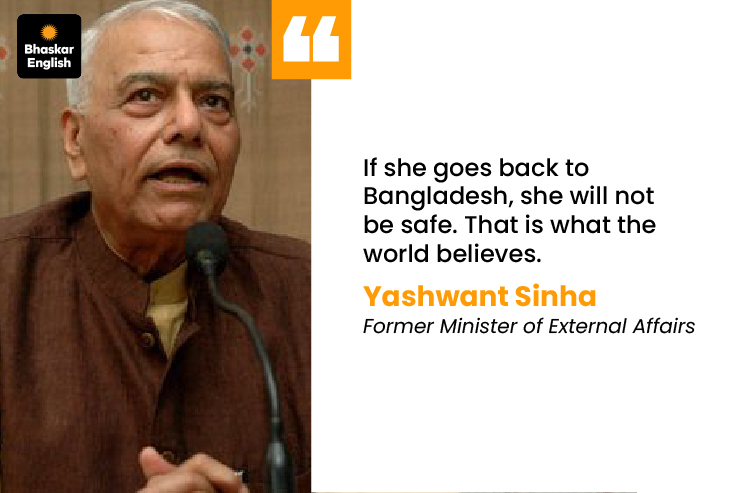
Sinha also commented on the current state of India-Bangladesh ties.
“At present, relations between the two countries are not as friendly as they used to be. There is a lack of a friendly atmosphere for now.”
‘Under Modi, there is no foreign policy, only event management’
Comparing Prime Minister Modi with former Prime Minister Atal Bihari Vajpayee, Sinha criticised the government’s approach.
“There is no foreign policy under Modi. What exists is exhibition, event management and publicity. There is no substance in it.”
He praised Vajpayee’s foreign policy, saying:
“It was Vajpayee’s foreign policy that earned India respect across the world.”