
23 hours agoAuthor: Swadhin Patel
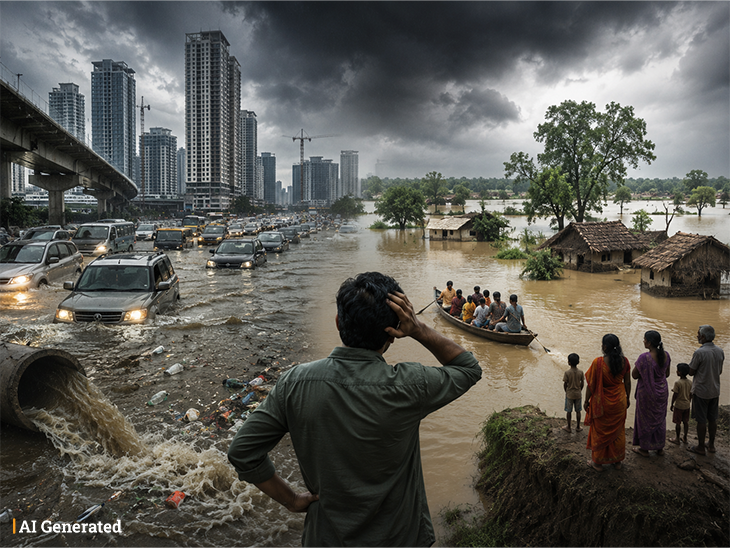
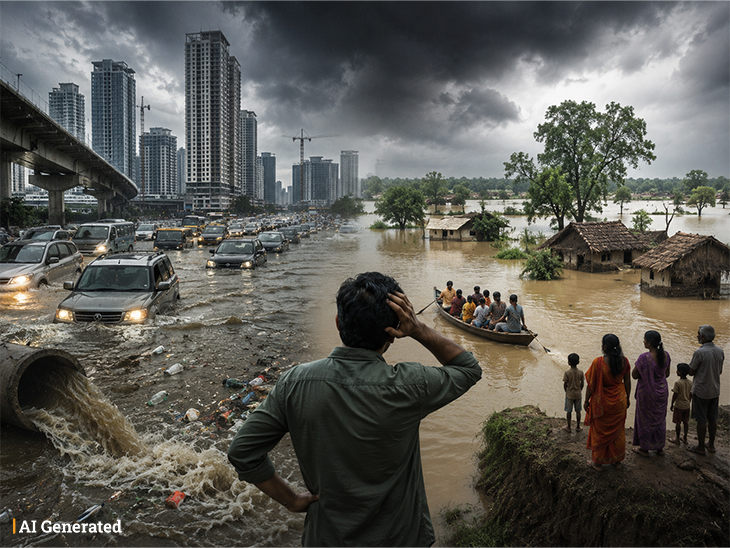
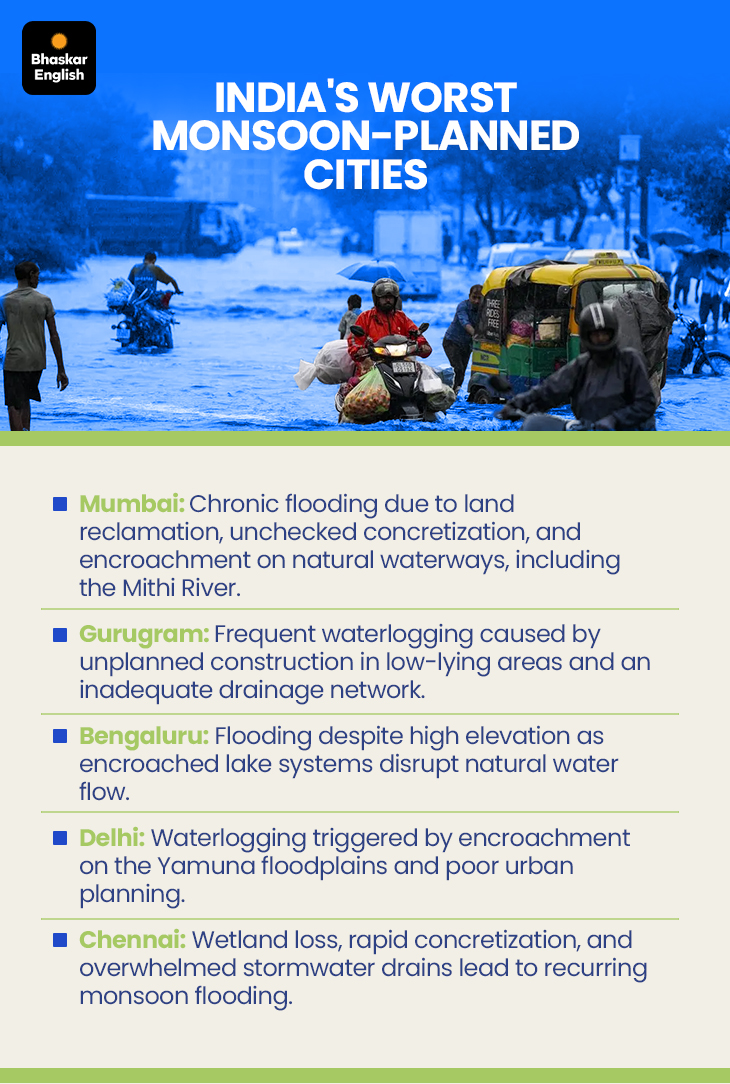
Every monsoon, India’s biggest cities, from Mumbai and Bengaluru to Gurugram, Noida and Jaipur, struggle with flooded roads, waterlogged neighbourhoods and paralysed traffic.
Last week, half of Surat, the ‘Diamond City of India’, was submerged after heavy rainfall. Located on the banks of the Tapi River, the city experienced severe flooding due to a combination of torrential rain, upstream dam releases, and tidal backflow, leaving large parts of it underwater.
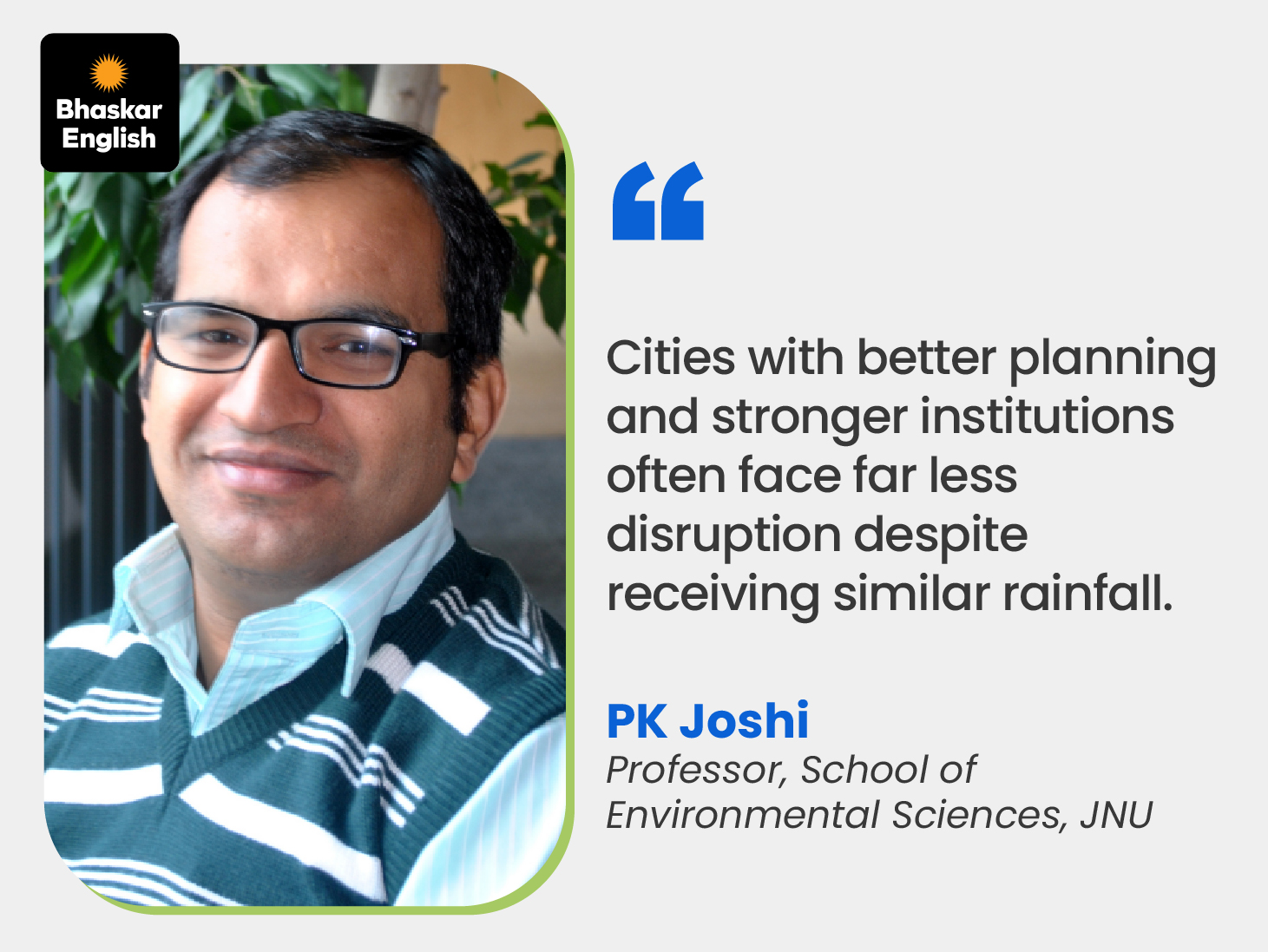
While climate change is making rainfall more intense, experts say the real reason cities repeatedly sink is decades of poor planning, weak governance and shrinking natural drainage systems.
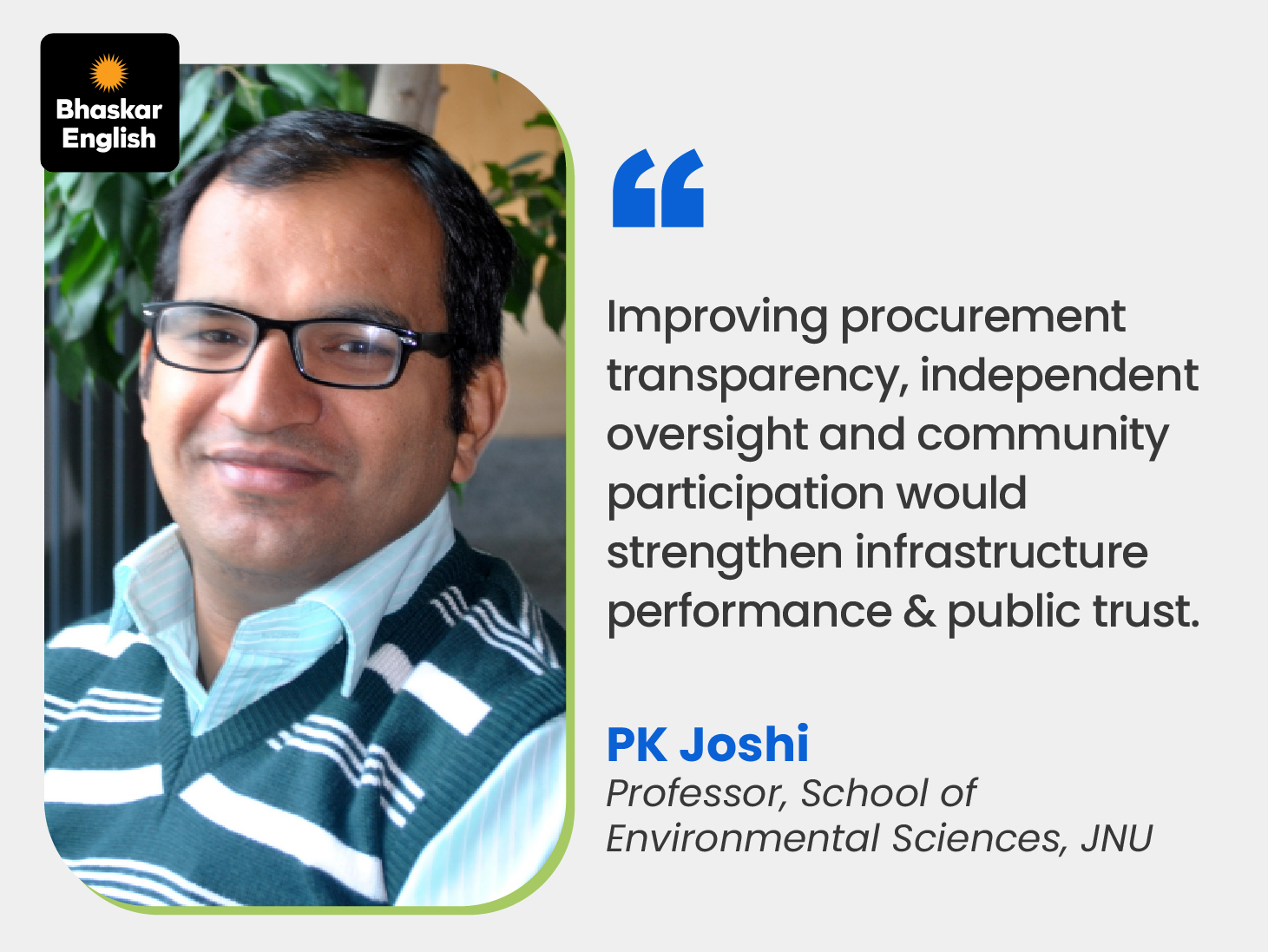
In interactions with Bhaskar English, Manohar Singh Rathore, Director at Centre for Environment and Development Studies in Jaipur and PK Joshi, Professor of School of Environmental Sciences at JNU, explained why India’s urban flooding has become a recurring crisis and what needs to change.
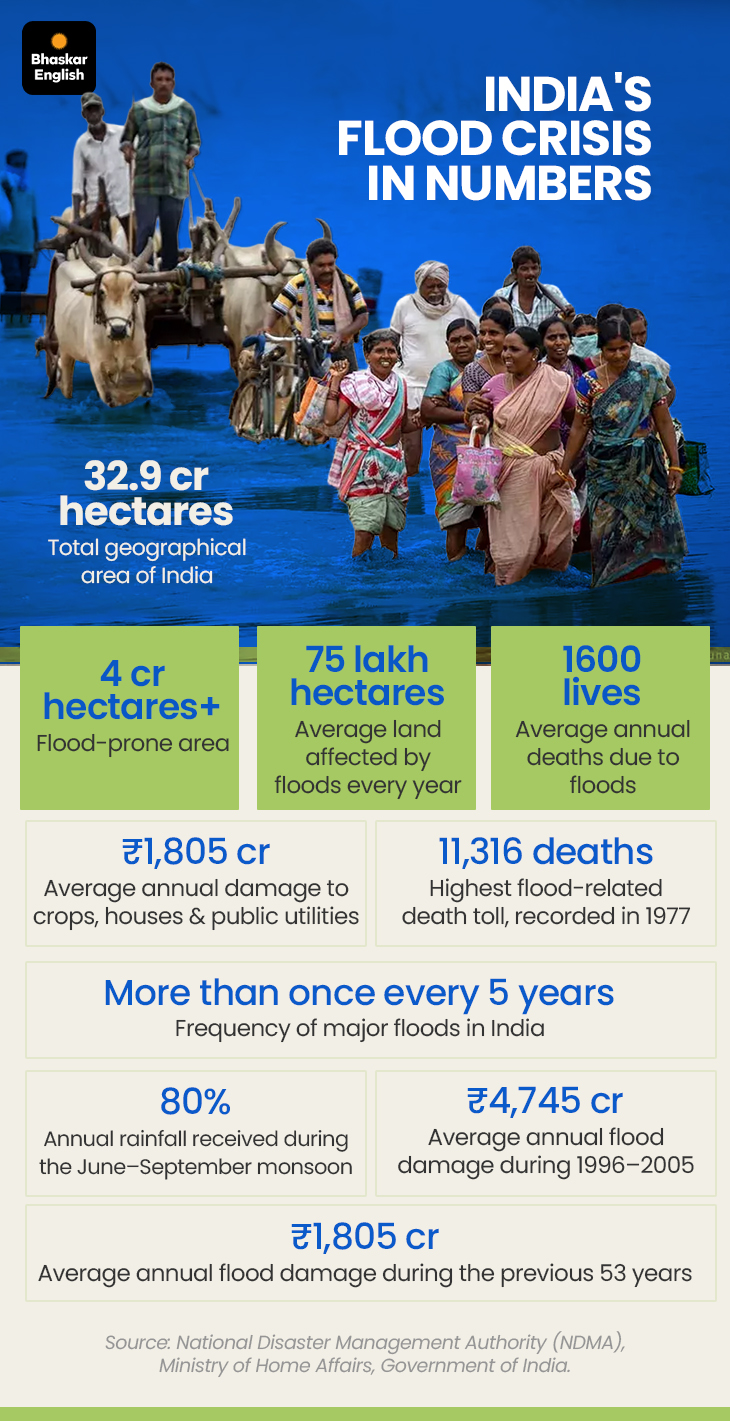
Climate change is worsening floods, but governance determines the damage
Both experts agreed that climate change is increasing the frequency and intensity of extreme rainfall events. However, they said governance failures determine how severely cities are affected.
According to Joshi, climate change acts as a “threat amplifier”, while governance determines vulnerability.
Rathore said climate change is a natural phenomenon, but human activities are accelerating it, increasing the pace of extreme weather events.
Urban planning ignored natural drainage
Rathore said modern cities use advanced planning techniques, engineering and satellite technology, but have failed to integrate hydrology into urban planning.
Using Jaipur as an example, he said the city’s original design ensured rainwater drained quickly without remaining on roads or entering shops. However, unchecked urban expansion and poor planning have disrupted this system.
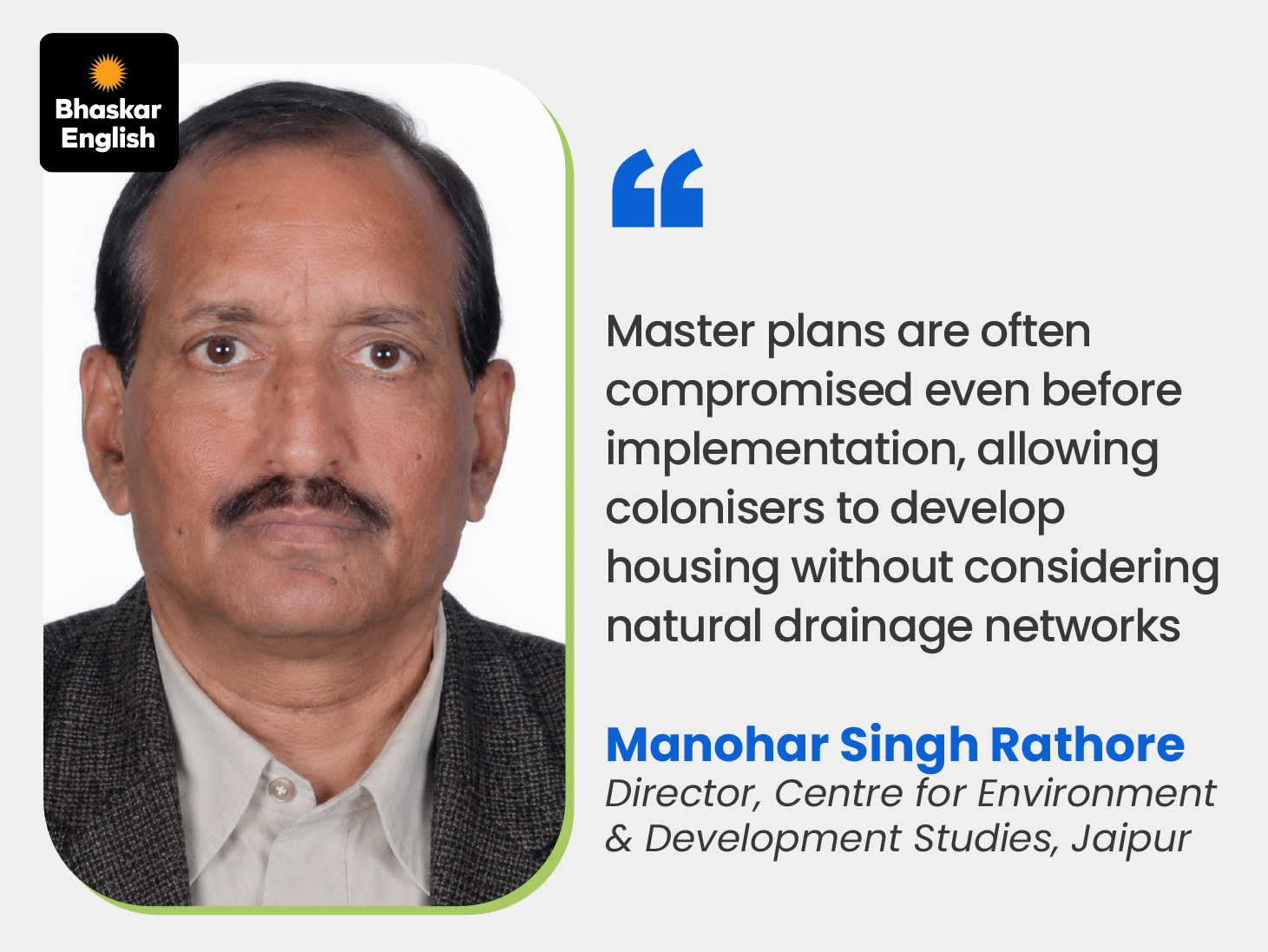
According to Rathore, governments should first plan rainwater drainage systems and liquid runoff management before approving construction projects.
He also said designated areas for solid waste disposal should be developed in advance so that drainage channels remain free from encroachment, significantly reducing urban flooding.
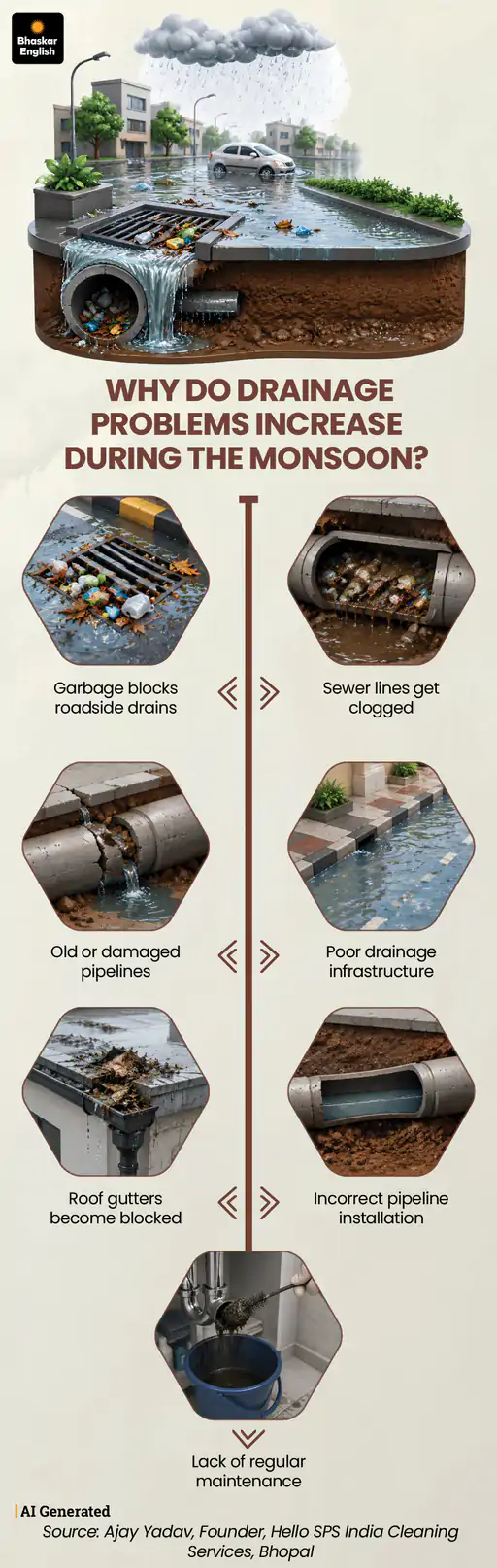
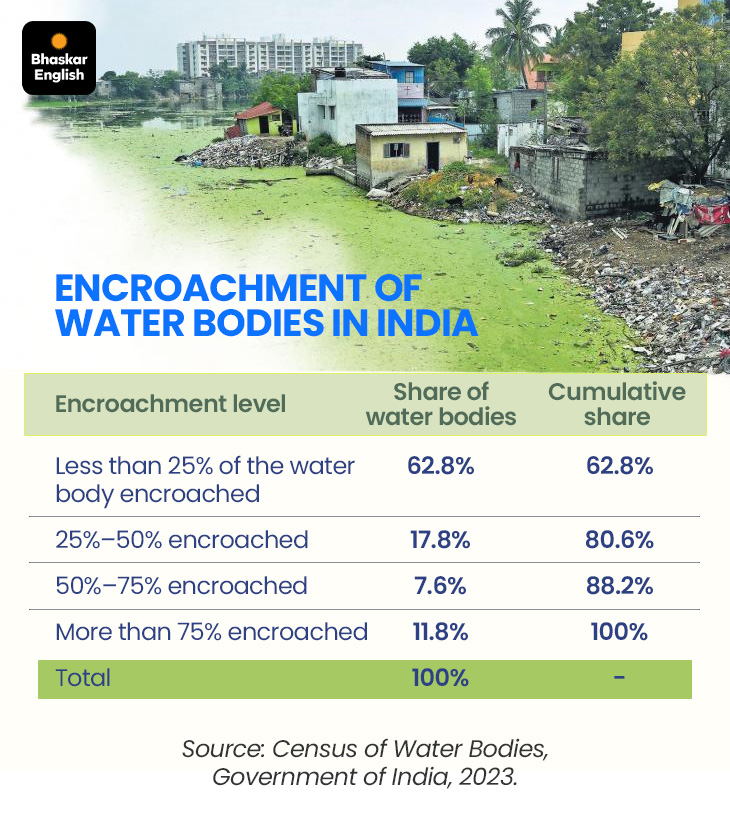
Encroachment has destroyed natural water systems
Encroachment means the illegal or unauthorized occupation or use of land or property that belongs to someone else.
In the context of water bodies, encroachment refers to people or organizations occupying, filling, or constructing on the land or water area of lakes, ponds, rivers, wetlands, or reservoirs, reducing their original size.
Rathore said Jaipur once had around 40 water bodies connected through natural drainage channels that stored rainwater. Today, almost all have been encroached upon.
As these natural pathways disappeared, floodwater lost its outlets. He also pointed out that roads are repeatedly raised without proper planning, leaving shops and houses at lower levels and more vulnerable to waterlogging.
Joshi also said encroachment of water bodies, wetlands, floodplains and natural drainage channels significantly worsens flooding.
Weak municipal corporations and fragmented governance
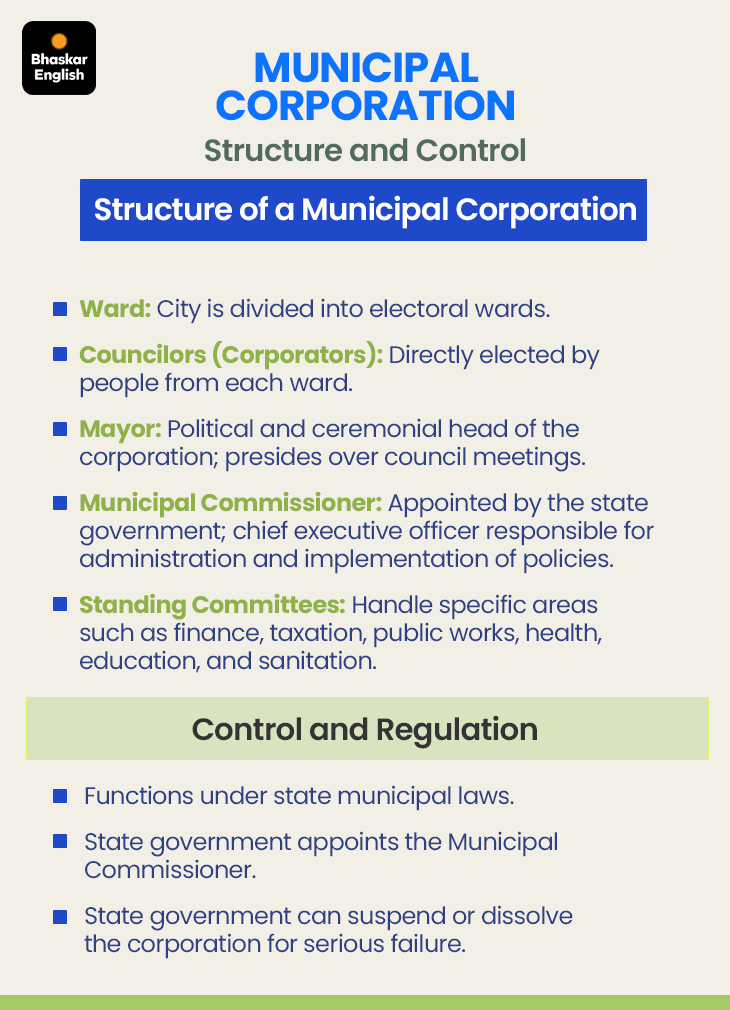
Rathore said municipal corporations lack financial autonomy, institutional authority and decision-making powers. Multiple agencies control different aspects of urban governance, while politicians and influential individuals often interfere in planning and project execution.
He added that responsibilities for drinking water, drainage and civic infrastructure are spread across multiple departments instead of remaining under municipal corporations, weakening accountability and reducing efficiency.
Joshi echoed similar concerns, saying fragmented governance allows responsibility to be shared across multiple agencies, reducing accountability while violations accumulate over decades.
Public money is being spent, but implementation remains weak
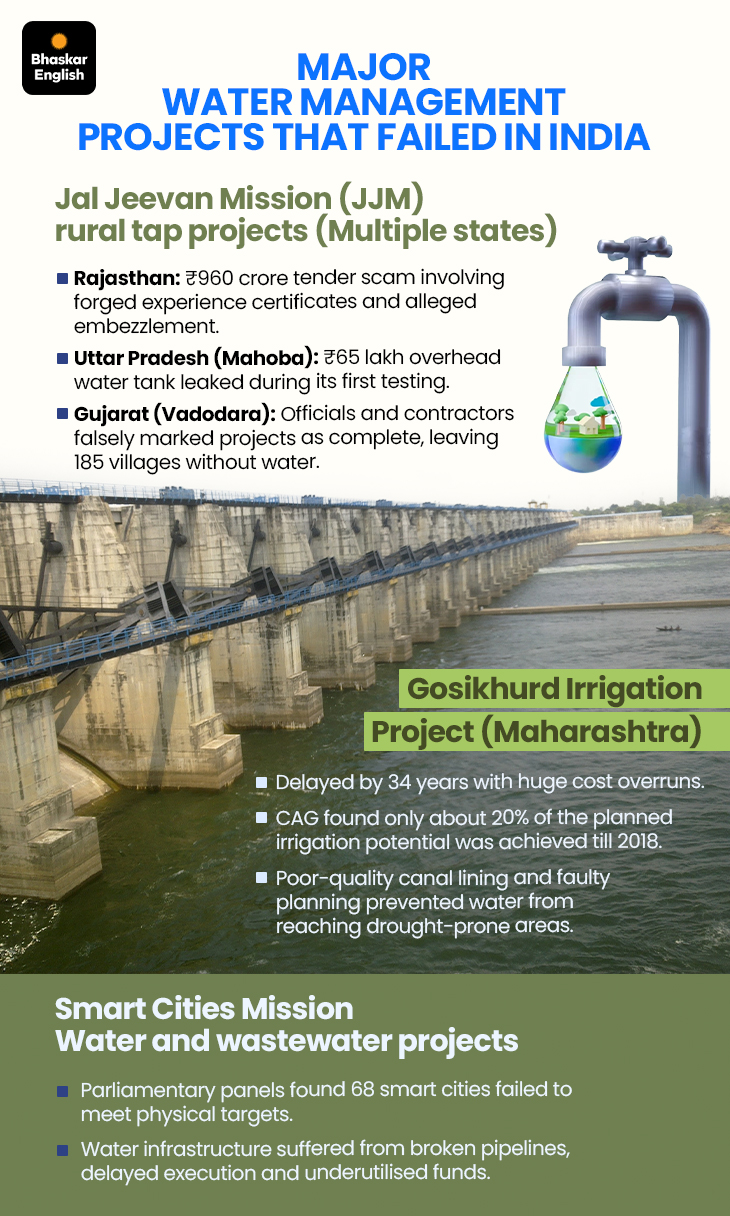
Joshi said governments have invested substantial public funds in disaster management, drainage upgrades and Smart City projects.
However, he said outcomes have been undermined by fragmented implementation, delays, poor project design, weak maintenance and inadequate monitoring.
According to him, many projects have prioritised visible infrastructure instead of integrated storm-water management, wetland restoration and long-term resilience. Weak post-project audits have further reduced accountability.
Sewage systems and rainwater harvesting remain poorly integrated
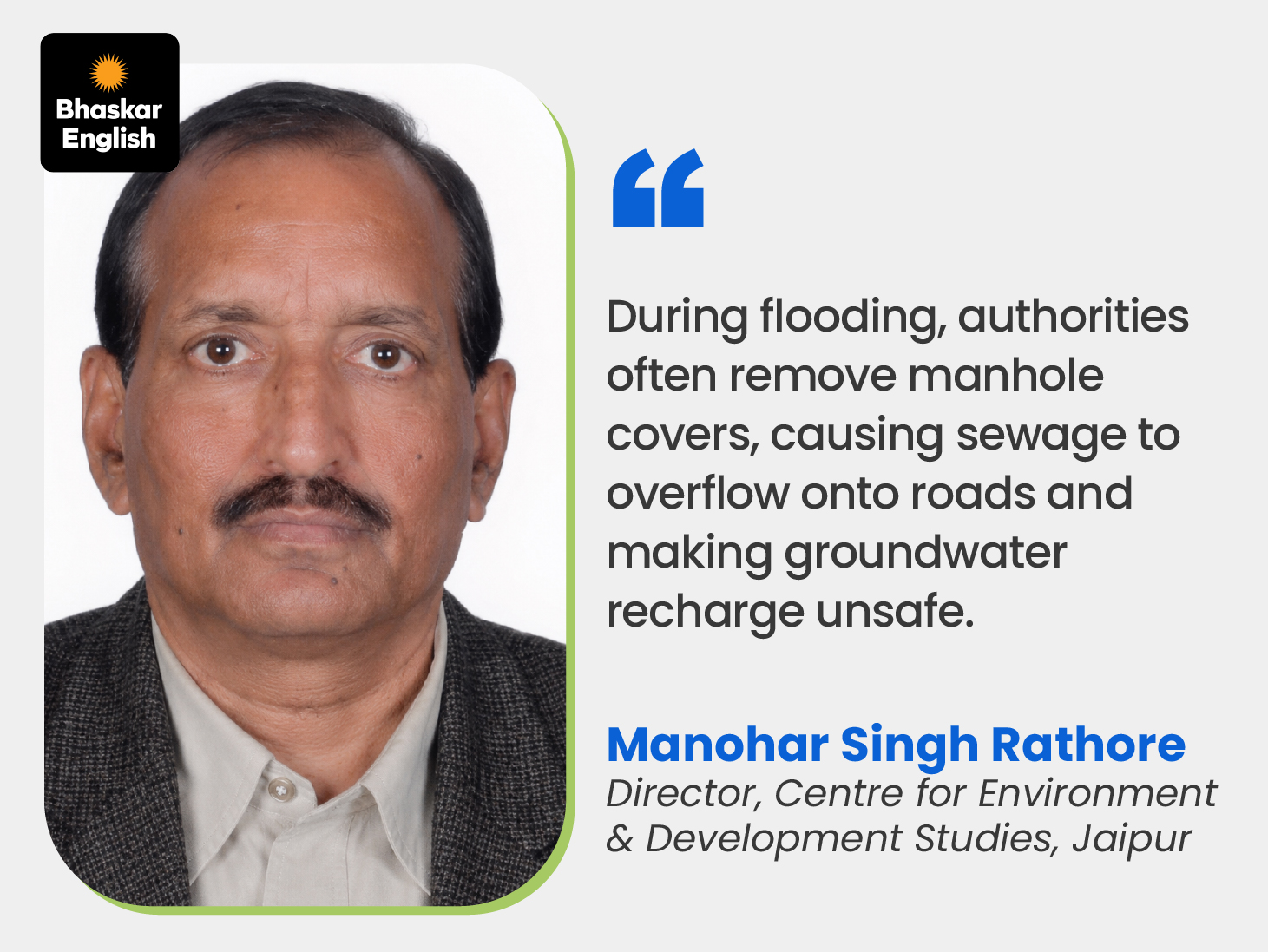
Rathore said existing sewage systems require large quantities of water to function, making rooftop rainwater harvesting and groundwater recharge difficult to implement effectively.
Rathore said there is inadequate enforcement against environmental violations and pollution. He argued that offenders should face stronger legal action instead of minor penalties.
He also noted that Pollution Control Boards have not prepared district-level plans despite existing legal provisions.
Lack of coordination between departments
Rathore said poor coordination between departments such as public works, water supply and telecommunications results in repeated road digging and inefficient infrastructure management.
While cities like Indore have demonstrated effective solid waste management, he said many large and small cities continue to struggle with basic urban services.
Corruption is a factor, but not the only reason
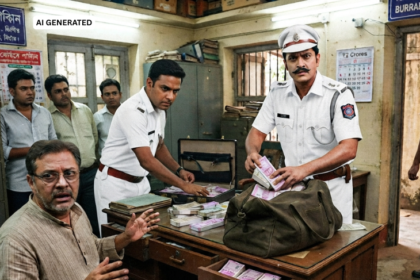
Joshi said corruption contributes to urban flooding when it leads to poor-quality construction, inflated contracts, weak maintenance or tolerance of illegal developments.
However, he said recurring flooding is better explained by a broader combination of governance failures, including corruption, weak institutional capacity, poor planning, inadequate maintenance and lack of accountability.