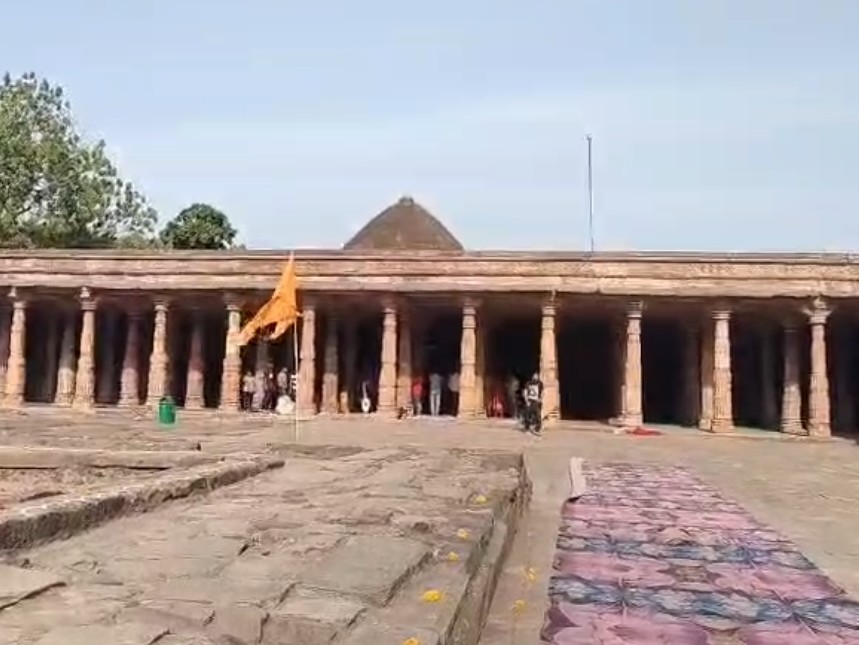
The Supreme Court on Tuesday has agreed to hear the Muslim side’s appeal challenging the Madhya Pradesh High Court’s verdict that declared the Bhojshala-Kamal Maula complex in Dhar as a Hindu temple.
However, the Top court has refused to allow Namaz inside the Bhojshala complex for the time being.
Instead, the court directed the Madhya Pradesh government to arrange an alternative open space adjacent to the Bhojshala complex where Muslims can offer Friday prayers between 1 pm and 3 pm.
The Apex Court also ordered that the Archaeological Survey of India (ASI) shall not undertake any structural changes to the Bhojshala complex without prior permission from the court.
‘An extremely sensitive matter’: Supreme Court
A Bench comprising Chief Justice Surya Kant, Justice Joymalya Bagchi and Justice V. Mohan heard the matter and observed that the dispute is “extremely sensitive.”
The Bench indicated that it would try to conclude the final hearing in a single day to ensure an early resolution. Notices will be issued to all concerned parties, and the court clarified that it would not pass any interim order that could disturb the existing situation or create tension.
Muslim side challenges High Court verdict
Appearing for the Muslim side, Senior Advocate Huzefa Ahmadi argued that the High Court’s judgment had completely altered the long-standing religious arrangement at the site.
He told the court that, for years, Muslims had been offering Namaz on Fridays while Hindus were permitted to perform worship on Tuesdays. Following the High Court’s order, the Muslim community has been barred from entering the complex and offering prayers.
Ahmadi also questioned the findings of the Archaeological Survey of India (ASI) and the conclusions drawn from its survey report.
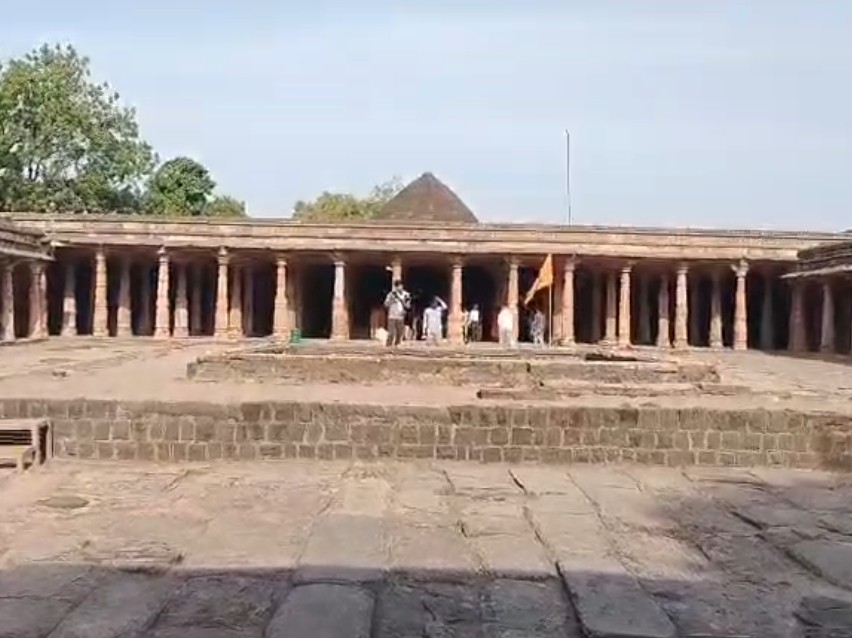
Bhojshala Temple
Reference to places of worship act
Senior Advocate Abhishek Manu Singhvi, also representing the Muslim side, argued that the Madhya Pradesh High Court’s judgment was contrary to the spirit and provisions of the Places of Worship (Special Provisions) Act, 1991.
He submitted that Friday prayers had been held at the site for decades and that several government records support this practice. Therefore, altering the long-standing arrangement, he argued, was not consistent with the law.
Centre says situation remained peaceful
Representing the Centre, Solicitor General Tushar Mehta informed the Supreme Court that the administration had handled the implementation of the High Court’s order peacefully.
He said no law-and-order issues had arisen after the judgment, and the administration had maintained communal harmony in the region.
What did the High Court rule?
On May 15, 2026, the Madhya Pradesh High Court ruled that the Bhojshala-Kamal Maula complex is a temple dedicated to Goddess Saraswati. The court prohibited the offering of Namaz within the premises and granted Hindus the right to perform worship.
The judgment was based on the ASI’s survey report and other evidence placed before the court.
Final legal battle moves to the Supreme Court
Following the High Court’s decision, the Muslim side approached the Supreme Court seeking relief.
The apex court will now examine the arguments of all parties, the ASI report, historical records and the relevant legal issues before delivering its verdict. The Bench indicated that a detailed hearing could take place within the next two to three weeks.
The outcome is being closely watched across the country, as it could have implications not only for the Bhojshala dispute but also for other cases involving religious places.