
35 minutes agoAuthor: Anjali Rajgovind
The debate over the CBSE’s new three-language policy is far from over.
After petitions in the Supreme Court argued that the new language rules were being introduced too abruptly for students already in school, CBSE clarified that the policy would be rolled out in phases.
It would start with students entering Class 6. The Board also agreed to revise parts of the policy.
But why is the government so keen on the three-language policy, and what could it mean for students and parents? Let us find out.
What exactly is the three-language policy?
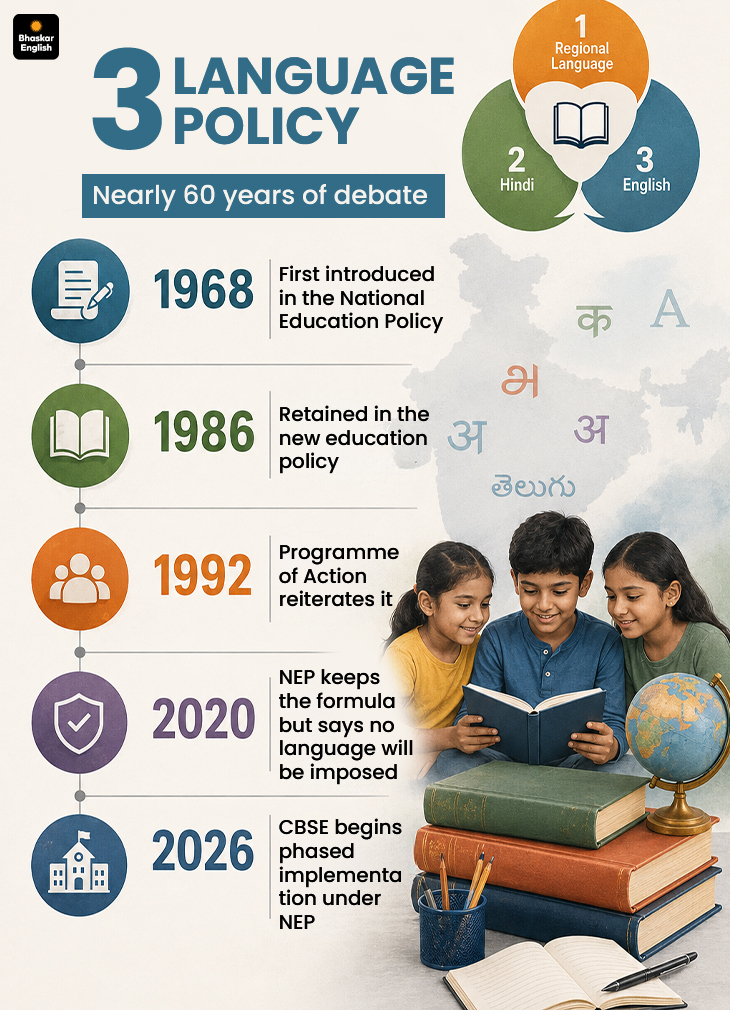
Under the new policy, CBSE students will study three languages in school. At least two of them must be Indian languages.
The rule follows the National Education Policy (NEP) 2020, but it does not force every student to learn Hindi or any other specific language.
- Students can study three Indian languages, or two Indian languages and one foreign language.
- The choice of languages will depend on what a school offers and the options available in that state.
- Students may also change one or more of their languages in Classes 6 or 7, provided they meet the required proficiency by the end of secondary school.
- The aim is to help students become proficient in three languages by the time they finish school.
- This also gives schools and states flexibility in deciding which languages to offer.
Why is the government so keen on implementing it?
The government believes learning more than one language helps children learn better and stay connected to India’s diverse culture.
Under the NEP 2020, it says children understand concepts more easily when they learn in a familiar language, especially in their early years.
At the same time, knowing more than one Indian language can help people communicate across different states.
The policy also aims to:
- Promote multilingualism from an early age;
- Preserve Indian languages through regular classroom learning;
- Improve reading, writing and speaking skills in more than one language; and
- Prepare students for higher education and jobs in a country where people often study or work outside their home state.

What benefits does the government say students will get?
The government says learning three languages can help students both in school and later in life.
It believes multilingual education improves learning while preparing children to study, work and communicate across India.
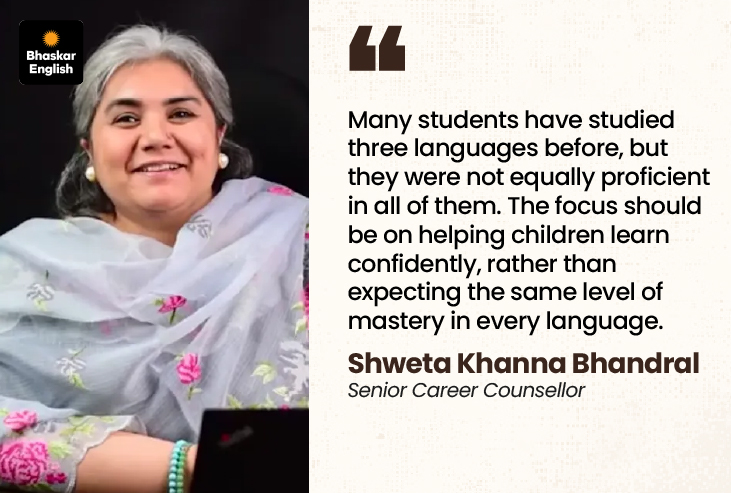
Senior career counsellor Shweta Khanna Bhandral says research has found that learning multiple languages can strengthen the brain’s cognitive abilities.
- It can improve concentration, memory and decision-making.
- It helps students switch between different ideas and understand complex concepts more easily.
- It may also make it easier to communicate with people from different states.

What concerns or disadvantages do critics point out?
Education experts say learning more languages is generally beneficial. The bigger challenge is making sure every student and every school can keep up.
Shweta Khanna Bhandral says not every child will become equally good at all three languages, and that’s perfectly normal.
- A student may be fluent in English and Hindi but struggle with Punjabi, Marathi or another third language.
- Children have different interests and strengths, so one language may come more naturally than another.
- Students who move to another state may also find it difficult to adjust if the new school offers different language options.
- Schools will need enough trained teachers and learning material for the policy to work smoothly.
Which students and schools will it apply to?
The policy applies to all schools affiliated with the Central Board of Secondary Education (CBSE). This includes both government and private schools.
However, it will not be introduced for every student at the same time.
- The new language rules will begin with students entering Class 6.
- Students already studying in higher classes will not have to change their subjects immediately.
- Schools will get time to prepare teachers, textbooks and other learning resources.
- The phased rollout is expected to make the transition easier for both students and schools.
CBSE says this gradual implementation is intended to avoid disruption and give schools enough time to adapt to the new system.
Can students choose any three languages? Will this affect board exams?
Students cannot simply pick any three languages they like.
- The final choice will depend on the languages offered by their school and the options approved by CBSE.
- Schools will continue to decide which languages they can teach, based on the availability of teachers and other resources.
Students can choose from those available options, subject to CBSE’s rules.
- CBSE will continue to conduct board examinations only in the languages it officially offers as examination subjects.
- The language a student studies will also determine the language paper they appear for in the board examination.
Do other multilingual countries follow similar language policies?
Yes. Many countries encourage children to learn more than one language, but the way they do it varies.
For example:
- In Singapore, students study English along with their designated ‘Mother Tongue’ language, such as Chinese, Malay or Tamil.
- In Canada, many schools offer bilingual education in English and French, while some provinces also support Indigenous languages.
- In Switzerland, students usually learn more than one national language during school, along with English in many regions.
- South Africa also promotes multilingual education, recognising several official languages in its school system.
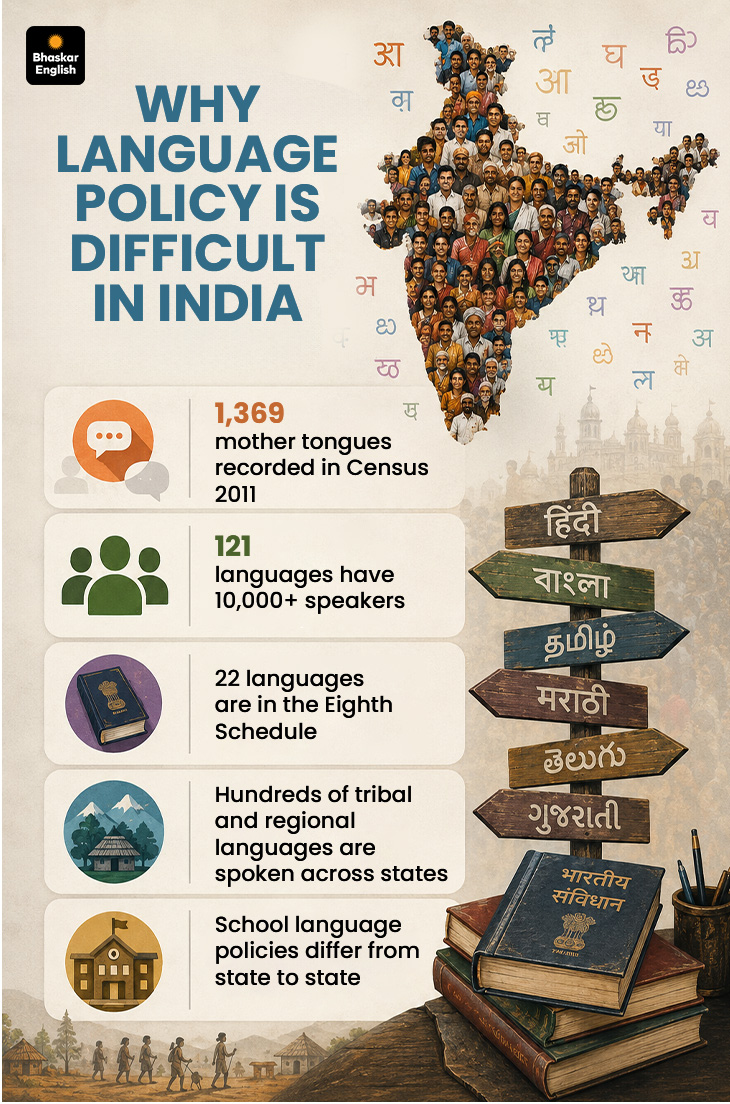
India’s approach is different because language choices depend on the state, the school and the languages available locally.
Graphics: Aayushi Jain, Nikhil Valari