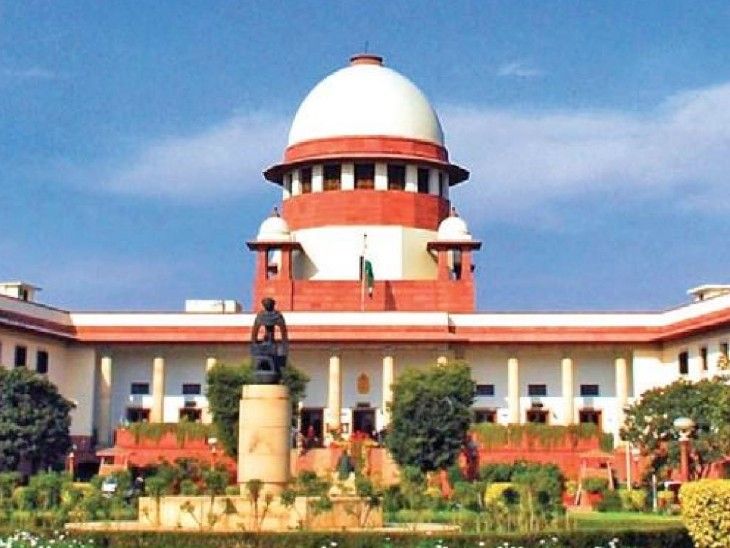

The Supreme Court on Tuesday asked the Centre to consider formally defining digital arrest as a separate criminal offence and introducing stricter punishment for those involved in such scams.
Digital arrest is an emerging form of cybercrime in which fraudsters impersonate police officers, court officials or government personnel through audio and video calls. Victims are intimidated into believing they are under investigation or in custody and are then coerced into transferring money.
A Bench comprising Chief Justice of India Surya Kant, Justice Joymalya Bagchi and Justice V Mohan observed that, in such cases, the properties of the accused may be frozen once there is sufficient evidence to establish a prima facie case against them.
Need for change in law
Attorney General R Venkataramani told the Supreme Court that digital arrest is already recognised as a criminal offence under existing law.
He also informed the Bench that an Inter-Departmental Committee (IDC) is finalising a comprehensive report to identify gaps in the current legal and enforcement framework.
CJI suggests separate legal definition, asset-freezing provision
CJI Surya Kant said digital arrest should be formally defined as a separate criminal offence in law, noting that such cases often involve elements of extortion and robbery and therefore warrant stringent punishment.
He also suggested introducing a legal provision allowing authorities to freeze the assets of an accused once sufficient evidence has been gathered against them.
Bench raises concerns over deepfakes and emerging cybercrime
Justice Joymalya Bagchi highlighted the growing threat posed by deepfakes, saying the government should take the lead in defining such emerging forms of online crime.
He observed that while existing laws may cover some aspects of these offences, the legal framework needs to be strengthened to address evolving technologies. “We now have deepfakes. They can be used to commit fraud. The existing law applies, but it needs to be improved,” he said.
Justice Bagchi also noted that the Supreme Court could not create a new criminal offence by exercising its powers under Article 142 of the Constitution, adding that such changes must be made through legislation.
Government drafting law on deepfakes and digital arrest
Solicitor General Tushar Mehta told the Supreme Court that the Centre is drafting legislation to tackle emerging cybercrimes, including deepfakes, digital arrest scams, and other forms of online fraud. He said a draft Bill is being prepared to address these offences under a comprehensive legal framework.
CBI probing major cyber fraud cases
Attorney General R. Venkataramani informed the Bench that the CBI is currently investigating around 20 major cyber fraud cases involving losses of ₹10 crore or more, while other cases are being handled by state police forces.
He also urged the court to direct the Reserve Bank of India (RBI) to implement a Standard Operating Procedure (SOP) for the temporary freezing of suspicious bank accounts linked to cyber fraud.
Court to issue directions
The Supreme Court also considered a plea seeking directions to all states, Union Territories and law enforcement agencies to immediately operationalise the grievance redressal and money restoration modules for cybercrime victims.
The Bench said it would issue its directions in the matter on Wednesday.
Home Ministry panel reviewing cybercrime framework
Earlier, the Ministry of Home Affairs (MHA) informed the Supreme Court that it had set up a high-level Inter-Departmental Committee (IDC) to identify gaps in the existing framework and strengthen real-time protection for victims of cybercrime.
On 16 December 2025, the Supreme Court directed the government to hold inter-departmental consultations under the supervision of the Attorney General.
In a status report filed on 12 January, the MHA said a multi-agency operation involving the CBI, Reserve Bank of India (RBI), Department of Telecommunications (DoT) and other key government agencies was under way. The initiative aims to dismantle international cybercrime syndicates that use fake documents and so-called digital arrest scams to defraud victims.
CBI steps up action against organised cyber fraud
The CBI told the Supreme Court that digital arrest scams are often orchestrated by organised international cybercrime syndicates. The agency said it is working through Interpol channels to identify and dismantle cross-border criminal networks involved in such fraud.
It also informed the court that the Ministry of Home Affairs (MHA) has constituted a high-level Inter-Departmental Committee (IDC), chaired by the Special Secretary (Internal Security), to strengthen coordination and tackle the growing threat of cybercrime.