
2 hours agoAuthor: Anjali Rajgovind
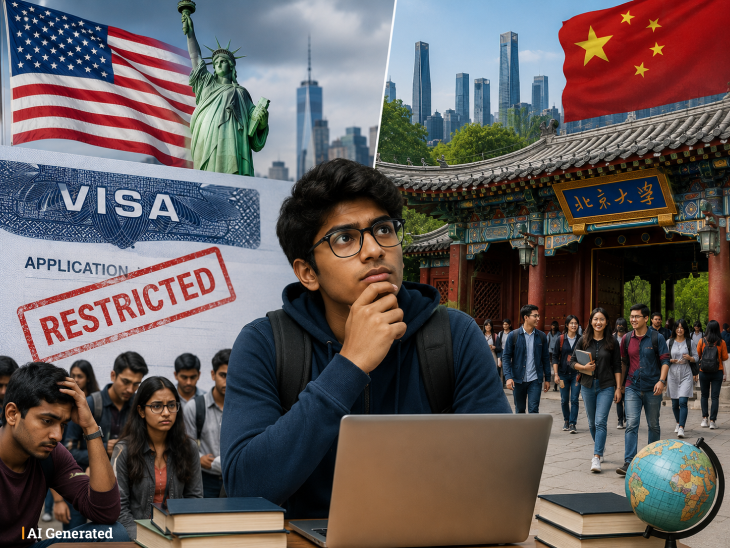
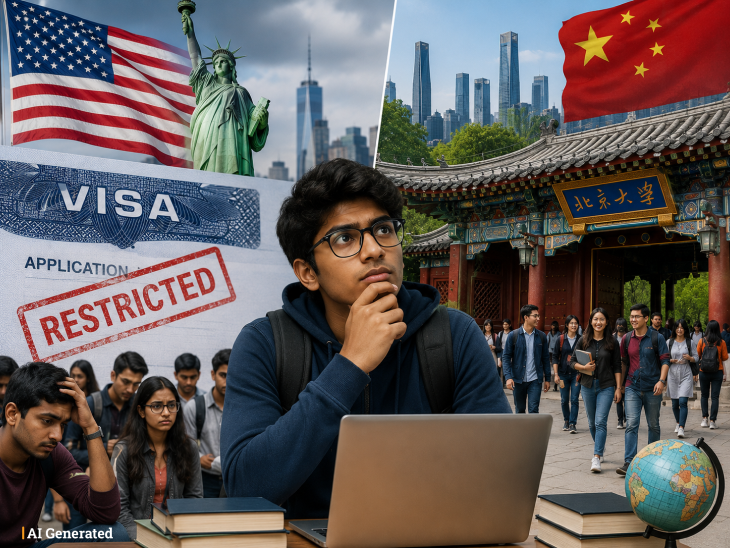

The US has long been the dream destination for Indian students.
But proposed changes to student visa rules have raised fresh questions about studying there.
Could China benefit from this shift, and should Indian students consider it? We explain.
Why has the US tightened student visa rules?
The Trump administration says the changes are meant to strengthen immigration control and improve national security.
It argues that the current student visa system makes it difficult to track whether foreign students continue studying, switch courses or leave the country after completing their programmes.
The biggest proposed change is replacing the current ‘Duration of Status’ (D/S) system with a fixed visa validity, usually four years. Students would have to apply for an extension if their course lasts longer.
Main reasons behind the move include:
- Stricter monitoring of foreign students.
- Preventing visa misuse and overstays.
- Greater scrutiny of universities and exchange programmes.
Which Indian students will be affected the most?
Not every student will feel the impact in the same way.
The proposed rules are expected to affect those pursuing longer or research-intensive courses the most.
Students who could face greater uncertainty include:
- PhD scholars, as research programmes in the US often take five to seven years to complete.
- Students pursuing integrated master’s degrees (in STEM courses) and doctoral degrees.
- Researchers working on government- or university-funded projects that extend beyond four years.
- Students who need extra time because of laboratory work, field research or thesis delays.
Those enrolling in shorter master’s programmes of one or two years may see less immediate impact. However, they could still face stricter visa checks and documentation requirements.

Why is China suddenly being discussed as an alternative?
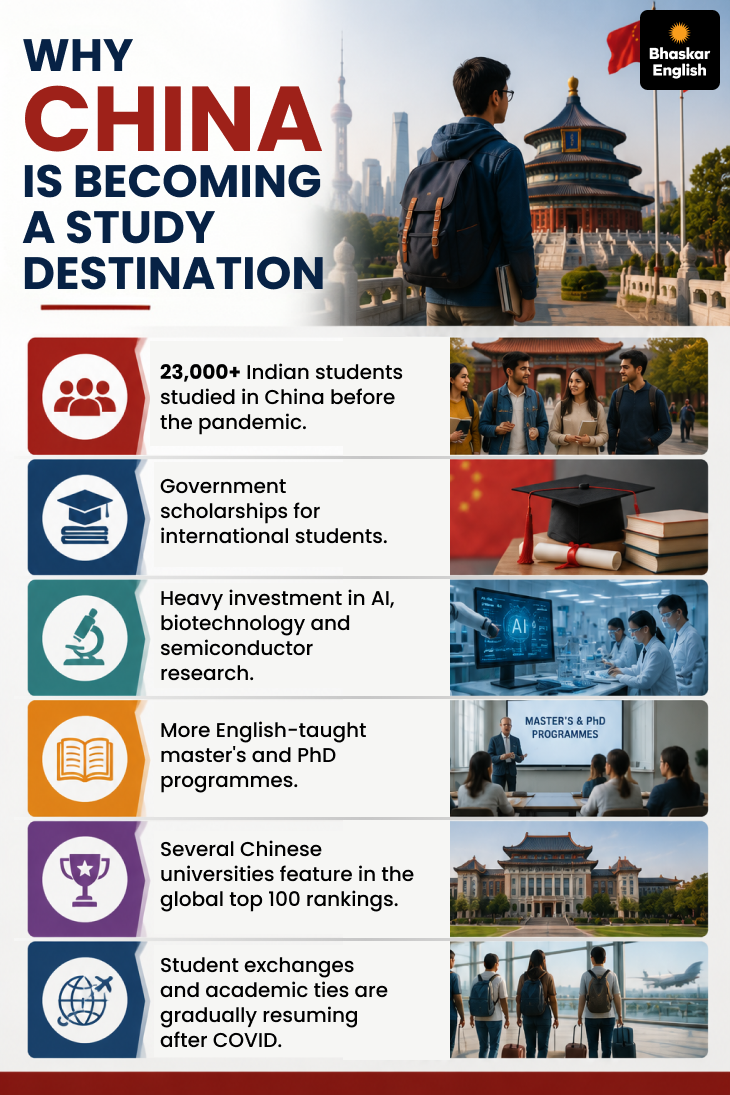
China has been investing heavily in higher education and research for more than a decade.
But with the US becoming a tougher destination for some international students, many education experts believe China could attract greater interest, especially in science and technology.
Several factors are driving this discussion:
- Chinese universities have expanded research partnerships with institutions around the world.
- The country has increased funding for advanced fields such as artificial intelligence, robotics and biotechnology.
- Beijing has also introduced measures to attract young researchers and skilled talent from overseas.
- Many universities now offer programmes taught entirely in English, making them accessible to international students.
How many Indian students already study in China, and what do they study?
China has long been a familiar destination for Indian students, especially those looking for affordable medical education.
Before the COVID-19 pandemic, thousands of Indians were enrolled at Chinese universities.
Their return slowed during the pandemic because of travel restrictions, but admissions have gradually resumed.
Most Indian students in China choose:
- MBBS, which has traditionally been the most popular course.
- Pharmacy and dentistry.
- Engineering and computer science.
- Chinese language and business studies.
- A smaller number also pursue master’s and doctoral research in science and technology.
In recent years, education consultants have also noticed growing interest in courses linked to artificial intelligence, data science and advanced manufacturing.

Is China a good option for Indian students?
The answer depends on what you want to study and where you want to work later. China may suit some students very well, but it is not the right choice for everyone.
Before applying, students should consider:
- Whether the degree is recognised in India, especially for regulated professions such as medicine.
- The language of instruction. Some courses are taught in English, while daily life may still require basic Mandarin.
- Internship and research opportunities available during the course.
- The university’s global reputation and industry links.
- Living conditions, visa rules and support services for international students.
We recommend checking accreditation, speaking to current students and comparing multiple universities before making a decision.
Choosing a country should be based on career goals, not just changing visa policies elsewhere.
Can studying in China lead to good jobs?
Yes, but your career prospects depend more on your course, university and skills than the country alone.
Graduates from well-known Chinese universities find opportunities in:
- Multinational companies with operations in Asia.
- Research laboratories and technology firms.
- Manufacturing, electronics and electric vehicle industries.
- International business, trade and supply chain management.
Students who learn Mandarin alongside their degree may have an advantage in sectors where companies work closely with Chinese partners.
Those returning to India can also benefit if they have expertise in fields where Chinese universities have strong research or industry links.
However, make sure to check placement records, alumni outcomes and employer recognition before applying.
A degree alone does not guarantee a job.
Practical experience, internships, language skills and professional networks often make the biggest difference after graduation.
Graphics: Gaurav Raj