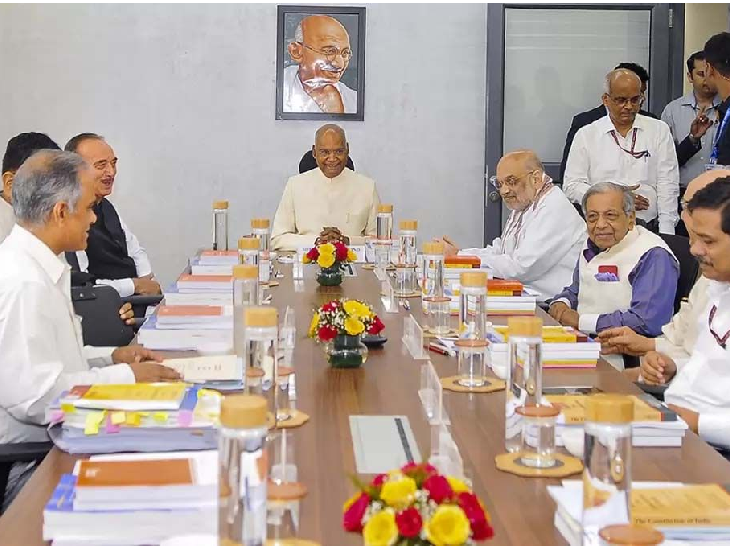

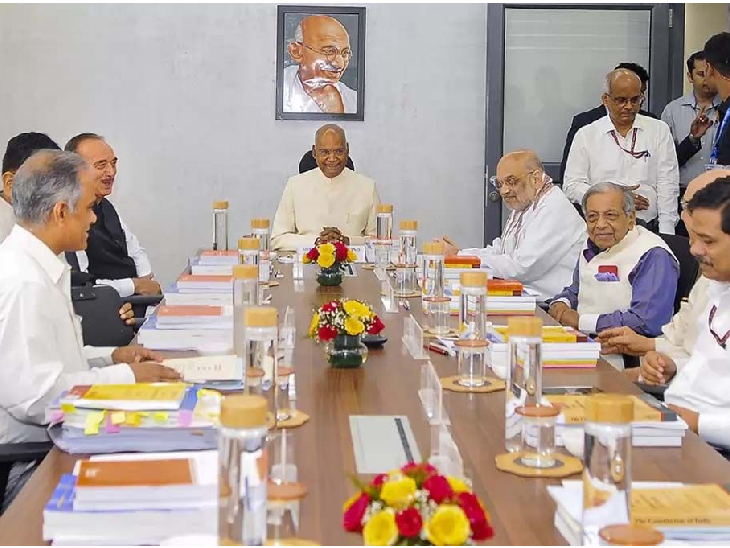
The picture is from September 23, when a meeting of the committee formed for One Nation-One Election was held at Delhi’s Jodhpur Officers’ Hostel.
The Joint Parliamentary Committee (JPC) is working towards implementing the ‘One Nation, One Election’ proposal by the 2029 Lok Sabha elections. According to the committee’s chairman, P P Chaudhary, around 99% of civil society groups and organisations consulted so far have expressed support for the proposal.
The committee has also held consultations with experts from several states, including Goa’s Chief Minister and members of the state cabinet, as part of the ongoing deliberations.
5 questions about ‘One Nation, One Election’
1. What does it mean? Holding Lok Sabha, State Assembly and local body elections at the same time instead of conducting them separately.
2. What will happen to states whose terms extend beyond 2029? Their terms may be cut short through a constitutional amendment so they align with the 2029 election cycle.
3. What about states whose terms end before 2029? They could come under President’s Rule for a limited period, or elected governments may serve only until the 2029 cycle.
4. What legal changes will be needed? Several constitutional provisions, including Articles 83, 172 and 356, will need amendments. This requires a two-thirds majority in Parliament and approval from at least half the states.
5. What if a government falls before completing its term? Under the proposal, fresh elections would be held only for the remainder of the term, ensuring the common election cycle remains unchanged.
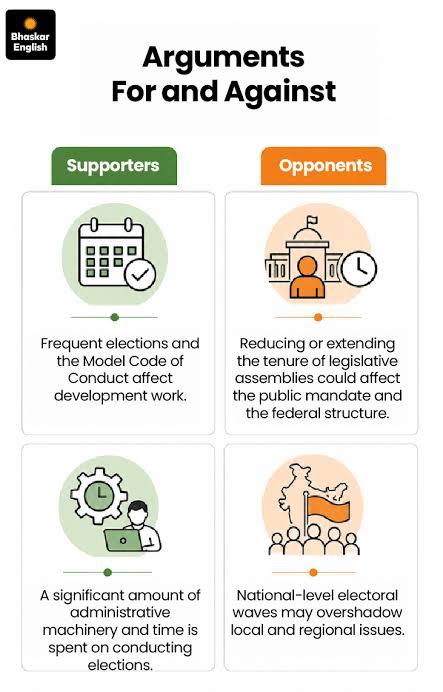
Government explores phased roadmap for ‘One Nation, One Election’
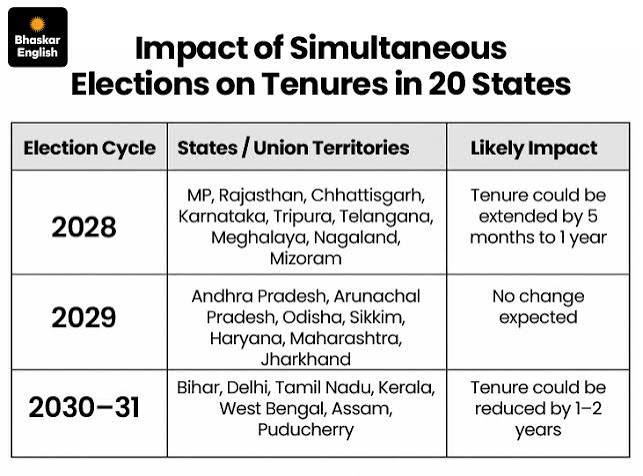
The Centre is exploring a practical roadmap to implement ‘One Nation, One Election’. According to sources linked to the JPC, the panel is considering a two-phase transition model to avoid repeated elections in states or major reductions in the tenure of state assemblies.
Instead of bringing the entire country under a single election cycle at once, the proposal favours two phases – 2029 and 2034. In the first phase, Assembly elections in around 20 states could be held alongside the 2029 Lok Sabha elections.
The tenure of the JPC has been extended until the Monsoon Session of 2026. If the plan moves ahead, the process of synchronising elections could begin in 2029, with the aim of bringing the entire country under a common election cycle by 2034.
Constitution allows scope, but consensus remains key
Anand Paliwal, former member of the Law Commission and Dean of the Faculty of Law at Mohanlal Sukhadia University, said the Constitution provides options to implement ‘One Nation, One Election’ in phases. Elections in some states could be held before the completion of their Assembly terms.
He said there are also constitutional provisions to extend the tenure of some state assemblies. India has altered the terms of the Lok Sabha and state assemblies under exceptional circumstances in the past. However, any large-scale reform would require the necessary legal amendments and broad political consensus in Parliament.
Panel formed under the chairmanship of former President Ram Nath Kovind
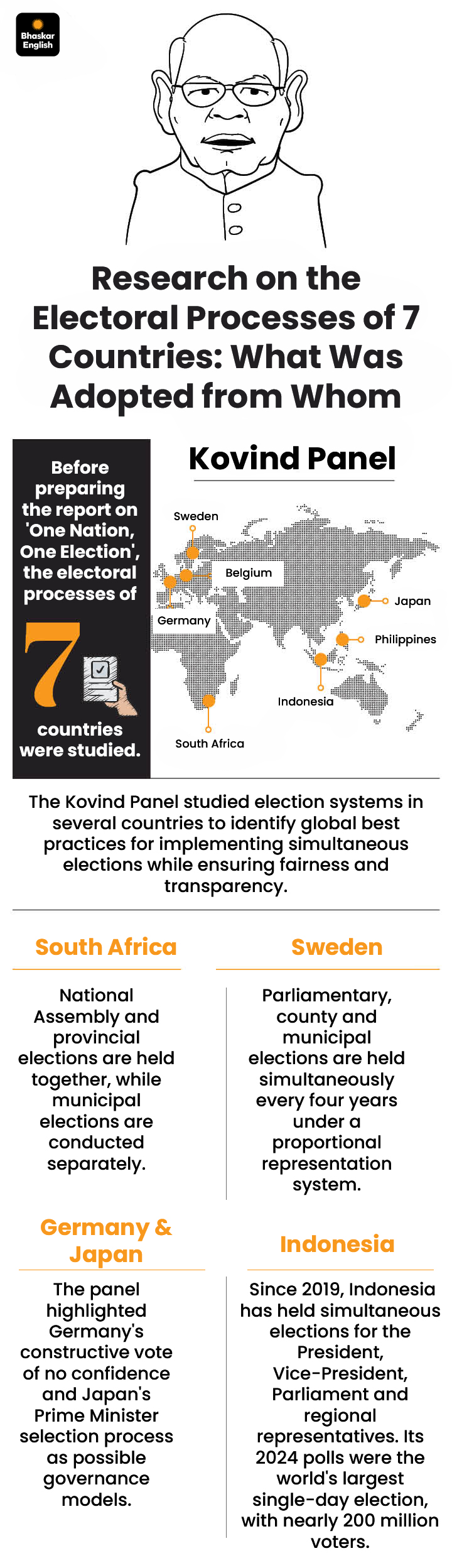
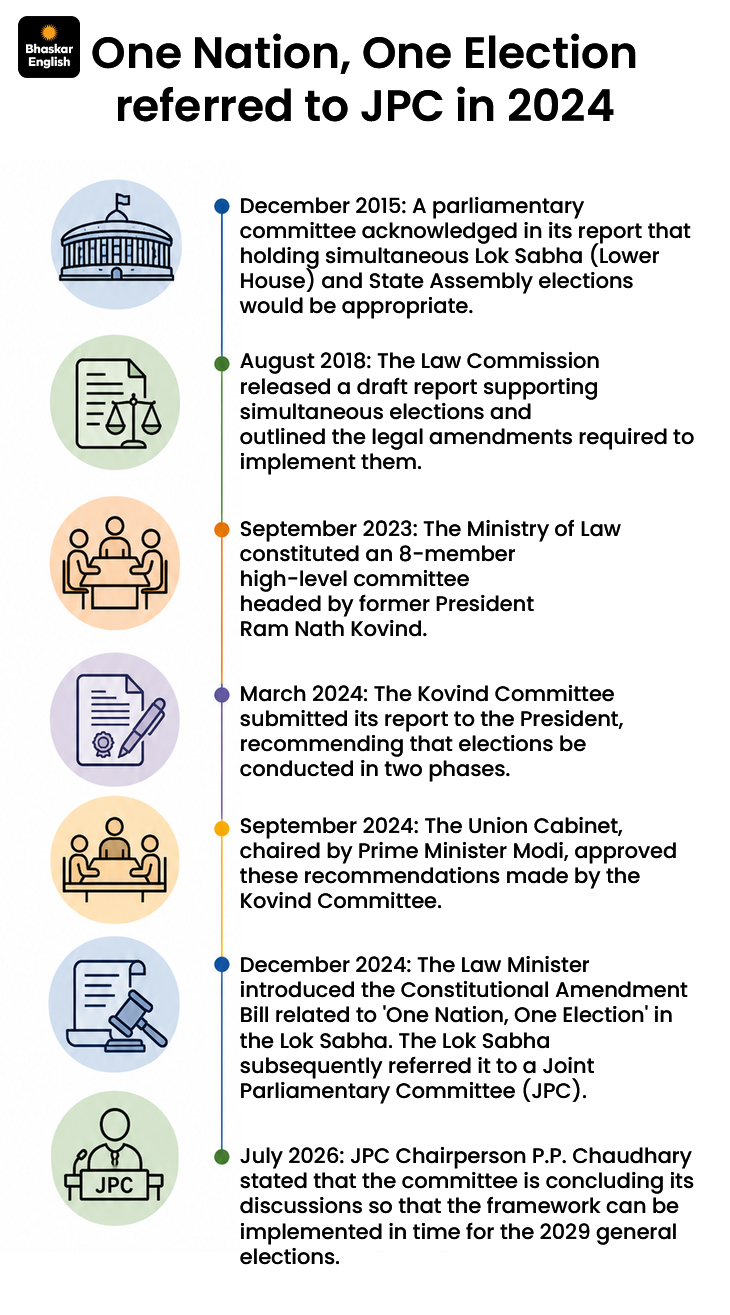
A panel was constituted on September 2, 2023, under the chairmanship of former President Ram Nath Kovind to consider ‘One Nation-One Election’. After discussions with stakeholders-experts and 191 days of research, this panel submitted its report to President Droupadi Murmu on March 14.
India held simultaneous elections until 1967
From 1952 to 1967, Lok Sabha and most State Assembly elections were held together on four occasions. After 1967, several state governments collapsed, leading to the dissolution of many Assemblies in 1968–69. In 1970, the Lok Sabha was also dissolved before completing its term, breaking the common election cycle.
Mid-term Lok Sabha elections were held in 1971, after which state elections began taking place at different times. Over the years, coalition governments, President’s Rule and early dissolutions widened the gap further. The Law Commission and NITI Aayog have repeatedly recommended restoring a common election cycle.