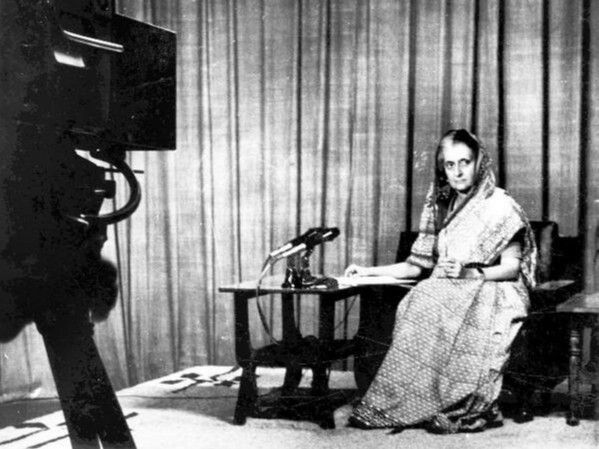

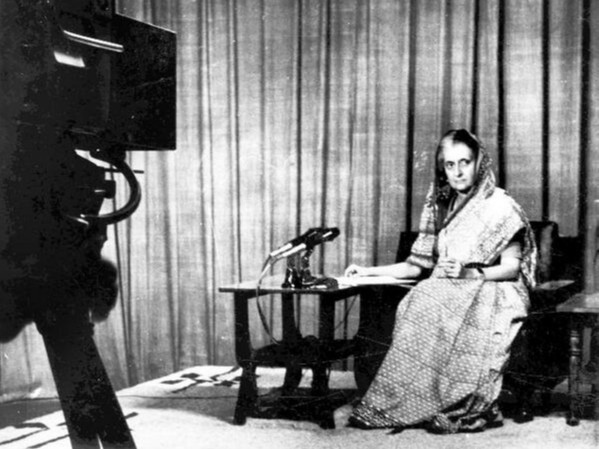
Then Prime Minister Indira Gandhi declared Emergency in the country on May 25, 1975.
For the first time, NCERT has included the 1975-77 Emergency in the Class 9 Social Science textbook. In the new book ‘Understanding Society: India and Beyond’, the Emergency has been described as one of the biggest challenges faced by Indian democracy.
According to an ANI report, an NCERT official has confirmed that a separate section on the Emergency has been added to the Class 9 textbook for the first time. This change comes at a time when the country recently commemorated 50 years since the imposition of the Emergency.
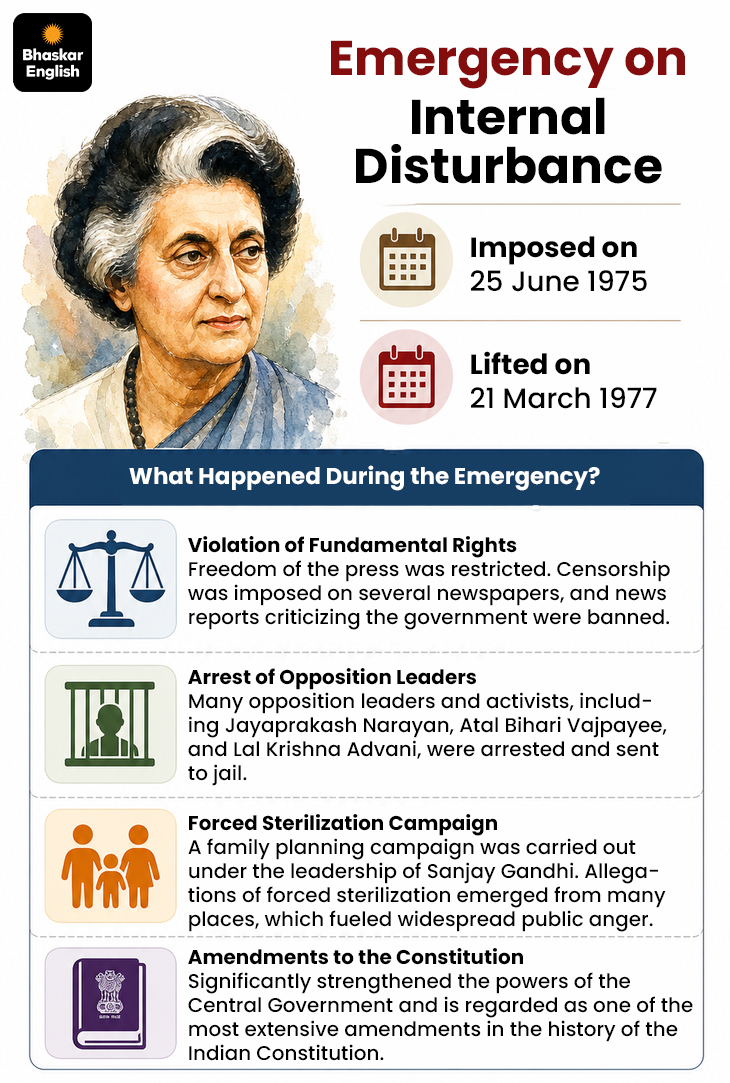
Book states – Public resentment against Indira government grew
The book states that in the early 1970s, public resentment against the Indira Gandhi government was growing. Protests took place in many places due to allegations of unemployment, inflation, and mismanagement. Subsequently, in June 1975, a national emergency was imposed on the grounds of internal disturbance.
According to the book, during this period, most fundamental rights were suspended, censorship was imposed on the press, and many political leaders and activists were arrested. The book states that during this period, pressure on democratic institutions increased and people’s freedom was curtailed.
Also Mention of Jayaprakash Narayan’s Movement
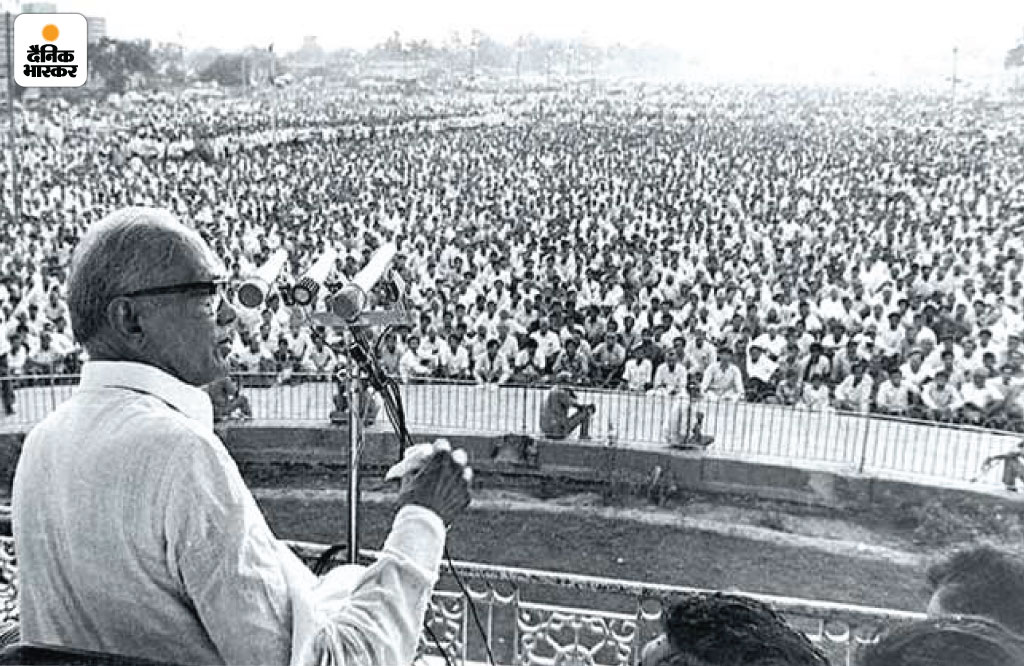
Jayaprakash Narayan addressing the people at Ramlila Maidan in New Delhi on June 25, 1975.
The book also elaborates on the role of Loknayak Jayaprakash Narayan. It states that he organized students and common people, leading to large public movements in Bihar and Gujarat.
According to the book, general elections were held after the Emergency ended in 1977. The public expressed its opinion through voting, and the ruling government lost the election. The book describes this as an example of the strength of Indian democracy.
Other challenges to democracy also included
Besides the Emergency, the book also discusses other challenges facing democracy. These include fake news, misinformation, damage to public property, violation of rules, poverty, regionalism, social discrimination, and gender inequality.
For the first time, NCERT has also added a new section called ‘Democracy and You’. Its aim is to help students understand their role in the democratic process.
Emphasis on Democratic Traditions and Media
- The book also specifically focuses on India’s democratic traditions and institutions. It explains that the tradition of democratic thought and participation in India is quite old.
- A separate section is also provided on the role of media. The book describes media as the ‘fourth pillar’ of democracy and states that it plays a crucial role in raising the voice of the people and protecting democratic values.
- To explain the scale of Indian democracy, the book also provides electoral data. According to this, in 2024, there were more than 96.8 crore registered voters in the country. Additionally, the network of polling stations spread across the country has also been mentioned.
- The book also includes examples of democracy at the local level. It mentions a panchayat in Gujarat and a women-friendly panchayat in Tripura. A separate section is also provided on women’s voting rights and reservation in local bodies.