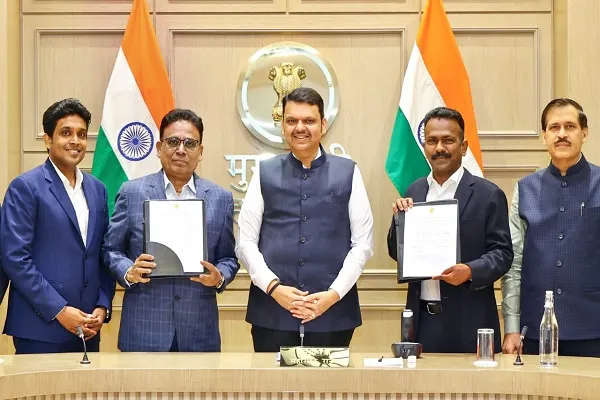

Maharashtra has signed 67 Memorandums of Understanding involving proposed investments worth ₹8.57 lakh crore as the state steps up efforts to attract large-scale industrial and infrastructure projects.
The announcements were made around the launch of the state’s new Invest Maharashtra platform. According to the Maharashtra government, the proposed investments could generate around 2.91 lakh direct and indirect employment opportunities. The proposed investments cover several sectors, including semiconductors, data centres, renewable energy, aerospace and defence, healthcare, infrastructure and agro-processing. The wide range of sectors reflects Maharashtra’s attempt to attract investment beyond traditional manufacturing.
The state government has also set an ambitious target of becoming a USD 1 trillion economy by 2030. The new investment platform is intended to make it easier for companies to interact with government agencies and navigate the approval process. The proposed investment figure of ₹8.57 lakh crore has attracted attention because of its size. However, Memorandums of Understanding represent investment intentions rather than completed projects. Actual investment will depend on several factors, including approvals, financing, land availability, infrastructure and implementation timelines. The proposed projects could nevertheless create opportunities across multiple parts of Maharashtra. Large industrial investments generally generate demand for supporting businesses, logistics companies, suppliers, construction services and skilled workers.
The semiconductor sector is one of the areas receiving particular attention. India has been attempting to build a stronger domestic semiconductor ecosystem, and Maharashtra has been seeking a larger role in electronics and advanced manufacturing. Data centres are another major area of proposed investment. As digital services, cloud computing and artificial intelligence expand, demand for data storage and computing infrastructure is also increasing. Renewable energy projects are expected to form another important part of the investment pipeline. Maharashtra has been looking to expand its clean-energy capacity while supporting industrial development and meeting rising electricity demand.
The proposed investments in aerospace and defence also point towards the growing importance of advanced manufacturing in the state. Maharashtra already has an established industrial base, and new projects in high-technology sectors could expand the range of manufacturing capabilities available within the state. Healthcare and agro-processing are included in the investment plans as well. These sectors have a direct connection with Maharashtra’s large population and agricultural economy. The employment figure of 2.91 lakh jobs is another major part of the announcement. The figure includes both direct and indirect employment opportunities associated with the proposed projects. The eventual number of jobs will depend on how many projects move from the agreement stage to actual implementation.
The Invest Maharashtra platform is expected to play a role in this process by providing investors with a more coordinated interface with the state government. The broader aim is to reduce delays and make Maharashtra more attractive for companies looking to establish or expand operations. Mumbai and Pune remain important economic centres, but the state is also seeking to spread investment across different regions. Such expansion could help create employment opportunities outside the state’s largest urban centres. For small and medium businesses, large investments can also create indirect opportunities. New factories, technology facilities and infrastructure projects require local suppliers, transportation, maintenance services, professional services and other forms of business support.
The investment announcement therefore has implications beyond the companies directly signing the MoUs. If projects are implemented as proposed, they could contribute to supply-chain growth and increase economic activity in surrounding areas. At the same time, the implementation stage will be crucial. Converting investment proposals into operational projects usually requires land acquisition or allocation, environmental and regulatory clearances, financing and construction. The ₹8.57 lakh crore figure should therefore be viewed as a proposed investment pipeline rather than money already invested in the state. Maharashtra’s latest investment push nevertheless signals a continued focus on attracting capital into emerging industries. With sectors such as semiconductors, renewable energy, data centres and advanced manufacturing becoming increasingly important to India’s economy, the state is positioning itself to participate in those areas.