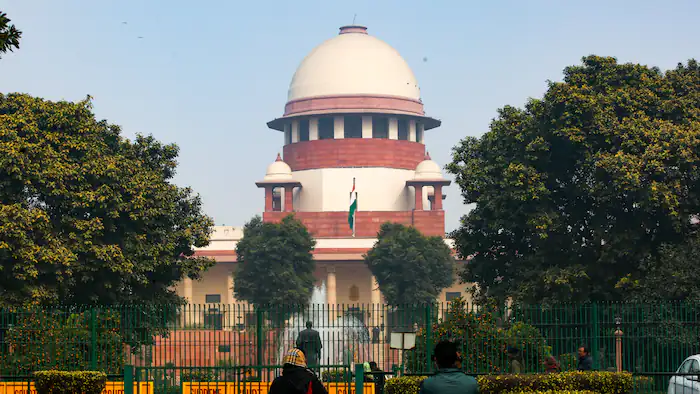

The Supreme Court has indicated that its judges may visit the National Testing Agency’s office in New Delhi to examine how the agency is preparing to make competitive examinations more secure and reliable. The development has brought the National Testing Agency, NEET-UG reforms and examination security back into focus as students and parents continue to closely watch changes in the country’s major entrance examination system. The court was hearing petitions concerning the restructuring and functioning of the NTA. During the proceedings, the bench indicated that a direct visit to the agency’s new office could help it understand the infrastructure, manpower and systems being used to conduct examinations. The Centre welcomed the proposed visit.
The issue is particularly important because the NTA conducts several major examinations for students across India. NEET-UG, which determines admission to undergraduate medical courses, is among the most significant. Any concern about examination security can affect thousands of students because a small disruption can have consequences for an entire admission cycle. The Supreme Court has also sought information about progress being made on examination reforms. A task force associated with Infosys co-founder Nandan Nilekani has been examining ways to strengthen the examination process. The government has been asked to provide an update on the work being carried out and the proposed reforms.
One of the larger concerns is how examination papers are protected before they reach candidates. Digital systems, secure question-paper handling, examination-centre management and staff training have all become important parts of the conversation around competitive examination reforms. For students, the discussion is not limited to technology. The credibility of an examination depends on several connected factors. Question papers must remain confidential, examination centres need adequate security, staff must be properly trained and results must be processed accurately. A strong system also needs a clear response mechanism when irregularities are reported.
The Supreme Court’s interest in visiting the NTA office is therefore significant because it moves the discussion beyond paperwork and reports. A physical inspection could allow the court to understand how the agency actually functions and whether the proposed systems are capable of handling examinations involving millions of candidates. The NTA has faced intense scrutiny in recent years, particularly over concerns surrounding examination management. The continuing legal proceedings show that examination reform remains an important national issue.
For students preparing for NEET and other entrance examinations, the immediate concern is stability. Candidates want predictable examination schedules, secure question papers and a transparent process for handling complaints. Parents, meanwhile, want confidence that their children’s performance will be judged through a fair examination system. The discussion around NTA reform also highlights a broader challenge for India. Competitive examinations have become extremely important in determining access to professional education. As the number of candidates grows, the systems conducting these examinations must be able to manage large-scale digital and physical operations without compromising security.
Technology can play an important role, but technology alone cannot solve every problem. Examination security also depends on trained personnel, clear rules, strong monitoring and accountability at every stage. The Supreme Court’s proposed visit could therefore become an important part of the ongoing discussion over NTA reforms. The focus will remain on whether the agency can build an examination system that is secure, transparent and capable of handling the country’s largest entrance tests.
For millions of students, the issue ultimately comes down to one basic expectation: when they enter an examination hall, they should be confident that the system around them is working properly.