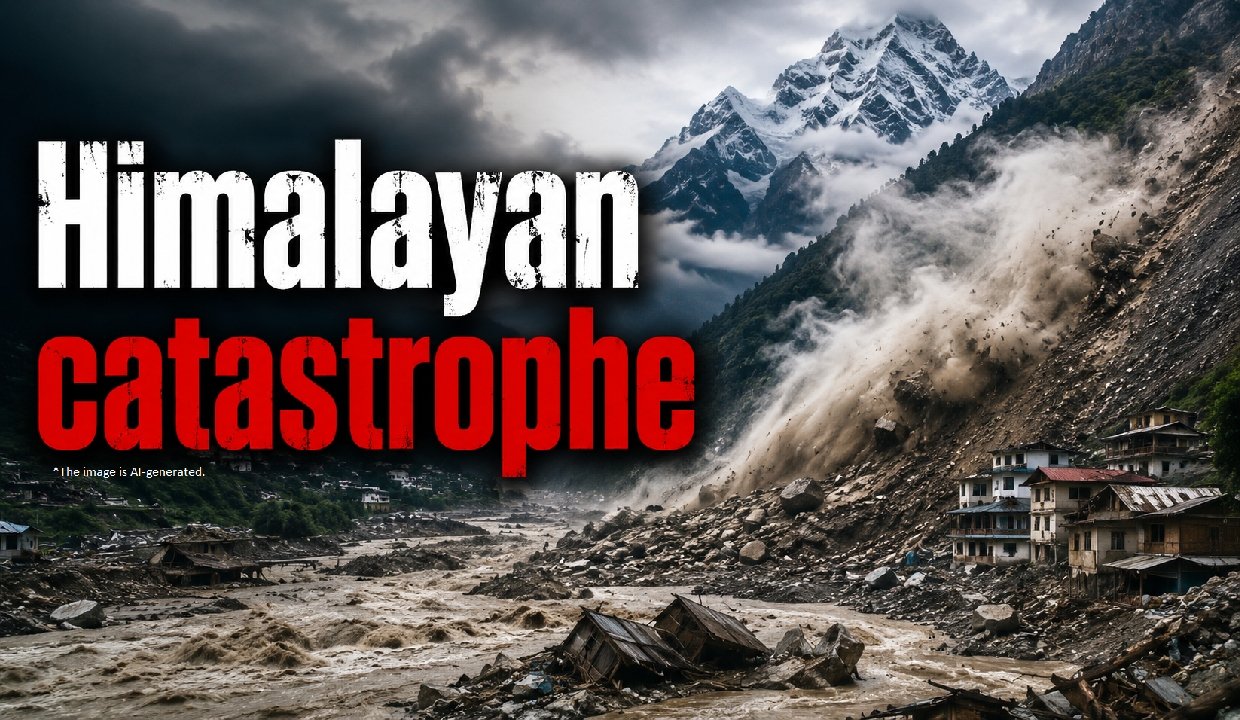

New Delhi: A devastating glacier-related flood catastrophe in the Himalayan region has once again exposed the extraordinary vulnerability of communities, infrastructure and economies across the mountains.The disaster, centred on the Nepal-Tibet Himalayan region, has killed more than 1,000 people and left thousands missing, according to the latest international reports. Rescue operations have been complicated by damaged roads, unstable terrain and the continuing threat of further flooding.For India, the tragedy carries a warning that cannot be ignored.The Himalayas are not merely a geographical boundary. They are home to millions of people and support major rivers, hydropower projects, tourism economies and strategically important infrastructure.The latest catastrophe has intensified concern over glacial instability and the growing frequency of extreme weather events in the region.
Scientists and international officials have repeatedly warned that rapid glacier melt can increase the risk of glacial lake outburst floods and other cascading disasters.The danger is particularly serious because Himalayan infrastructure has expanded rapidly.Roads, tunnels, bridges and hydropower projects are being built across terrain that is geologically young and naturally unstable. Development has brought connectivity and economic opportunities, but it has also increased the consequences when nature turns hostile.India has already experienced repeated disasters in Uttarakhand, Himachal Pradesh, Jammu and Kashmir and the northeastern states.
Landslides, cloudbursts, flash floods and infrastructure failures have repeatedly disrupted communities.The lesson from the latest Himalayan catastrophe is therefore not simply that extreme weather is becoming more dangerous. It is that disaster preparedness must evolve faster than infrastructure development.Early-warning systems, satellite monitoring, evacuation networks and stronger construction standards are no longer optional additions to Himalayan development.
They are fundamental requirements.The economic consequences are equally serious. Nepal’s hydropower infrastructure has suffered major damage, highlighting how a disaster in one Himalayan country can rapidly affect regional energy systems and connectivity.India itself has a major stake in the stability of the Himalayan region because its northern rivers and infrastructure networks are deeply connected to the mountains.
The question now facing policymakers is difficult: how should development proceed in a region where the physical environment itself is changing?The answer cannot simply be to stop development. Himalayan communities need roads, electricity, hospitals, telecommunications and employment.But development without geological and climate risk assessment can become a dangerous gamble.The latest disaster should therefore be treated as a regional wake-up call.The Himalayas are changing. The climate is changing. And the scale of infrastructure across the mountains is increasing.India cannot afford to wait for another tragedy before strengthening its defences.The mountains may be ancient, but the risks facing them are increasingly modern.