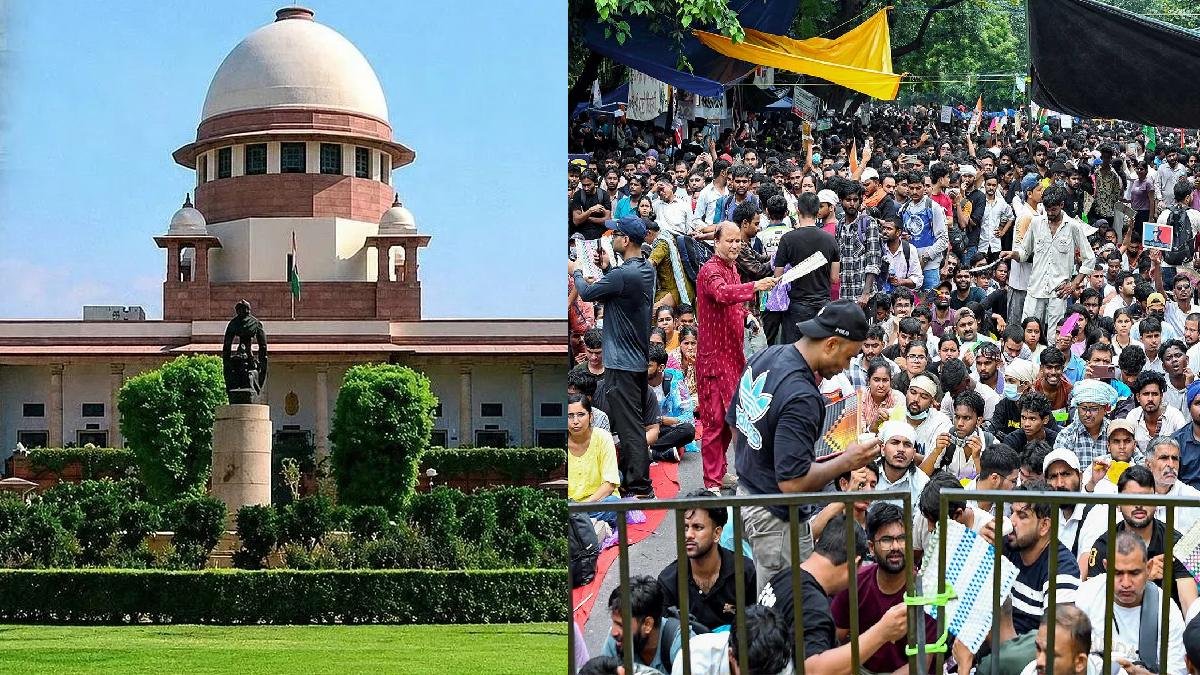

New Delhi: In a significant development for students involved in protests over the NEET controversy, the Supreme Court has ordered relief in cases filed against protesters, while also addressing the broader dispute surrounding demonstrations.The proceedings have brought the relationship between student protest, public order and constitutional rights back into national focus.According to reports from September 1, the court exercised its special powers under Article 142 in relation to FIRs connected with protests, while distinguishing cases involving allegations of damage or violence.The significance of the development extends beyond the immediate legal relief.For thousands of students and families, examinations such as NEET represent years of preparation, enormous financial investment and intense competition. Any controversy surrounding the examination system therefore has the potential to create widespread public anger.Student protests are often dismissed as temporary demonstrations.But for those participating, the issue can determine their academic future.The Supreme Court’s intervention has placed renewed attention on the need to balance two principles: the right of citizens to protest peacefully and the state’s responsibility to maintain public order.
That balance is particularly important when the protesters are students.A democratic society cannot treat every protest as a threat. At the same time, legitimate protest does not provide immunity for violence or destruction of property.The court’s approach, as reported, distinguishes between peaceful participation and allegations involving damage or violence.The development also comes amid broader concern over the credibility and fairness of competitive examinations in India.NEET has become one of the most consequential examinations in the country. A single examination determines access to medical education for a huge number of aspiring doctors.That makes transparency essential.Students need confidence that examination papers are secure, evaluation is fair and grievances will be heard through credible institutions.When that confidence disappears, protests become almost inevitable.
The government has a responsibility not merely to defend an examination system but to demonstrate that the system deserves public trust.The Supreme Court’s intervention provides immediate legal relief to affected protesters, but it cannot by itself resolve the deeper concerns surrounding competitive examinations.Those concerns require administrative reforms, stronger examination security, transparent investigations and clear accountability whenever irregularities are established.For students, the message from the court is significant: peaceful democratic expression cannot automatically become a criminal matter.For authorities, the message is equally important: maintaining public order and protecting democratic rights must go hand in hand.The NEET controversy has therefore evolved beyond an examination dispute.It has become a test of institutional trust.And for a generation of young Indians whose futures depend heavily on competitive examinations, that trust matters enormously.