

Mukesh Kaushik15 minutes ago

Despite the US strikes on Iran and the continuing Israel-Gaza conflict, Indians living overseas have not reduced the money they send home to their families. Instead, remittances reached a record high this year.
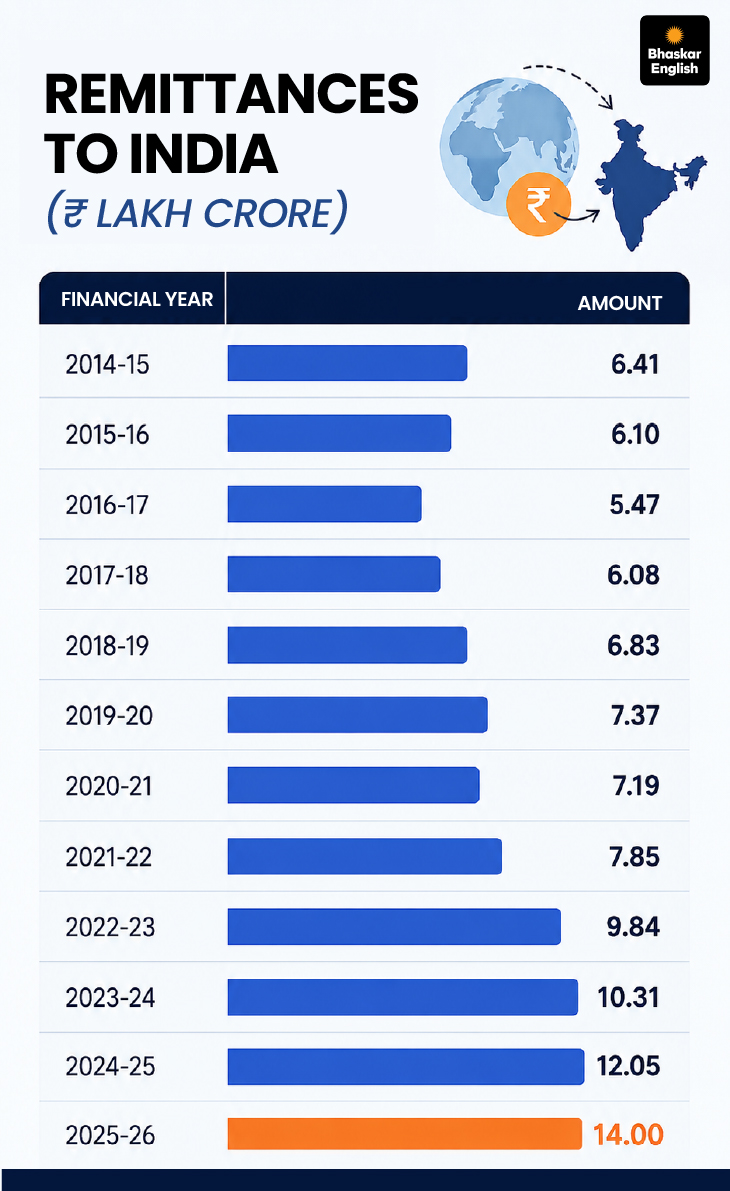
Citing the Finance Ministry’s Monthly Economic Review, the government informed the Lok Sabha that net private transfers to India are estimated to have risen to around ₹14 lakh crore (USD 144.8 billion) in 2025-26, up from around ₹12 lakh crore (USD 124.6 billion) in 2024-25. This means overseas Indians sent nearly ₹2 lakh crore more to their families despite the geopolitical uncertainty.
The figures come at a time when conflict in West Asia has fuelled concerns over oil prices, shipping routes and global investment. The government said remittance flows behave differently from other forms of capital inflows such as foreign direct investment (FDI), foreign portfolio investment (FPI) and external borrowings.
Official data show that remittances to India have increased by around ₹7.7 lakh crore (USD 79 billion) over the past 12 years.
Why remittances have remained resilient
According to experts, three key factors have helped sustain remittance flows despite regional instability:
- Stable employment: Most Indians in Gulf countries work in construction, oil and gas, and the services sector. As long as employment remains intact, their ability to send money home is largely unaffected.
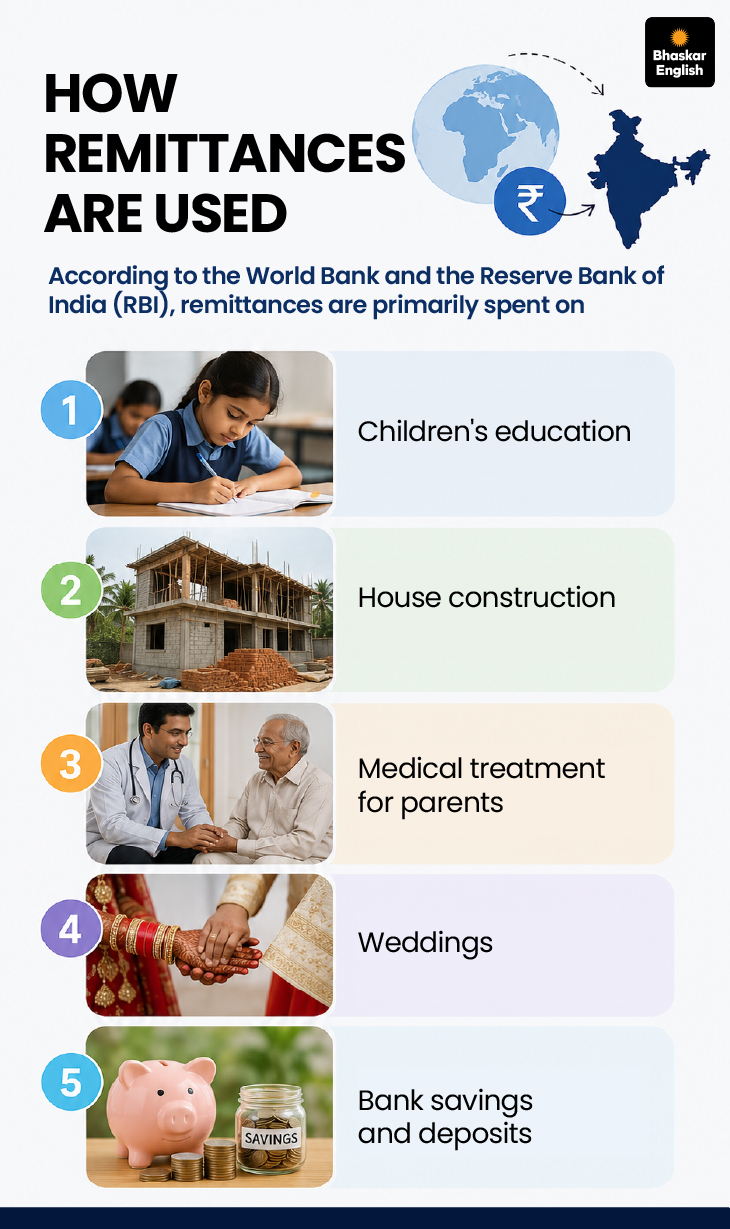
- Family commitments: Remittances are primarily intended to support families rather than for investment purposes, making them less sensitive to geopolitical shocks.
- Long-term diaspora ties: Indian communities in the Gulf have been established for decades, and conflicts generally do not have an immediate impact on labour markets.
India remains the world’s largest remittance recipient
India continues to be the world’s largest recipient of remittances. A significant share comes from Gulf nations, particularly the United Arab Emirates, Saudi Arabia, Qatar, Kuwait, Oman and Bahrain. Indian diaspora communities in the United States, the United Kingdom, Canada and Australia also contribute substantially.
Why remittances matter
Remittances play a vital role in the Indian economy by helping reduce the trade deficit, supporting foreign exchange reserves and easing pressure on the rupee. The profile of remittance senders has also evolved over time. While earlier the bulk of remittances came from blue-collar workers, an increasing share now comes from highly skilled professionals working abroad.
Outward remittances decline
Meanwhile, outward remittances under the Reserve Bank of India’s Liberalised Remittance Scheme (LRS) fell to around ₹19,800 crore in April 2026, a decline of 7.85% compared with April 2025.
The steepest decline in outward remittances was seen in donations, which fell by 47.8%, followed by money sent for medical treatment abroad, down 33.7%, and overseas education, which declined by 17.6%.
Spending on overseas travel also fell by 8.9%, while money sent abroad for the maintenance of relatives declined by 17.4%.