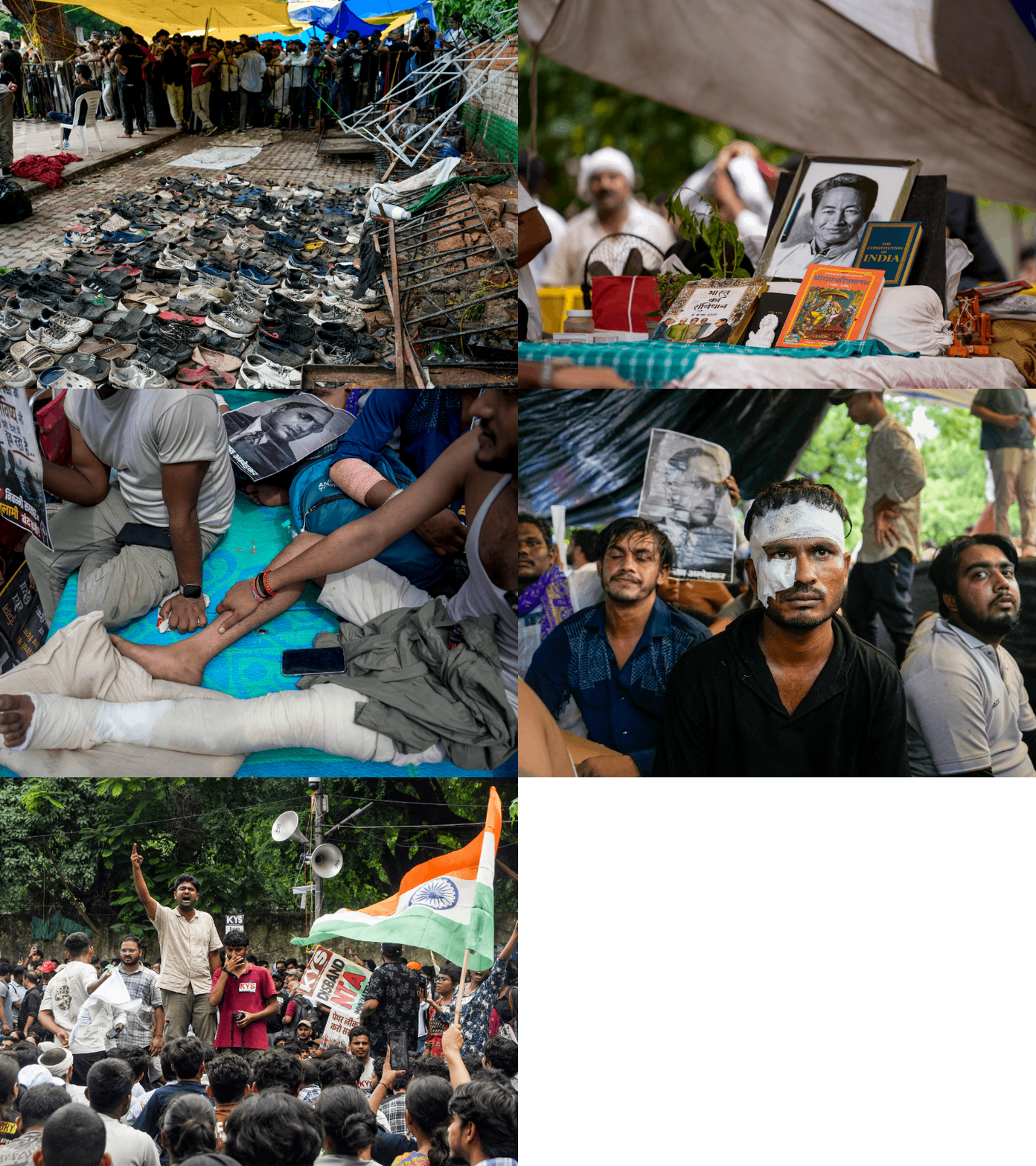

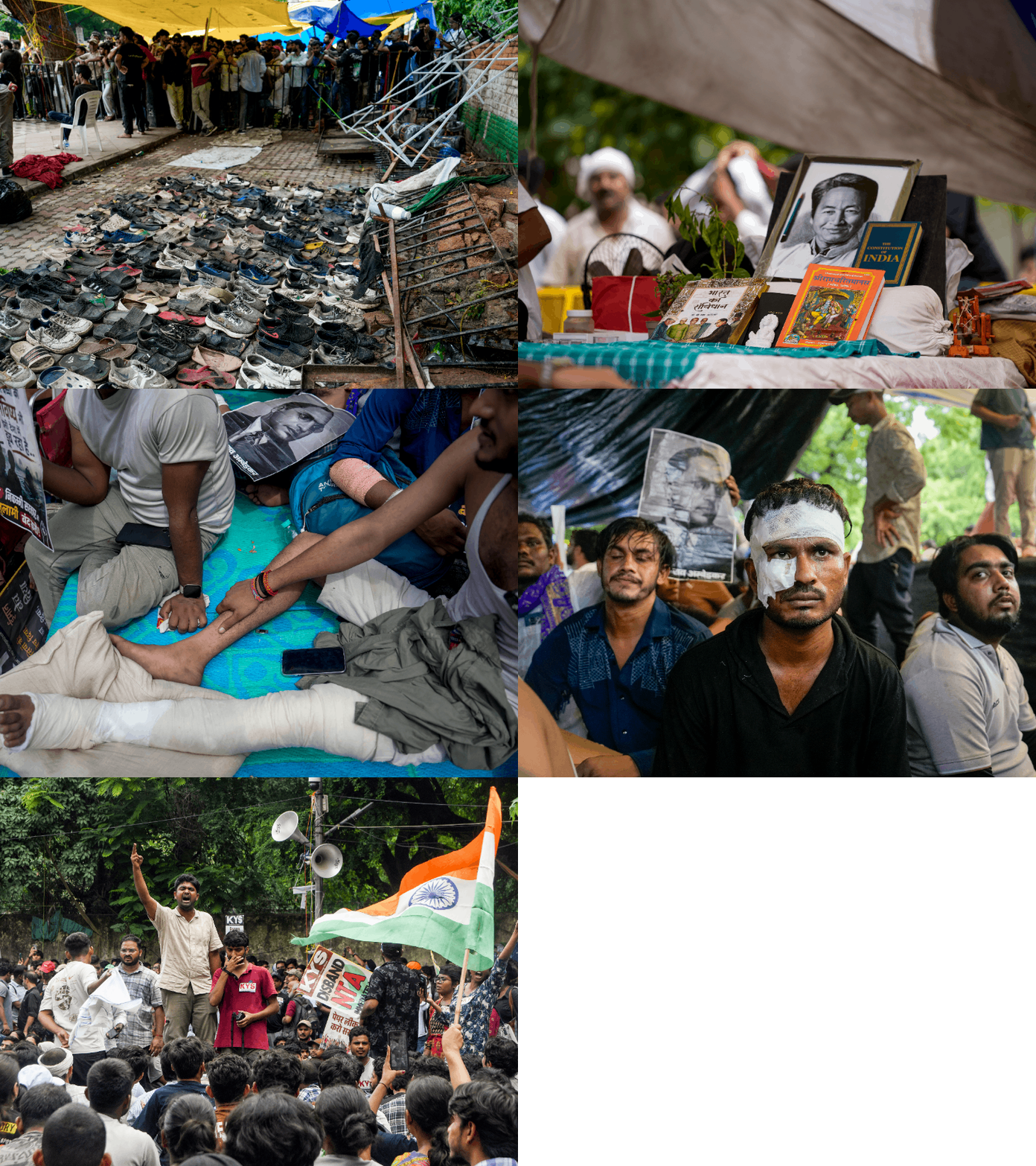
Picture is from July 21, it was claimed that more than 100 protesters were injured in police lathi-charge
The central government has told the Supreme Court that no legal action will be taken against students protesting the NEET paper leak. Solicitor General Tushar Mehta said on Monday, “The government stands by its promise. There will be no FIRs against the students.”
Mehta also said that the FIRs registered against more than 2,700 people for serious crimes during the protests will not be withdrawn.
The Cockroach Janata Party (CJP) protested this issue at Jantar Mantar in Delhi. They had three demands, which the government accepted. One of these demands was that the government would not take any legal action against the protesters. The case will now be heard on August 18th.
Court says: Don’t shield officers accused of using excessive force
The Supreme Court on Monday heard petitions alleging police brutality during the 20 July Parliament march over the NEET paper leak and examination irregularities.
Senior advocate Vrinda Grover asked whether the FIRs registered against the protesters would be withdrawn or quashed. Solicitor General Tushar Mehta responded that the government stood by its commitment, irrespective of the legal course adopted.
Chief Justice of India Surya Kant observed that police officers who use excessive force should not receive unwarranted protection. At the same time, he said that individuals accused of serious criminal offences should not be shielded under the guise of participating in a student protest.
The Cockroach Janata Party (CJP) led a 36-day protest against alleged examination irregularities and the NEET paper leak. The agitation was called off on 25 July following the resignation of Dharmendra Pradhan.
Court’s focus on 2 issues…
- The bench is also considering whether to constitute a Special Investigation Team (SIT), headed by a former Supreme Court judge, to probe allegations of police brutality and pellet gun injuries.
- It is also expected to examine whether attacks on police personnel were carried out by student protesters or by alleged miscreants who infiltrated the demonstration.
At previous hearing, SC said those without criminal records should not be detained
At the previous hearing on July 28, the Supreme Court restrained states from taking any coercive action against the protesters. The court also said that those below 18 years of age with no criminal record should be released.
The court issued notices to the governments of Maharashtra, Bihar, Assam, Uttar Pradesh, Madhya Pradesh, West Bengal and Kerala, and directed their Advocates General to appear virtually on the next date of hearing.
It also ordered authorities in the states where protests took place to preserve CCTV footage, drone recordings, body-camera footage, wireless communication records, PCR logs and other digital evidence related to the demonstrations.
Lathicharge during Parliament march on July 20
On July 20, clashes broke out between protesters of the Cockroach Janta Party and security personnel during the Parliament march in Delhi. Security forces used baton charge and fired tear gas shells to disperse the crowd as it attempted to march towards Parliament.
The protesters were demanding the resignation of Union Education Minister Dharmendra Pradhan over the NEET paper leak. The agitation ended on July 25 after Pradhan resigned and the government agreed to provide compensation to the families of students who had lost their lives.
2 pictures from the Parliament march on July 20…
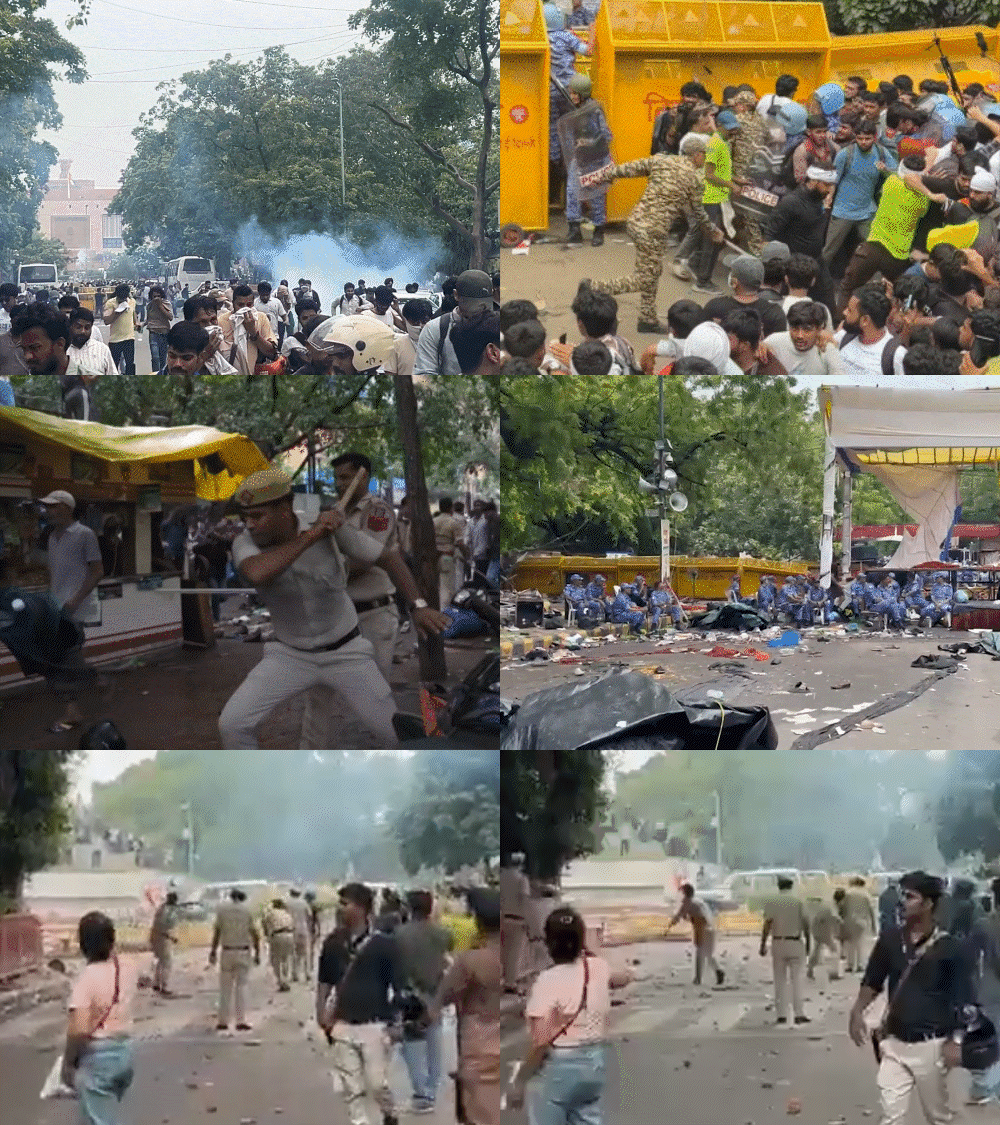
Police-Rapid Action Force lathicharged, fired tear gas shells, stone pelting also occurred.
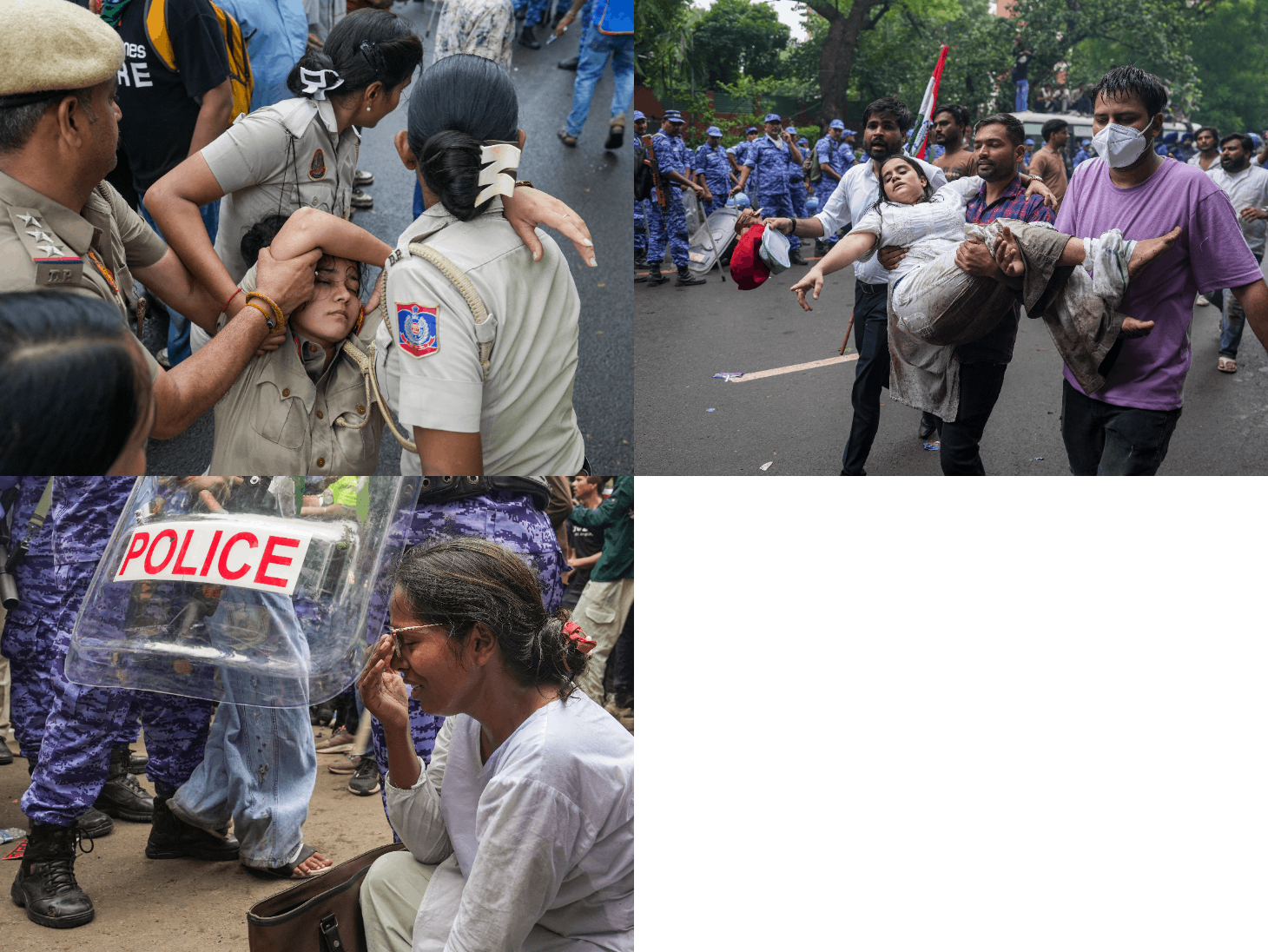
During this, police and protesters were injured. More than 100 people sustained injuries.
Plea in Supreme Court challenges use of facial recognition during protest
A Rajya Sabha MP has moved the Supreme Court challenging the Delhi Police’s use of Facial Recognition Technology (FRT) and other forms of biometric surveillance during the protest.
A.A. Rahim, Rajya Sabha MP from Kerala representing the Communist Party of India (Marxist), has sought a declaration that the indiscriminate use of biometric surveillance at peaceful public gatherings is unconstitutional.
Petition related to Cockroach Janta Party reached Supreme Court three times before
1. First hearing – May 24 | Demand: CBI probe into those behind the formation of CJP
Petitioner’s counsel N.K. Goswami alleged that the Cockroach Janta Party (CJP) was tarnishing the judiciary’s image and sought a CBI investigation into those who created the organisation. However, the Supreme Court refused an urgent hearing.
A bench of CJI Surya Kant, Justice Joymalya Bagchi and Justice Vipul Pancholi remarked, “Don’t take it so emotionally.”
The petition also sought action against the commercialisation of oral observations made by judges during court proceedings. Responding to this, the CJI said, “There is no such serious emergency at present. Let’s see what happens.”
2. Second hearing – July 22 | Demand: Probe into lathicharge on CJP supporters
A lawyer filed a public interest litigation before a three-judge bench headed by the CJI, seeking an investigation into the alleged lathicharge on Cockroach Janta Party supporters.
During the hearing, the petitioner’s counsel said students were raising important issues and that videos allegedly showed police brutality against them, urging the court to hear the matter urgently.
CJI Surya Kant responded, “We are not interested in videos; we don’t have time to watch them.” When the lawyer again requested the court to view videos of students being beaten, the CJI said, “Don’t waste our and your time.”
3. Third hearing – July 24 | Demand: Urgent hearing on police violence petitions
Senior Advocate Gopal Shankarnarayan informed the court that two petitions alleging police violence against protesters had been filed and that several states had been made parties. He said the matters had not been mentioned earlier because the petitioners were waiting for diary numbers.
After hearing the submissions, the CJI said, “Let it come to listing, we will hear it.”
Earlier, while hearing another matter, the CJI had clarified that he had not refused to hear any petition related to the lathicharge during the CJP protest. He said, “The truth is that no writ petition was filed at all. The media also ran false news.”