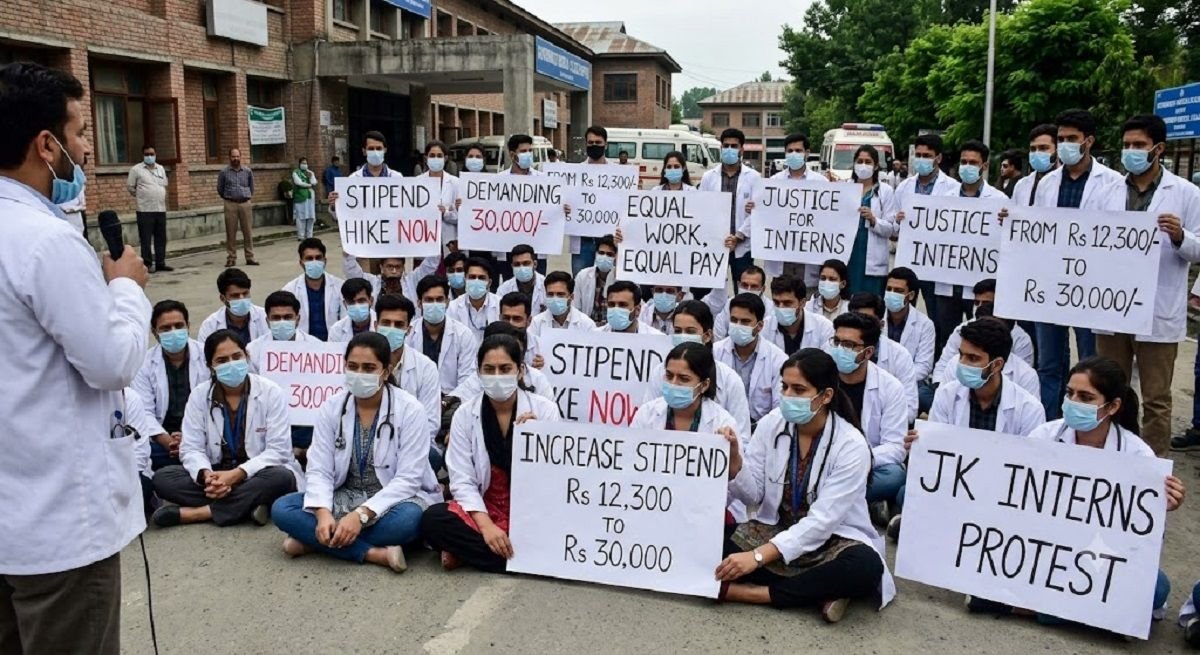

Medical interns in Jammu and Kashmir have received a significant financial boost after the administration announced an increase in their monthly stipend from Rs 12,300 to Rs 25,000. The decision addresses a longstanding demand among medical graduates who undertake supervised clinical training before moving further into their professional careers.
According to reports published on October 22, 2026, the revised stipend applies to MBBS and BDS interns, including foreign medical graduates covered by the order. The increase is effective from October 1, 2026, according to the Chief Minister’s Office.
Medical Intern Stipend Increased
Under the revised arrangement, the monthly stipend has increased by Rs 12,700, moving from Rs 12,300 to Rs 25,000. This represents an increase of more than 100 per cent compared with the earlier amount.
The decision follows an agitation by medical interns seeking better financial support. Reports indicated that the previous stipend had remained unchanged since 2019, prompting concerns about whether the payment adequately reflected the demands placed on trainees.
The increase is an important development for young healthcare professionals who must complete internship requirements as part of their medical training. During this period, interns work under supervision in clinical settings and gain practical experience across different departments. Although internship is a training stage, it can involve demanding schedules, patient-care responsibilities and significant time commitments. A monthly stipend helps interns manage everyday expenses while continuing their professional education.
Why Medical Internships Matter
An MBBS internship allows medical graduates to apply their academic learning in real healthcare settings. Under supervision, interns develop practical skills, interact with patients and understand how hospitals manage diagnosis, treatment and emergency care. Dental graduates completing BDS internships also require practical clinical experience. Their training involves developing professional skills, understanding patient management and working within established clinical procedures. Internships are therefore an important bridge between classroom learning and independent professional practice.
The quality of supervision, access to clinical experience and working conditions can influence how effectively graduates develop their skills. Financial support is one part of this wider system. Adequate stipends can help trainees manage travel, food, accommodation and other basic expenses, particularly when their schedules leave limited time for additional work. However, the stipend is not a substitute for proper training, suitable working conditions or access to necessary facilities. Medical institutions must continue to ensure that interns receive meaningful supervision and the learning opportunities required for professional development.
Financial Pressure on Young Doctors
The cost of living can be a significant concern for medical graduates beginning their careers. Interns may need to travel to hospitals regularly, arrange accommodation near their institutions and cover everyday expenses during a demanding training period. Those posted away from their family homes may face additional costs. Financial pressure can become more difficult to manage when working hours are long and opportunities for other paid work are limited.
An increase in the monthly stipend can provide greater financial stability and reduce some of these difficulties. The impact will vary according to an individual’s circumstances, location and living expenses. The revised amount may also contribute to a wider discussion about how medical trainees are supported across different states and institutions in India. Stipend policies vary, making comparisons between regions an important part of debates over training conditions.
A Response to Interns’ Demands
The announcement follows demands raised by medical interns in Jammu and Kashmir. Such representations are often linked to the difference between the responsibilities associated with hospital training and the financial assistance provided during the internship period. The administration’s decision demonstrates how sustained representations by trainees can bring attention to employment conditions within medical education.
At the same time, the implementation of the revised stipend will be important. Eligible interns will need clear information about payment procedures, the effective date and how any applicable arrears will be handled. The reported effective date of October 1, 2026, means that the administrative arrangements for the revised payments will be an important aspect of the decision’s implementation. Further details should be confirmed through official notifications or institutional communications.
Implications for Medical Education in India
Medical education requires substantial investment from students, families and institutions. Beyond tuition fees, trainees may face expenses related to accommodation, study materials, transport and professional examinations. Financial support during internships can help ease some of these pressures, especially for graduates who have not yet begun earning a full professional salary.
However, improvements in medical education require a broader approach. Hospitals need adequate staff, proper training facilities, appropriate supervision and systems that protect both patients and trainees. The stipend increase is therefore a positive development within a larger discussion about the conditions in which young doctors and dental professionals begin their careers.
What the Decision Means for Interns
The revised monthly stipend of Rs 25,000 offers eligible medical and dental interns in Jammu and Kashmir increased financial support during their training period. It also reflects the administration’s response to a demand that had gained attention through protests. The next priority will be ensuring that the revised payments are implemented correctly and that interns receive clear guidance from their institutions.
For young healthcare professionals, improved financial support can make the internship period more manageable. For the healthcare system, supporting trainees appropriately remains an important part of developing a capable and well-prepared medical workforce.