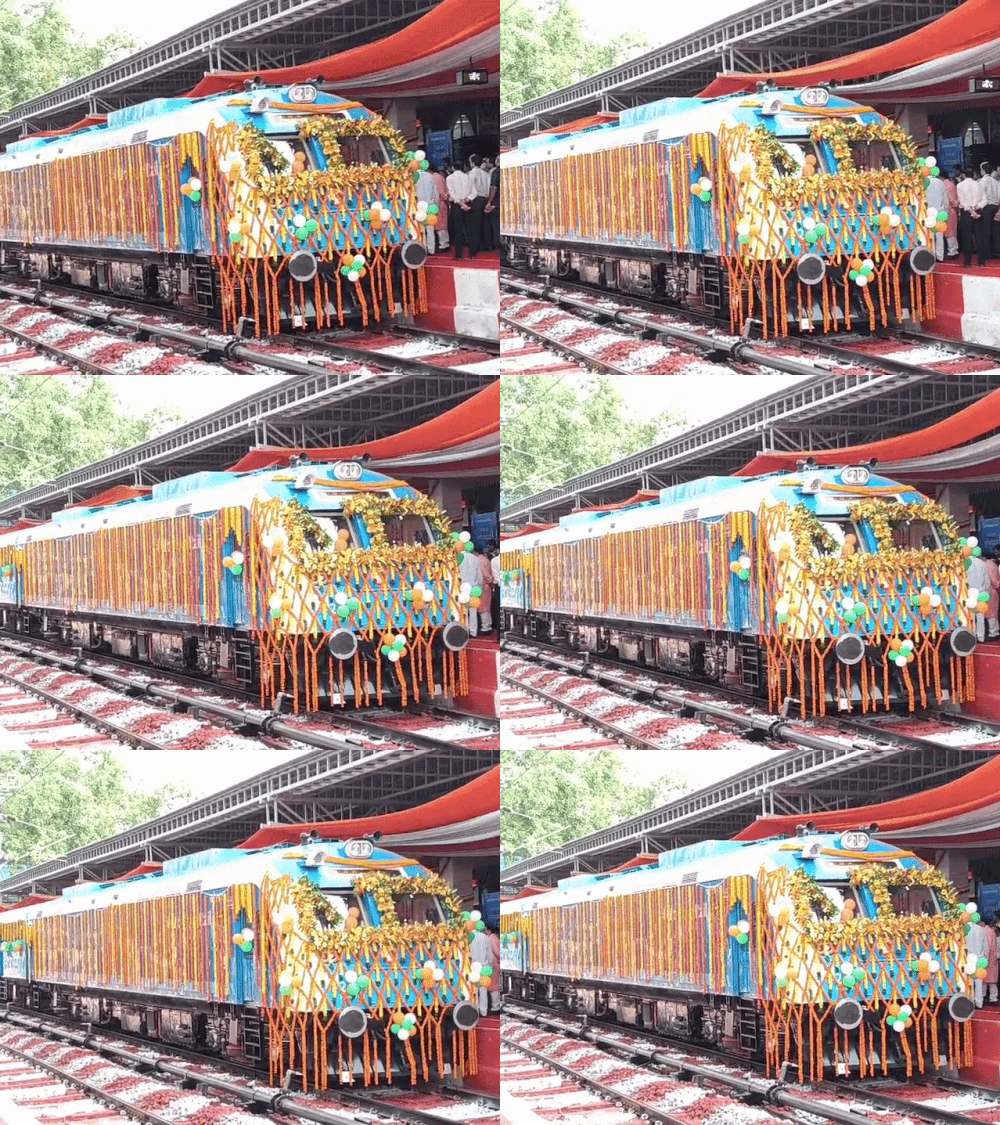

Q: Why was the Jind–Sonipat route chosen for India’s first hydrogen train?
A: There are two main reasons:
Low traffic: Only about eight trains operate on this route daily, making it suitable for pilot operations.
Close to Delhi: Jind is around 145 km from Delhi, making it easier for railway officials to monitor the project, provide technical support and conduct trial runs.
The route is also a non-electrified broad-gauge line, making it an ideal test corridor for hydrogen-powered trains.
Q: How does a hydrogen train work?
A: A hydrogen train works like a small power plant on wheels.
Hydrogen gas is converted into electricity through fuel cells, and that electricity powers the train’s motors instead of using diesel.
Q: How far can the train travel on one kilogram of hydrogen?
A: Indian Railways has not officially released this data yet.
However, according to The Indian Express, the train will make two round trips daily, covering about 356 km while consuming an estimated 300 kg of hydrogen.
Based on these estimates, the train would travel approximately 1.2 km per kilogram of hydrogen.
Q: How is hydrogen produced?
A: Water (H₂O) is made up of hydrogen and oxygen.
Hydrogen is produced by using electricity to split water into hydrogen and oxygen through a process called electrolysis.
Q: What are the different types of hydrogen? Which one will power India’s first train?
A: Hydrogen is generally classified into three types:
Green Hydrogen: Produced using renewable energy such as solar or wind power. It generates almost zero carbon emissions.
Grey Hydrogen: Produced from natural gas (methane). Its production releases significant amounts of carbon dioxide (CO₂).
Blue Hydrogen: Also produced from natural gas, but the CO₂ emissions are captured and stored to reduce environmental impact.
According to the Press Information Bureau (PIB), India’s first hydrogen train will run on green hydrogen.
A green hydrogen production plant has been set up in Jind, Haryana, to supply fuel for the project.
Q: If hydrogen returns less electricity than is used to produce it, what is its advantage?
A: Green hydrogen does not return all the electricity used to produce it because some energy is lost during hydrogen production and when it is converted back into electricity.
For this reason, scientists consider hydrogen an energy carrier rather than an energy source.
For example, when solar panels or wind farms generate excess electricity during sunny or windy periods, the surplus power can be used to produce green hydrogen. The hydrogen stores that energy and can later be converted back into electricity through fuel cells to power trains when needed.
Q: Will hydrogen trains operate on other routes in India?
A: Yes.
Under the government’s “Hydrogen for Heritage” initiative, Indian Railways plans to introduce 35 hydrogen-powered trains on heritage and hill routes across the country.
These trains are expected to be particularly useful on routes where extending overhead electric lines is difficult or not economically viable.