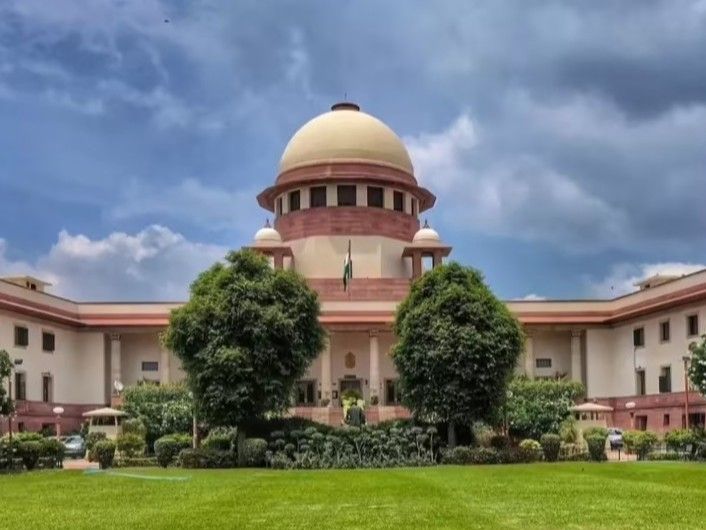

The Supreme Court on Friday said it would “very closely monitor” the Centre’s efforts to reform the National Testing Agency (NTA) and prevent future NEET paper leaks, stressing that lasting institutional safeguards, not temporary fixes, are essential to restore confidence in India’s largest medical entrance examination.
Hearing a batch of petitions filed by the United Doctors Front (UDF) and the Federation of All India Medical Associations (FAIMA), a Bench of Justices PS Narasimha and Alok Aradhe said the focus must shift from crisis management to building a robust and permanent examination framework.
The case stems from the cancellation of NEET-UG 2026, conducted on May 3, following allegations of a widespread paper leak that reignited concerns over the credibility of the examination system. The controversy prompted the Centre to constitute the Radhakrishnan Committee to recommend structural reforms to the NTA and the examination process.
Court seeks permanent institutional safeguards
Solicitor General Tushar Mehta, appearing for the Centre, told the court that the government had made progress on implementing reforms and sought additional time to place a comprehensive roadmap before the Bench.
“There is some progress. I request a few more days so that we can present a holistic view,” Mehta submitted.
Justice Narasimha made it clear that the court was looking beyond immediate corrective measures.
“We will very closely monitor this so that complete institutionalisation takes place. We can’t let this continue,” the Bench observed.
The court emphasised that the matter would not be treated as a one-time exercise and indicated that it would continue reviewing the reform process throughout the year.
‘Ad hocism has troubled us for years’
During the hearing, Mehta said the Centre would explain every stage of the examination process—from the printing of question papers to their secure delivery to candidates.
“We will explain right from the printing press till the time the student gets the paper. For children, there cannot be any adversarial response,” he said.
Referring to the extraordinary security measures adopted after previous paper leak incidents, Justice Narasimha noted that such arrangements could not become permanent solutions.
The Bench observed that the government had even deployed the Indian Air Force to transport question papers to prevent leaks.
“You deployed the Air Force, but that is ad hoc. Ad hocism has troubled us for years,” Justice Narasimha remarked.
The court said the objective should be to institutionalise safeguards so that extraordinary interventions are no longer required.
Centre asked to submit detailed reform roadmap
The Supreme Court directed the Centre to file a comprehensive affidavit outlining its proposed reforms across the entire examination ecosystem.
The affidavit must include details on:
- The structure of the proposed governing board.
- Transparency and accountability mechanisms.
- Participation of stakeholders.
- Appointment of domain experts across operational verticals.
- Collaboration with institutions such as the IITs.
- Reforms covering pre-examination planning, examination conduct and post-examination processes.
The Bench also sought clarity on issues such as the composition of state and district-level examination bodies, secure printing and transportation of question papers, the feasibility of conducting examinations in multiple sessions and post-examination safeguards.
Court seeks clarity on computer-based testing
The Bench also asked the Centre to explain its proposal for transitioning NEET to a computer-based test (CBT).
“Tell us the proposal, the cybersecurity and how it is to be conducted,” Justice Narasimha said.
The court stressed that any move towards digitisation must be accompanied by robust cybersecurity safeguards.
“If you digitise it, how will you secure it?” the Bench asked, directing the Centre to explain how examination data and digital infrastructure would be protected against cyber threats.
Appearing for the petitioners, Advocate Tanvi Dubey also urged the court to seek a detailed standard operating procedure (SOP) for implementing CBT and submitted suggestions on how the transition could be carried out.
Centre says reforms go beyond committee recommendations
Mehta assured the court that the government was implementing reforms beyond those recommended by the Radhakrishnan Committee and that the exercise was being supervised at the highest level.
“The government is going ten extra miles. Everything is being supervised at the highest executive level,” he submitted.
He added that the Centre would readily consider any additional suggestions made by the court.
The Solicitor General also informed the Bench that the recommendations of the Radhakrishnan Committee had been accepted.
Petitions seek overhaul of NTA
The petitions before the court seek structural changes to India’s examination system.
The FAIMA petition seeks the restructuring or replacement of the NTA and advocates measures such as digital locking of question papers, a transition to CBT and publication of centre-wise results to identify anomalies.
A separate petition filed by the United Doctors Front, through advocates Ritu Reniwal and Charu Mathur, seeks the creation of a statutory national testing body with greater oversight and parliamentary accountability.
Another plea filed by RJD MP Sudhakar Singh, social activist Anubhav Garg, IMA national spokesperson Dhruv Chauhan and political leader Harisharan Devgan also seeks replacement of the NTA with an independent examination authority and adoption of a CBT model.
The Supreme Court recalled that NEET-UG 2024 was also marred by allegations of a paper leak. While the court declined to order a re-examination after accepting the NTA’s submission that the leak was not widespread, it directed the Centre to constitute a seven-member expert committee to recommend systemic reforms.
The matter will now be heard on July 27, by which time the Centre is expected to file its affidavit detailing the reforms and safeguards proposed to prevent future NEET paper leaks.