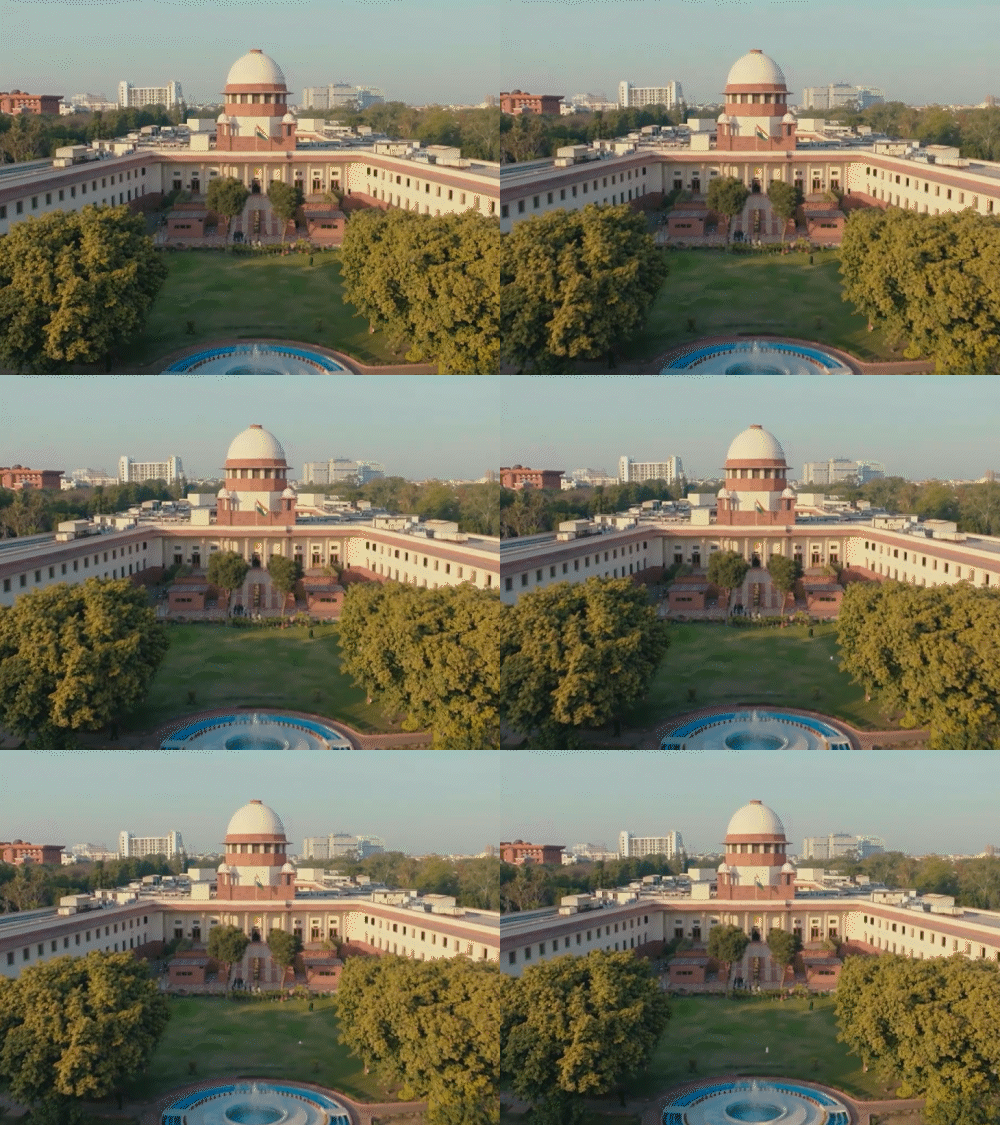

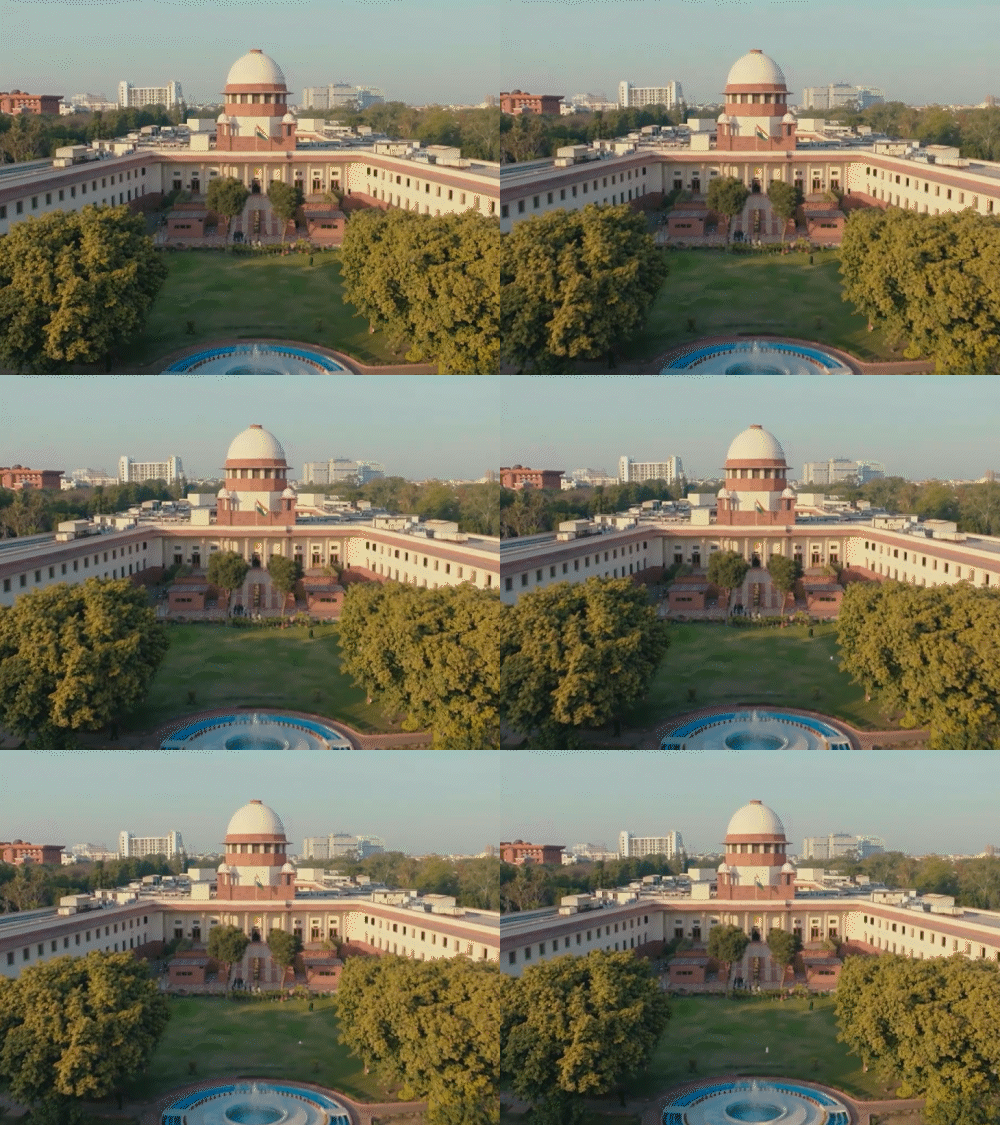
The Supreme Court has prohibited the posting of audio and video recordings of court proceedings on social media and other digital platforms without prior permission. However, it clarified that the interim order will not affect fair and accurate news reporting.
A Bench comprising Chief Justice of India Surya Kant, Justice Joymalya Bagchi and Justice V. Mohana passed the interim order while hearing a public interest litigation filed by journalist Harshita Grover seeking a ban on the live streaming and unauthorised sharing of court proceedings.
The Court said that extracting, modifying, transmitting, monetising, posting, reposting or uploading audio and video recordings of judicial proceedings without prior permission from the Secretary General of the Supreme Court or the Registrar General of the concerned High Court will remain prohibited.
Petitioner says live-streaming is being misused
Appearing for petitioner Harshita Grover, Senior Advocate Vikas Singh argued that the purpose of live streaming and video conferencing of court proceedings is to promote transparency and improve public access to the judicial process. However, he said the facility is increasingly being misused.
Singh told the Court that short excerpts from lengthy hearings are often taken out of context and made viral on social media. He said these clips are frequently accompanied by misleading captions and sensational comments, creating a distorted impression of the court proceedings and misleading the public.
CJI says he too faced misreporting
Chief Justice of India Surya Kant said he had personally experienced the misuse of court proceedings, recalling that some of his remarks had recently been reported inaccurately. Referring to a recent case, he said no petition had been filed by 10 am, yet media reports claimed that he had refused to hear the matter.
The observations came during the hearing of a public interest litigation expressing concern over the monetisation and misuse of court proceedings on social media. The petition argued that short, selectively edited clips from hearings are circulated with misleading captions, harming the reputation of judges and lawyers while generating online revenue.
The Supreme Court issued notices to the Central Government, the Bar Council of India, Meta, X and other social media platforms, making them parties to the case.
When Senior Advocate Vikas Singh sought an interim order, the Bench observed that “the genie that has come out of the bottle cannot be completely stopped,” but emphasised that the dignity of the judiciary must be protected.