
The Supreme Court on Wednesday raised concerns over the Central Board of Secondary Education’s (CBSE) decision to introduce the mandatory three-language policy from Class 9, with Justice B V Nagarathna observing that students at this stage already face significant academic pressure.
Hearing petitions challenging the policy, Justice Nagarathna remarked that Class 9 is a stressful phase for students and questioned the rationale behind introducing an additional language at this level.
She suggested that if multilingual education is the objective, such learning should ideally begin in the primary years rather than just before board examinations.
Court seeks centre’s response
The observations came during proceedings on petitions filed by students, parents and teachers challenging the CBSE circular issued on May 15.
The petitioners argued that the revised framework compels students to study two Indian languages, forcing many to abandon foreign languages such as French or German that they have studied since Class 5.
Senior advocates appearing for the petitioners contended that schools lack qualified teachers and textbooks for several Indian languages. They also warned that the abrupt policy shift could increase academic stress and affect the careers of foreign-language teachers.
The Supreme Court has sought responses from the Centre, CBSE and the National Council of Educational Research and Training (NCERT), while continuing to hear the matter.
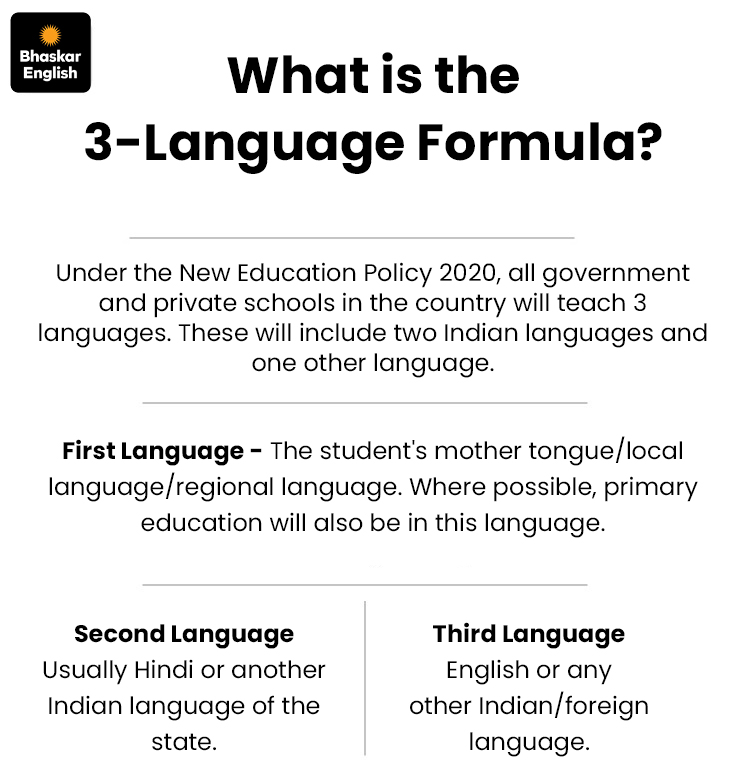
NEP 2020 was introduced after 34 years
The CBSE issued the circular implementing the three-language policy on May 15 for the 2026-27 academic session.
The decision was challenged in the Supreme Court by a group of 19 students, parents and teachers, who argued that it contradicted the board’s earlier clarification issued on April 9, which had stated that the revised third-language rule would not apply to Class 9 students until the 2029-30 academic session.
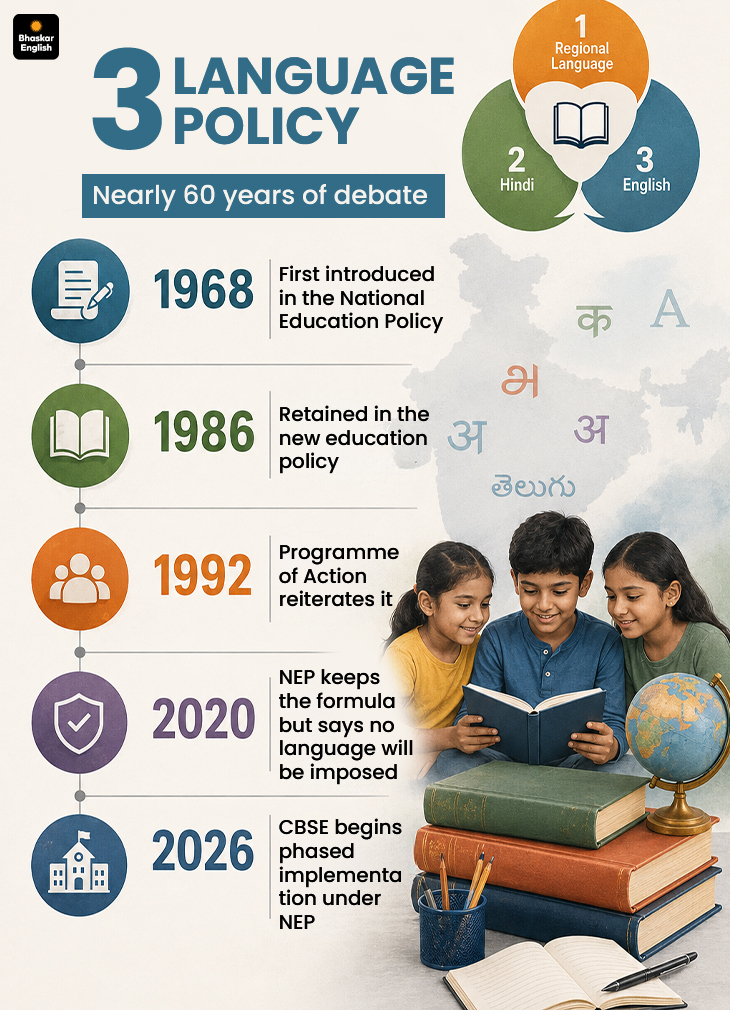
The three-language policy forms part of the National Education Policy (NEP) 2020, approved by the Union government on July 29, 2020.
It marked the first major overhaul of India’s education policy in 34 years, replacing the policy introduced in 1986 and revised in 1992.
The Centre aims to implement NEP 2020 across the country by 2030. However, as education falls under the Concurrent List of the Constitution, states are not legally bound to adopt every provision, leaving room for variations in implementation.