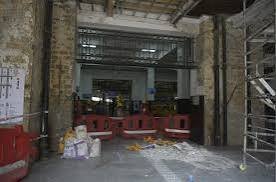

Two passengers were injured after a portion of the ceiling collapsed near the booking hall entrance at Mumbai’s Chhatrapati Shivaji Maharaj Terminus (CSMT) on Thursday night, October 22, 2026. The incident took place amid ongoing redevelopment work at the busy railway station and raised concerns about passenger safety in areas where construction activities are underway.
Central Railway officials said the incident occurred at approximately 10:05 pm. The affected section was associated with work being carried out by the Rail Land Development Authority (RLDA). Both injured passengers were taken to St George’s Hospital for medical treatment.
What Happened at Mumbai CSMT
The ceiling section fell near the booking hall entrance at Chhatrapati Shivaji Maharaj Terminus, one of Mumbai’s major railway stations. The station serves suburban and long-distance passengers and is an important transport hub for the city. Large numbers of commuters use the terminal every day to travel to work, educational institutions and other destinations. According to reports citing Central Railway officials, the collapse occurred in an area where redevelopment-related work was underway.
The circumstances that caused the ceiling section to fall had not been established in the initial reports. The incident should therefore not be attributed to a specific construction error or structural defect without the findings of an official investigation. The immediate concern was the safety of the injured passengers and the condition of the affected section of the station.
Two Passengers Taken to St George’s Hospital
The injured passengers were identified as Vinayak Balu Hatkar, 28, and Ayan Naushad Matwankar, 24. According to details reported by ThePrint, Hatkar sustained a laceration on the right side of his scalp that required suturing. Matwankar suffered an injury near his left eyelid, abrasions around his shoulder and neck, and pain and swelling in his right ankle. Both passengers were taken to the casualty department at St George’s Hospital, where they received medical attention.
Further clinical assessment was reported to be underway. The incident highlights the risks that can arise when repair or redevelopment activities take place in operational public spaces. Even a relatively small section of falling material can cause injuries when it falls in an area used by passengers. Appropriate barriers, inspection procedures and clear separation between work areas and public access points are important safety measures.
Redevelopment Work at a Heritage Railway Station
CSMT is a major transport landmark in Mumbai and is recognised as a UNESCO World Heritage Site.
Redevelopment work at large railway stations is intended to improve passenger facilities, upgrade infrastructure and support the growing demands of urban transport. Such projects can involve repairs, construction, changes to passenger circulation areas and improvements to station facilities. When work takes place while a station remains operational, planning must account for the continuous movement of commuters.
Construction safety is particularly important at stations with high passenger volumes. Workers and contractors need to follow approved procedures, while railway authorities must ensure that passengers are protected from hazards. The CSMT incident has brought renewed attention to the need for careful supervision during redevelopment projects. The investigation will be important in establishing the exact circumstances of the collapse and whether additional precautions are necessary.
Safety Measures Needed During Station Construction
Railway stations are complex public environments where maintenance and construction work must be coordinated with passenger movement. Temporary barriers can help keep commuters away from areas where work is underway. Warning signs, controlled access routes and protective coverings may also reduce the risk of injuries from falling materials or construction equipment. Regular inspections can help identify loose fixtures, damaged surfaces and other hazards before they become dangerous.
Contractors and project supervisors should also ensure that work areas are secured when activities stop and that materials are stored safely. Where necessary, passenger movement may need to be redirected away from sections under repair. These precautions are especially important near ticket counters, entrances, footbridges and other areas where large numbers of people gather. The appropriate response depends on the specific site conditions and the results of engineering assessments. The cause of the CSMT incident remains a matter for official examination.
Public Transport Infrastructure and Passenger Confidence
Mumbai’s railway network plays a central role in the city’s daily life. Many residents depend on trains because they offer an essential connection between residential areas, workplaces and commercial districts. Incidents involving station infrastructure can therefore affect public confidence, particularly when they occur in busy passenger areas. Reliable public transport requires more than train operations and timetable management. Buildings, platforms, entrances, ticketing areas and passenger walkways also need regular maintenance.
Redevelopment programmes can improve the travel experience, but their implementation must include clear safety arrangements throughout the construction period. Authorities need to communicate important restrictions to passengers and respond promptly when an incident occurs. Transparent reporting of inspection findings can also help the public understand the steps being taken to address safety concerns.
Investigation and Further Updates
The cause of the ceiling collapse had not been confirmed in the initial reports published on October 23. The outcome of any structural inspection, the findings of the railway authorities and further information about the affected area should be verified through official updates before publication as established facts.
The incident serves as a reminder that safety must remain a priority during railway redevelopment work, especially in stations that continue to handle large numbers of passengers.
For Mumbai commuters, the key concern is ensuring that station improvements proceed without exposing passengers to avoidable risks. Careful inspection, effective site management and clear accountability will be important in maintaining public safety at CSMT and other busy railway stations.