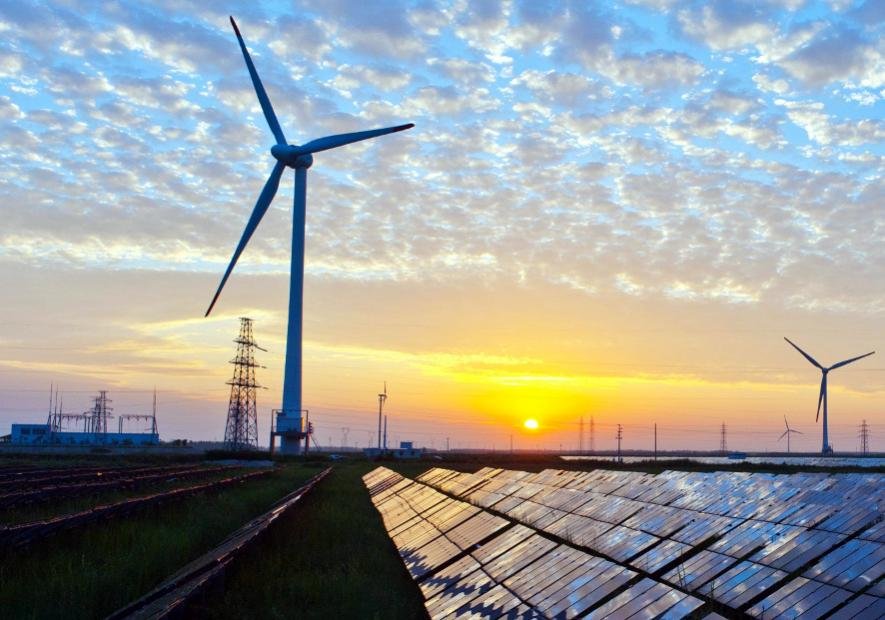

India has taken a major step towards strengthening its renewable energy infrastructure, with the Union Cabinet approving a programme worth ₹1.86 lakh crore aimed at improving power transmission and energy storage across the country. The decision comes at a time when India is rapidly expanding its clean energy capacity but continues to face challenges in moving and storing electricity generated from renewable sources. According to details reported on September 30, the programme includes ₹1.36 lakh crore for strengthening electricity transmission systems within states. The investment is expected to help evacuate up to 135 gigawatts of clean energy, allowing electricity generated from renewable projects to reach areas where it is needed.
The government has also approved an incentive scheme worth ₹50,000 crore for battery energy storage systems. The scheme aims to support the installation of 50 gigawatt-hours of battery storage capacity.
This is an important part of India’s energy transition. Solar and wind power do not generate electricity at the same level throughout the day. Solar power, for example, is strongest during daylight hours, while electricity demand can continue into the evening. Battery storage can help bridge this gap by storing excess electricity and making it available when demand rises. India has been increasing its renewable energy capacity over the past decade as it works towards reducing dependence on fossil fuels. The country currently has around 304 GW of non-fossil fuel power capacity and has set a target of reaching 500 GW by 2030.
The new renewable energy programme is therefore not only about building more solar and wind projects. It also focuses on the infrastructure required to make those projects more useful to the wider electricity network. Transmission has become an increasingly important issue as renewable energy projects are often located far from major consumption centres. Large solar parks and wind farms may generate significant amounts of electricity, but without adequate transmission networks, the power cannot always be efficiently delivered to cities and industrial centres. The battery storage component could also become increasingly important as India’s electricity demand continues to grow. Energy storage can support grid stability and provide greater flexibility when renewable generation changes because of weather conditions.
The announcement also comes against the backdrop of a changing global energy market. Countries around the world are investing in renewable energy, battery technology and modern electricity grids as they attempt to reduce emissions while maintaining reliable power supplies. For India, the transition has another dimension. Electricity demand is expected to rise as the economy expands, industries become more energy-intensive and households increasingly use electrical appliances, cooling systems and electric vehicles. The renewable energy programme could therefore have implications beyond the power sector. It may support investment in battery manufacturing, transmission equipment, engineering services and other parts of India’s clean energy ecosystem.
The government’s focus on energy storage also reflects a practical challenge. Building renewable generation alone is not enough to guarantee reliable electricity supply. Storage and transmission need to develop alongside generation capacity. The ₹1.86 lakh crore programme represents one of the larger recent investments in India’s clean energy infrastructure. Its implementation will determine how quickly new transmission lines and storage systems become operational and how effectively they support renewable power. For consumers, the impact will not necessarily be immediate. Large energy infrastructure projects generally require planning, construction and several stages of implementation.
However, the long-term objective is clear: create a stronger electricity system capable of handling a much larger share of renewable power. India’s renewable energy sector has already become a major part of the country’s economic and infrastructure story. With rising electricity demand and a 2030 clean-energy target approaching, transmission and storage are becoming just as important as generation itself.
The latest Cabinet decision places both areas at the centre of India’s next phase of renewable energy development.