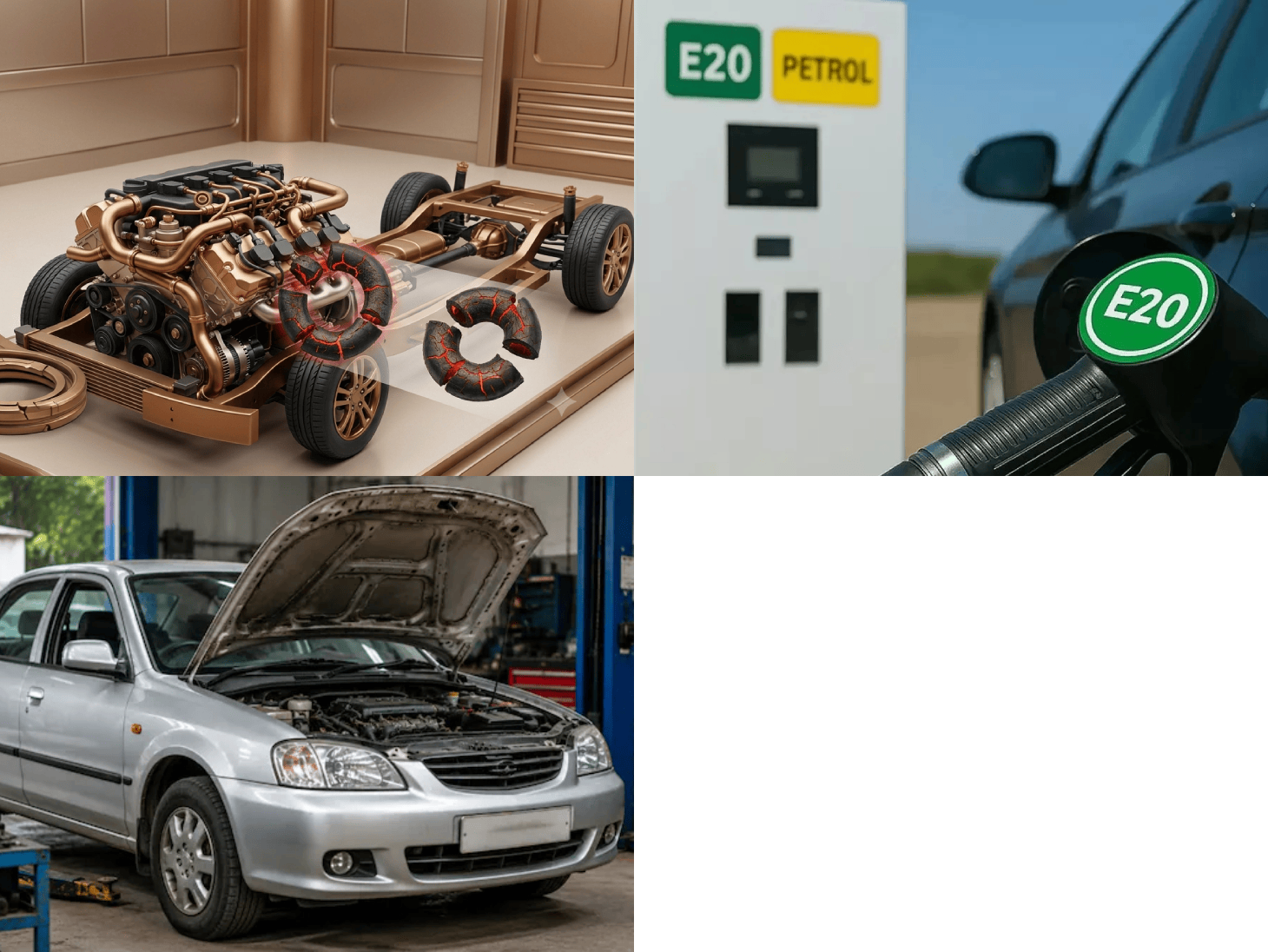

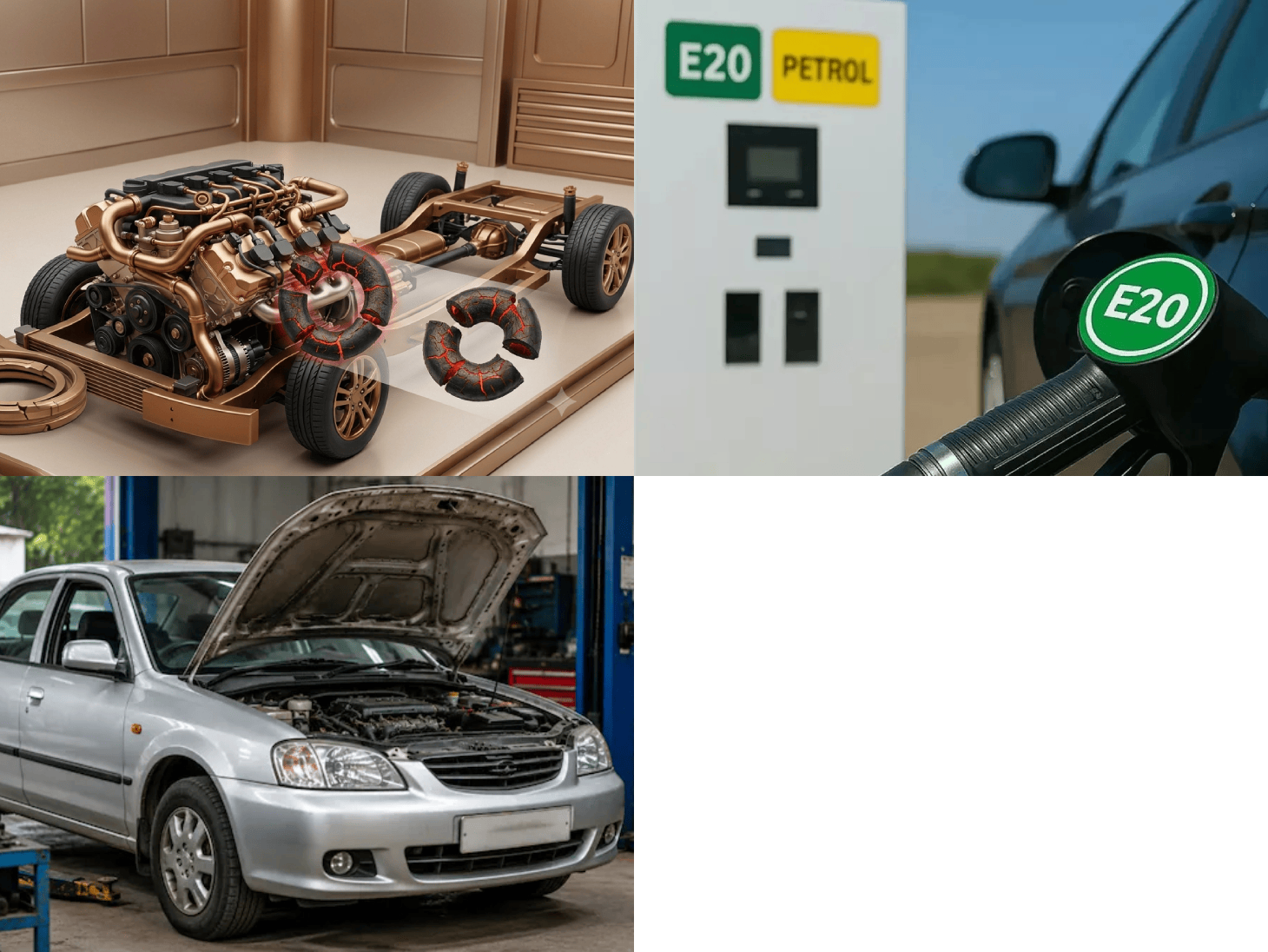
There are no concrete reports of vehicle engines failing or suddenly stopping due to 20% ethanol-blended petrol, i.e., E20 fuel, in the country. The government provided this information today, July 20, in a written reply to a question in the Rajya Sabha. Minister of State for Petroleum and Natural Gas, Suresh Gopi, stated that this conclusion has been drawn based on the experiences of over 23 crore vehicles running across the country and several scientific studies. The government has clarified that no evidence of engine damage from E20 fuel has been found.
20 Crore Two-Wheelers and 3 Crore Cars Running Without Any Complaints
Providing information in the Rajya Sabha, Minister Suresh Gopi said that over 20 crore two-wheelers and more than 3 crore petrol cars in the country are currently running on ethanol-blended fuel. A large number of these also include older vehicles that were manufactured before receiving E20 certification.
Even after reviewing the data and service records of all these vehicles, there is no concrete confirmation of engine failure or any major vehicle breakdown due to ethanol blending.
Change not made without thought
The government informed the House that the decision to move the country towards E20 fuel was not sudden. It has been entirely phased and based on scientific evidence.
In 2013-14, ethanol blending in petrol was only 1.53%, which is being scientifically increased to 20% (E20) by 2025-26, only after deliberation at every level with all stakeholders.
Confirmed by automobile companies’ service data as well
According to data shared by the ministry, a leading four-wheeler manufacturer in the country serviced a total of 2.84 crore vehicles during the financial year 2025-26. What is surprising is that these vehicles included 1.5 crore old vehicles that were non-E20 certified, meaning they were not designed for E20 fuel.
Despite this, not a single report of any damage to the vehicle due to E20 fuel was recorded in the company’s service records. Similarly, in the large service data of a leading two-wheeler manufacturer in the country, no separate incident of malfunction in vehicles running on E20 has been reported compared to previous fuel blends.
Impact on Mileage: 3 to 5% reduction is possible in old vehicles, but these 4 big benefits will be available
On the question of fuel efficiency (mileage), the government clarified that the mileage of any vehicle depends on driving conditions, driver’s habits, and vehicle maintenance. However, the government acknowledged that in some older vehicles designed for E10 (10% ethanol), there might be a slight reduction in mileage of about 3% to 5%. But in return, E20 fuel offers several benefits to vehicles and the environment:
- Higher Octane Rating: E20 fuel has a higher octane rating, which provides better power to the vehicle.
- Anti-Knock Properties: It prevents unwanted noise (knocking) in the engine and extends engine life.
- Cleaner Combustion: The fuel burns completely and cleanly, significantly reducing pollution.
- Smoother Engine Operation: The engine feels smoother while driving.
Currently, no decision on blending more than 20%
When the minister was asked in the Rajya Sabha if ethanol blending would be increased beyond 20% in the future, he clarified that no such decision has been taken for now. Any further decision will only be taken after an in-depth technical study with automobile manufacturers, oil marketing companies, and research institutions.