


25 minutes agoAuthor: Anjali Rajgovind
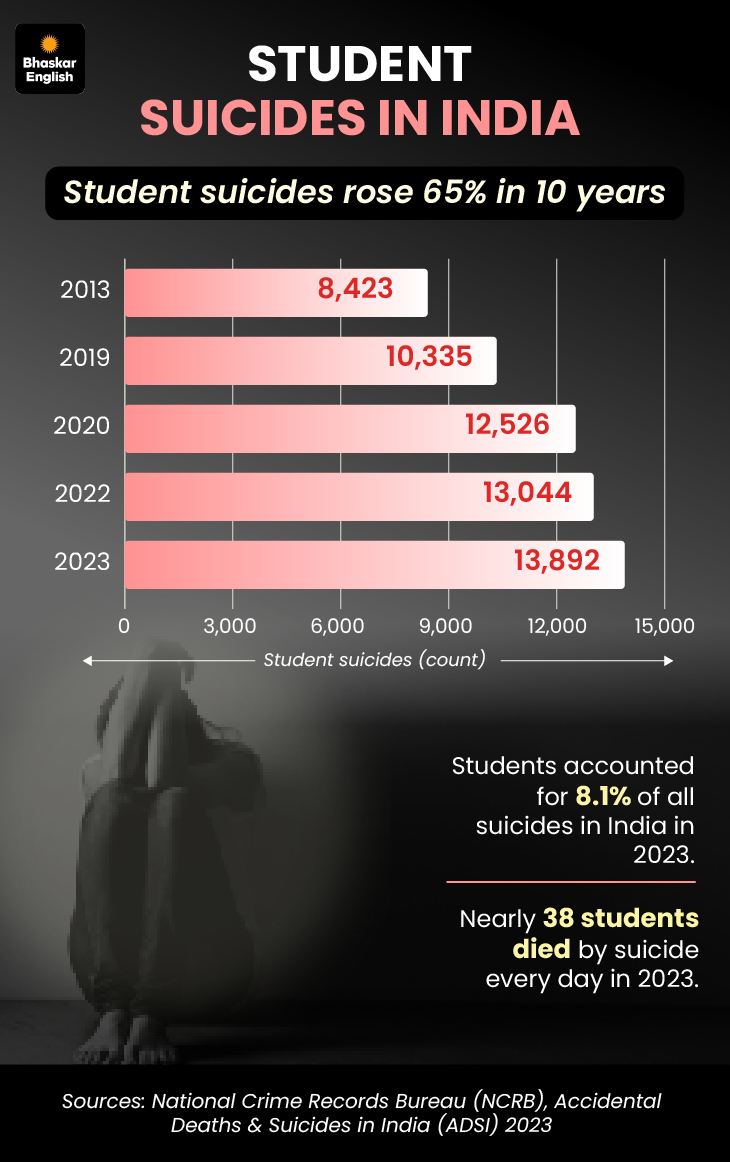
Student suicides have become a major concern in India’s higher education system, with even IITs, NITs and central universities reporting such deaths in recent years.
After losing four students in two months in 2023, IIT Madras says it has not recorded another student suicide in the three years since changing its academic and mental health support systems.
What changed on campus, and can other colleges do the same? Let us understand what the numbers reveal.
Why did suicides become such a serious issue at IIT Madras?
IIT Madras had multiple suicides over several years, but 2023 became the tipping point because four students died in just two months.
Several of those who died were research scholars. Across IITs, PhD and MS students are often more vulnerable because they face long research timelines, uncertainty, funding concerns and close dependence on supervisors.
Students and alumni repeatedly pointed to a combination of factors rather than one cause:
- Academic pressure.
- Research guide-student conflicts.
- Loneliness after moving away from home.
- Identity crisis; as many were school toppers but suddenly found themselves among equally brilliant peers.
- Reluctance to seek help because of stigma.
The 2023 cluster changed the conversation.
People stopped asking, ‘Why did one student die?’ and began asking, ‘Is there something about the system that needs fixing?’
That is why IIT Madras became a national case study.
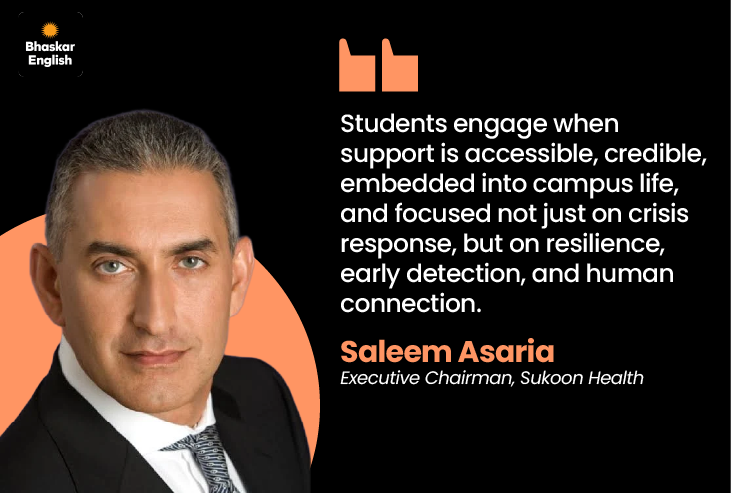
Saleem Asaria, Executive Chairman of Sukoon Health, says students seek help more readily when support is more accessible.
What did IIT Madras actually change?
IIT Madras concluded that counselling alone would not be enough.
Instead of adding one or two new services, it changed the way students are supported from the day they join the institute.
Some of the biggest changes included:
- Every student now has multiple support points, including faculty advisers, hostel wardens, counsellors, alumni and trained student volunteers.
- The institute expanded its Student Wellness Centre and made professional counselling available round the clock.
- A peer-support network called ‘MITR’ was strengthened, allowing students to speak to trained volunteers in confidence.
- Academic rules were made more flexible in certain situations, while faculty members received training to identify students who may be struggling.
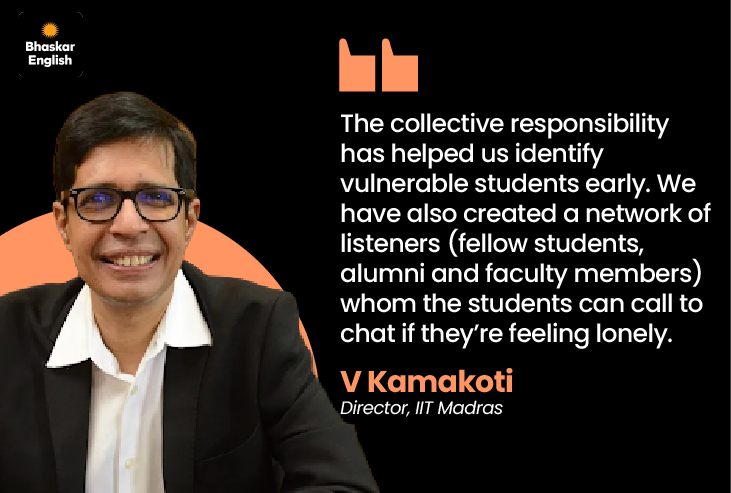
Director V Kamakoti says the aim was to create a ‘network of listeners’ so that no student feels they have to deal with problems alone.
Did those changes actually work?
IIT Madras says it has not recorded a student suicide in the three years since the 2023 reforms were introduced.
More students are using campus mental health services, with counselling, peer support and faculty mentoring becoming a regular part of campus life rather than only crisis support.

The institute’s approach has drawn national attention, with the Ministry of Education and other higher education institutions studying its student wellbeing model.
Why do IIT students struggle despite clearing one of India’s toughest exams?
Cracking JEE is only the beginning. Once students enter an IIT, many find themselves surrounded by equally talented classmates.
The pressure to perform, publish research or secure a good placement can become overwhelming, especially for those living away from home for the first time.
Several factors can increase stress:
- Competition becomes much tougher than it was in school.
- Research scholars may spend years working towards uncertain outcomes under close faculty supervision.
- Fear of failure, loneliness and family expectations can quietly build up over time.
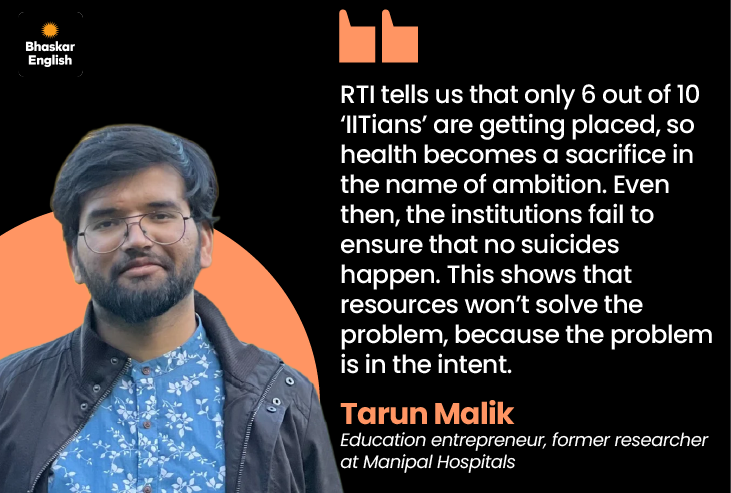
Education entrepreneur Tarun Malik says,

Only getting into an IIT does not guarantee success or happiness. Institutions must ensure ambition does not come at the cost of students’ wellbeing.
Can other colleges copy IIT Madras?
Experts say yes, but not every change needs a big budget.
Many of IIT Madras’ initiatives focused on making support easier to reach rather than creating entirely new systems.
What can be adopted
- Build stronger peer-support networks so students have someone to talk to before a crisis.
- Train faculty members to identify warning signs and guide students to professional help.
- Make counselling, grievance redressal and academic support easier to access without stigma.
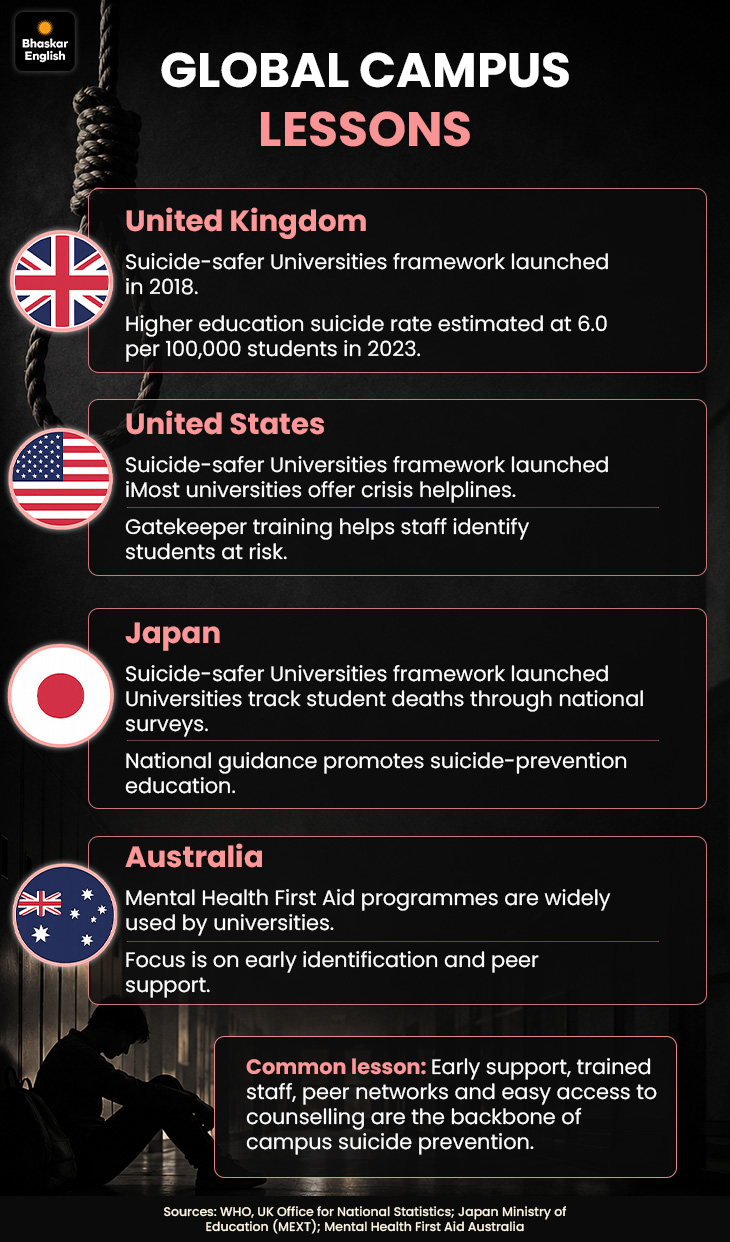
How are universities abroad tackling student suicides?
Universities across several countries are trying different ways to identify students at risk before a crisis.
While no single model fits every campus, many institutions are moving beyond counseling alone and focusing on prevention, early intervention and stronger support networks.
Some of the approaches being used around the world are shown in the graphic below.
Graphics: Aayushi Jain




