

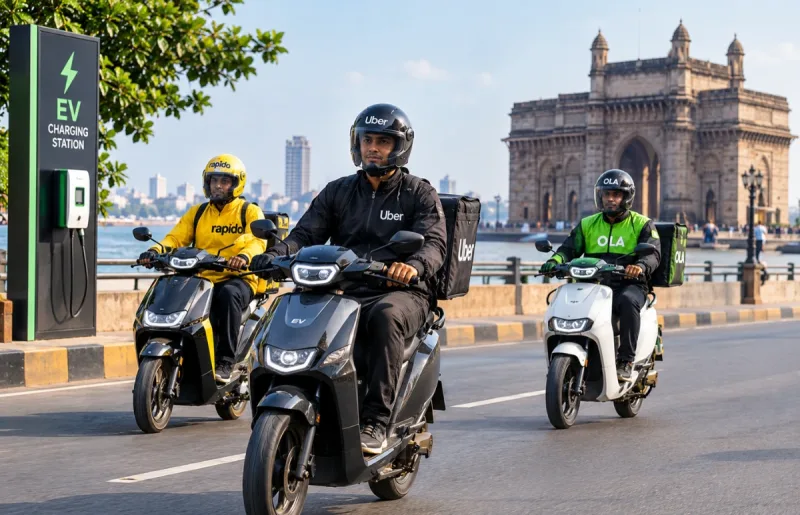

The Maharashtra government has set a deadline for bike taxi aggregators including Ola, Uber and Rapido to transition their operations to electric vehicles. The companies operating petrol-powered bike taxis have been given additional time to comply with the state’s electric vehicle requirements. Under the latest plan, existing operators will receive six months, while operators that have applied for provisional or temporary licences could receive an additional three months. The transition is expected to move the state’s bike taxi sector towards an all-electric fleet.
Maharashtra pushes electric mobility
The move forms part of Maharashtra’s broader effort to expand electric mobility and reduce dependence on petrol-powered transport. Bike taxis have become an important part of urban transportation because they provide relatively affordable and quick travel through congested city roads. The shift towards electric vehicles could therefore have a noticeable impact on the future of app-based bike taxi services in Mumbai and other Maharashtra cities. The state had already introduced electric vehicle requirements under the Maharashtra Bike-Taxi Rules, 2025.
July 2027 becomes the key deadline
The broader transition is expected to be completed by July 2027. The additional period gives aggregators time to increase their electric vehicle fleets, develop charging arrangements and make operational changes. For companies, the transition involves more than simply purchasing electric scooters. Operators will need to manage vehicle availability, charging infrastructure, maintenance, battery performance and driver requirements.
Impact on bike taxi drivers
Drivers are likely to be among the most directly affected by the policy. Electric scooters generally have different operating and maintenance requirements compared with petrol motorcycles. Drivers may need access to reliable charging facilities during working hours because a bike taxi depends on continuous vehicle availability. Companies may also need to introduce financing or leasing arrangements to make electric vehicles accessible to drivers. The cost of the vehicle, battery range and charging time will remain important considerations.
Possible benefits for cities
Electric bike taxis can help reduce tailpipe emissions because electric vehicles do not produce direct exhaust emissions while operating. For densely populated cities such as Mumbai, reducing petrol-powered two-wheeler traffic could contribute to cleaner urban transport. Electric vehicles can also have lower running costs in some operating conditions, particularly when electricity costs remain below the equivalent fuel expense. However, the environmental benefit also depends on the source of electricity and the overall lifecycle of the vehicle and battery.
Charging infrastructure becomes important
The success of Maharashtra’s electric bike taxi transition will depend heavily on charging infrastructure.
Drivers working for long hours require convenient access to charging points. If charging facilities remain limited, drivers could lose productive working time while waiting for vehicles to charge. Fast-charging networks, battery-swapping systems and strategically located charging stations could become increasingly important as the deadline approaches.
Companies face an operational transition
Ola, Uber and Rapido will need to adjust their business models to meet the state’s EV requirements.
The transition could encourage greater investment in electric two-wheelers and related infrastructure. It may also create opportunities for EV manufacturers, charging companies, battery providers and financing businesses. Maharashtra is one of India’s largest automobile and technology markets, making the policy significant for the wider electric mobility industry.
The shift towards electric bike taxis also reflects a broader change in India’s urban transportation sector.
As cities look for cleaner and more efficient mobility solutions, app-based transportation companies are likely to face greater pressure to reduce emissions. The July 2027 deadline gives operators time to prepare for the transition while providing the state government with a clear target for electric mobility in the bike taxi sector. For commuters, the long-term impact could include greater availability of electric two-wheelers, changes in operating costs and a gradual transformation of app-based urban transport across Maharashtra.




