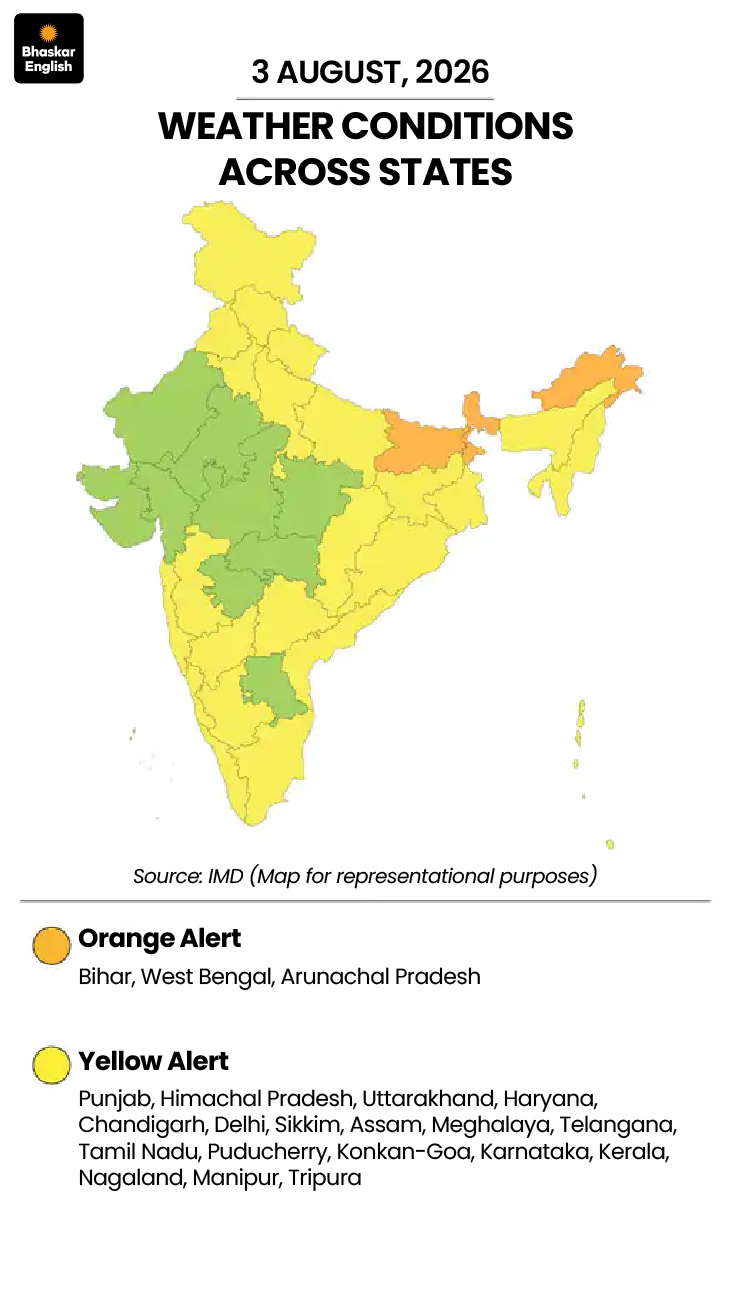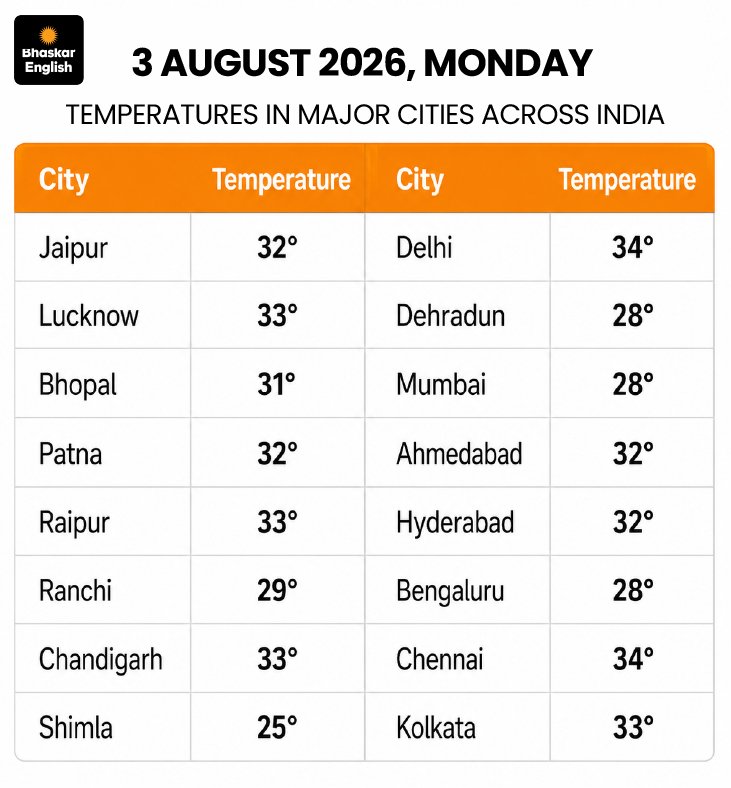


A landslide in Uttarkashi, Uttarakhand, has blocked the Yamunotri National Highway at several locations, causing inconvenience to travellers. In Rudraprayag, continuous rainfall has increased the risk of landslides in several areas.
On Sunday, six people were killed in separate lightning strikes in Banka district of Bihar. In Jharkhand, four people also died after being struck by lightning.
Madhya Pradesh has received an average of 15.4 inches of rainfall so far, against the normal 18.5 inches expected by this time. According to the India Meteorological Department (IMD), there is no heavy rain alert anywhere in the state over the next two days.
The monsoon has become active again in Uttar Pradesh, with the IMD issuing a rain alert for all 75 districts. A thunderstorm and rain alert has also been issued for 25 districts in Bihar, with winds expected to reach speeds of up to 60 kmph. Haryana is likely to receive light rainfall in several parts of the state on August 3 and 4, while a yellow alert for heavy rain has been issued for seven districts of Uttarakhand.
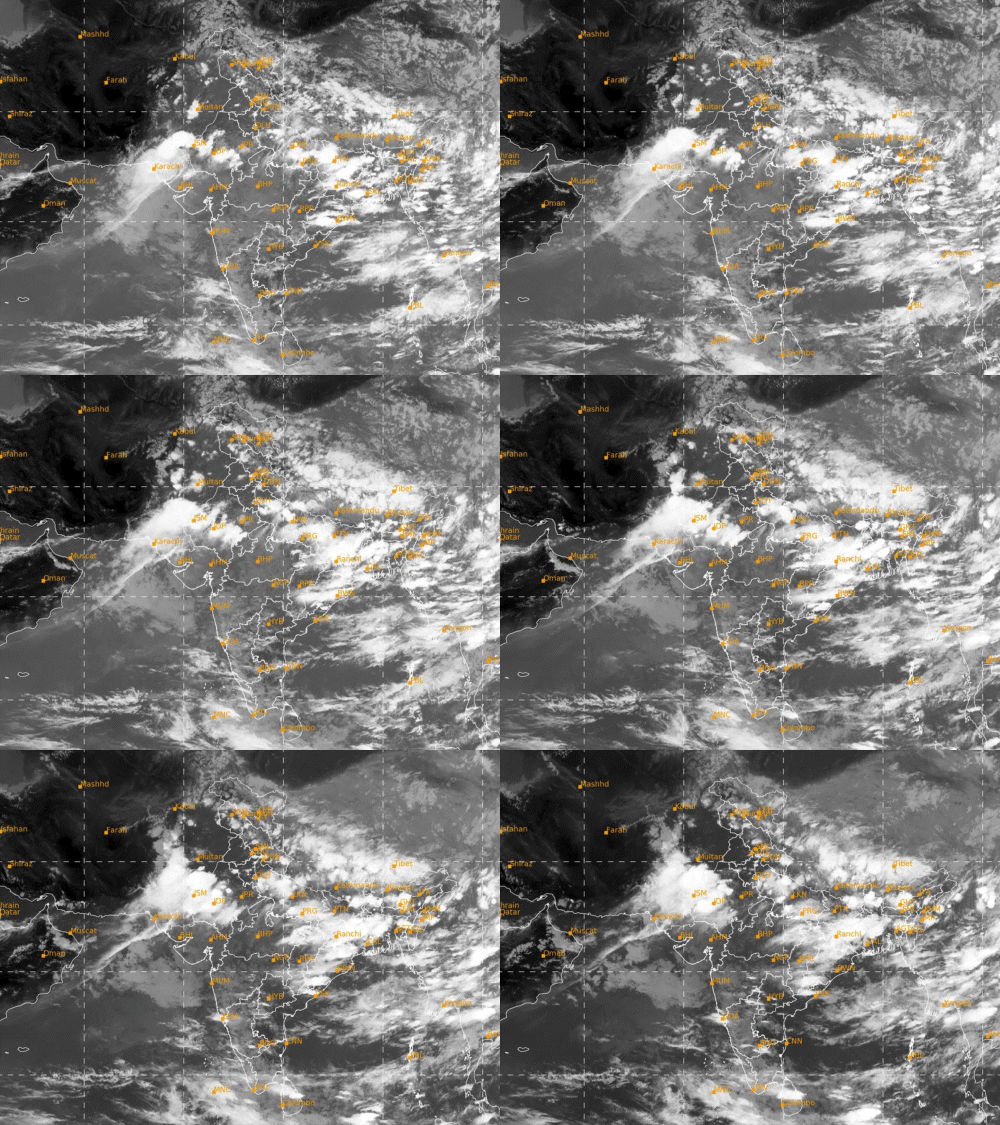
See the position of monsoon clouds on the satellite map
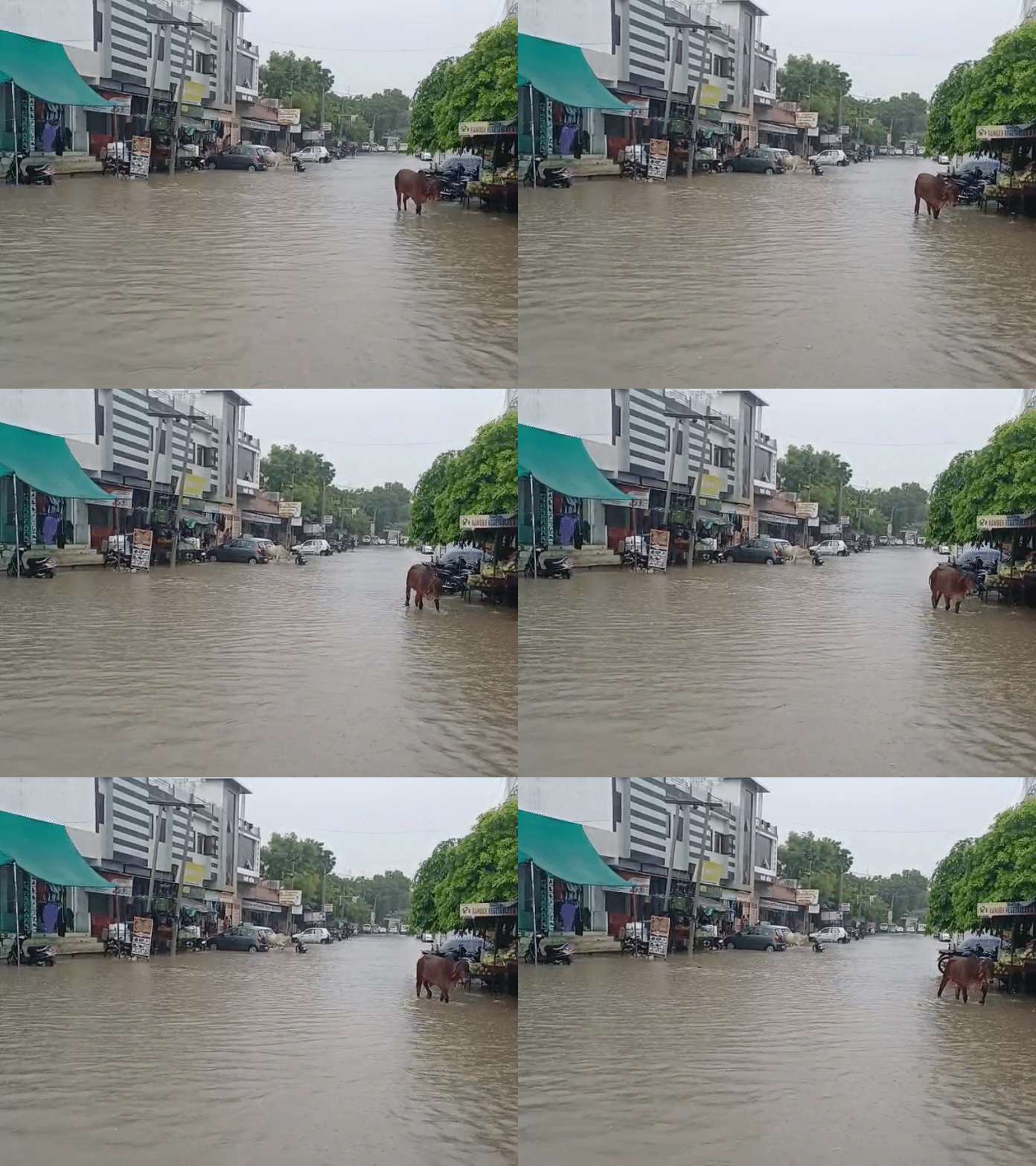
Weather updates from across the country


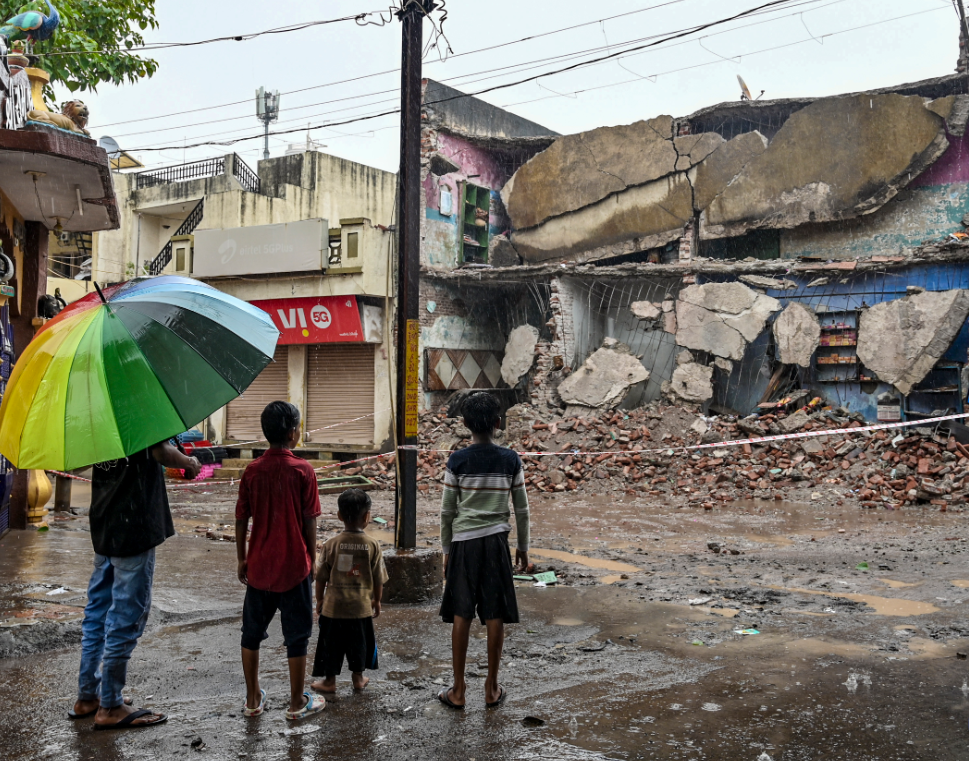
What is a cloudburst?
A cloudburst does not mean that a cloud literally bursts. It is a meteorological event in which an extremely heavy amount of rain falls over a very small area within a very short period.
According to the India Meteorological Department (IMD), a cloudburst is defined as 100 mm or more of rainfall within an hour or less over an area of about 20–30 square kilometres.
It occurs when large amounts of moisture in the air become concentrated over one location. This is especially common in mountainous regions, where mountains block moisture-laden winds from moving forward. As the moisture continues to build up, it is released suddenly as intense, torrential rainfall.