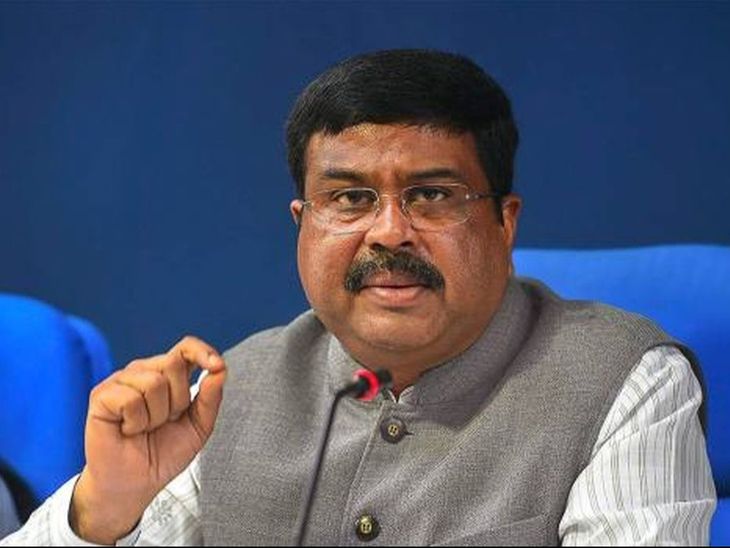

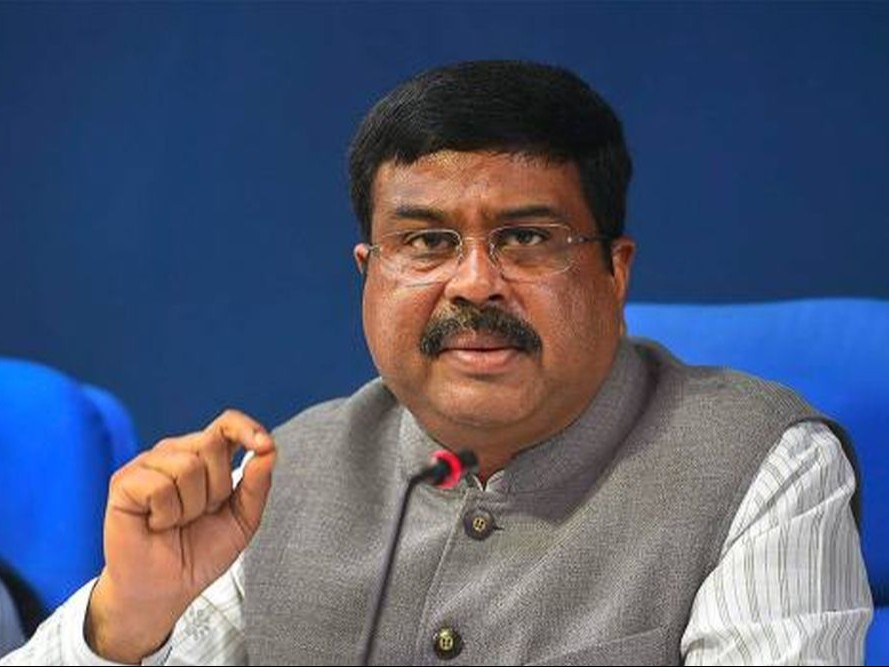
Education Minister Dharmendra Pradhan has resigned. He had been held responsible for the NEET paper leak, and a protest had been underway at Jantar Mantar for the past 36 days demanding his resignation. The protesters had maintained that they would not end their agitation for anything less than his resignation.
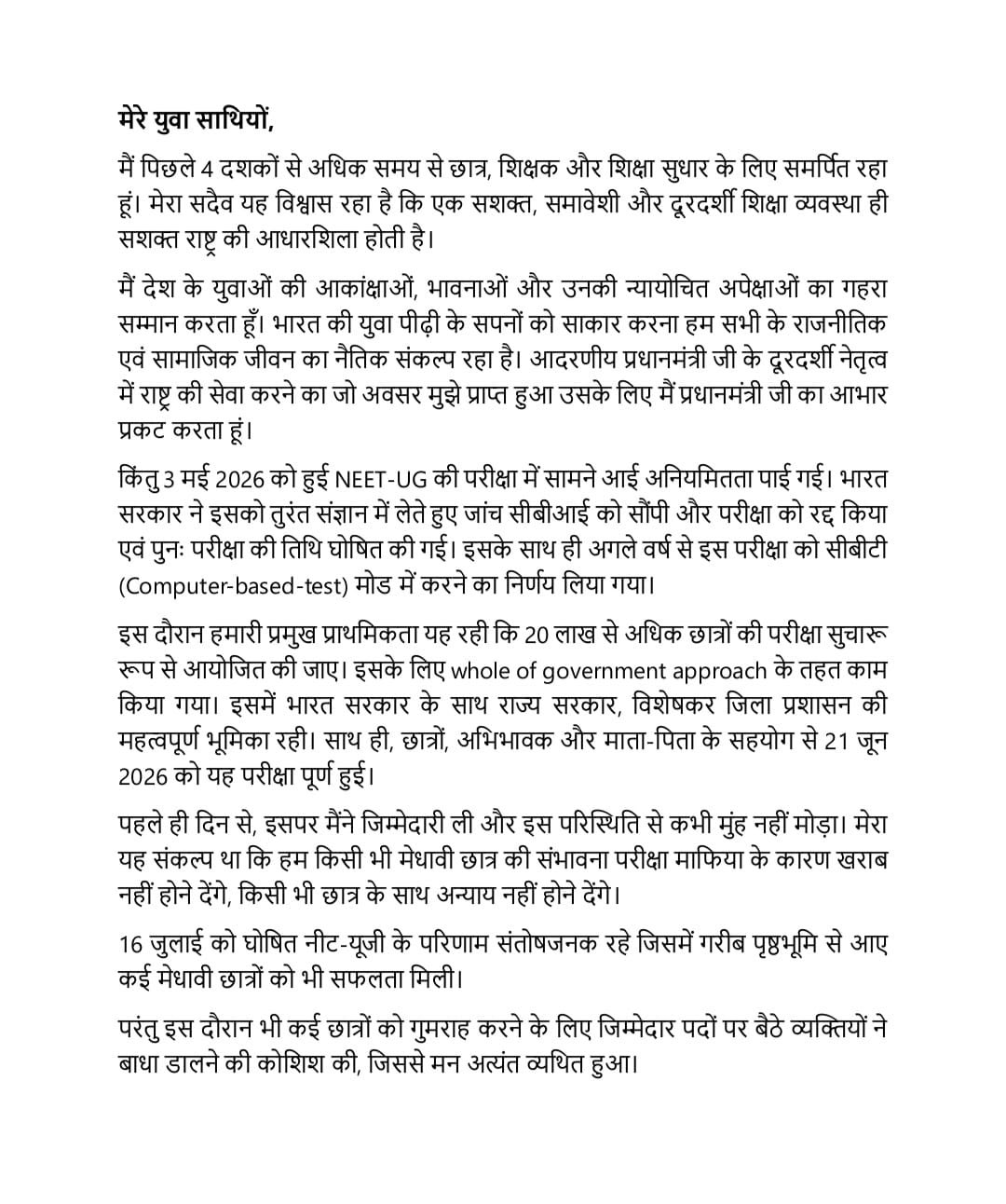
Dharmendra Pradhan announced his resignation by releasing his resignation letter in a post on his social media account.
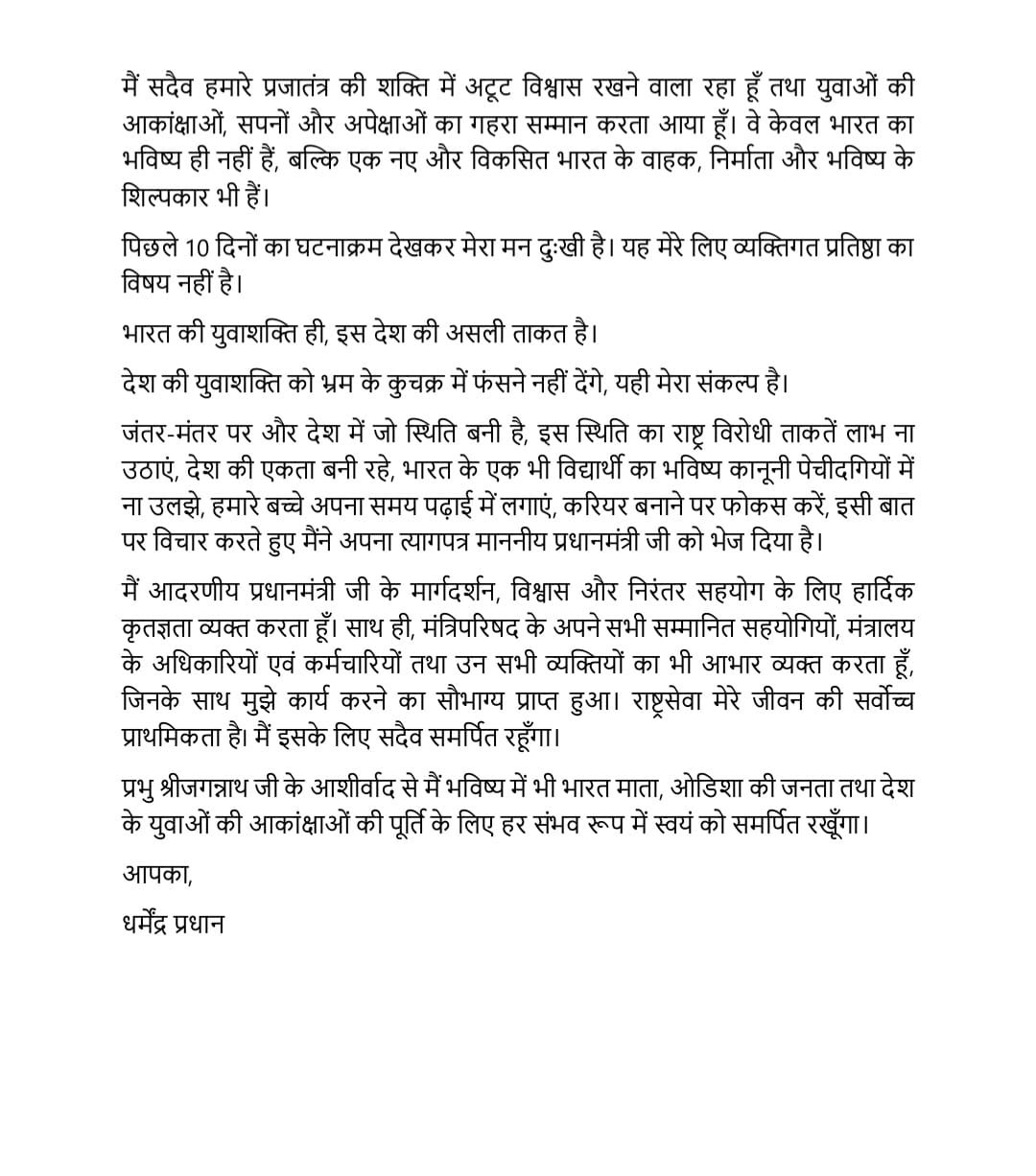
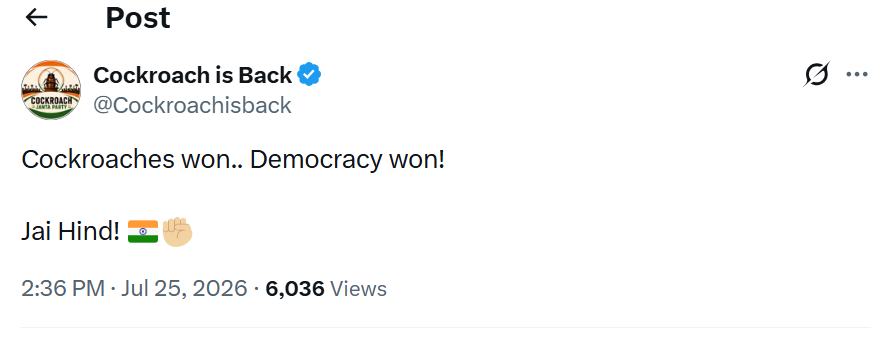
CJP says “Cockroaches have won” after Dharmendra Pradhan’s resignation
Following Dharmendra Pradhan’s resignation, the Cockroach Janata Party (CJP) said, “The cockroaches have won.” In a post, the party claimed victory after leading a 36-day protest at Jantar Mantar demanding Pradhan’s resignation. Social activist Sonam Wangchuk had also observed a hunger strike at the protest site, seeking the education minister’s resignation.
Yesterday, 47 National Testing Agency officials were dismissed
On Friday night, the National Testing Agency (NTA) dismissed 47 officials in connection with the NEET paper leak case. The agency also said that criminal cases would be registered against the dismissed officials.
According to officials, more action will be taken soon as part of reforms in the NTA. A day earlier, on Thursday, the government had transferred two secretaries in the Ministry of Education.
Officials said the outsourcing system will be overhauled and technological upgrades will be introduced to make examinations completely secure. A new testing system will also be developed to eliminate any possibility of paper leaks.
The NTA will appoint four Senior General Managers and 16 Young Professionals through the UPSC’s Pratibha Setu portal.
What is the NEET paper leak case? So far, 13 arrested
The question paper of the NEET-UG 2026 examination, held on 3 May 2026, was leaked. The government and the NTA subsequently cancelled the exam and conducted a re-examination. During this period, several students across the country died by suicide.
Over the paper leak, the Cockroach Janata Party has been protesting at Delhi’s Jantar Mantar for over a month. Sonam Wangchuk observed a 26-day hunger strike, while Members of Parliament have continued to raise the issue in Parliament.
The CBI is currently investigating the case. Searches and investigations have been carried out in Maharashtra, Rajasthan, Delhi, and several other states. So far, 13 accused have been arrested, and the CBI is expected to file its chargesheet soon.
Current law to prevent paper leaks: 4 key points
1. Until June 2024, there was no single central law dealing specifically with paper leaks. Cases were registered under provisions related to cheating, criminal conspiracy, and forgery, which did not have stringent bail conditions.
2. Some states enacted their own anti-copying laws and also invoked the Prevention of Money Laundering Act (PMLA) in certain cases. In Uttar Pradesh, the Gangsters Act was also applied in some paper leak cases.
3. Following irregularities in the NEET-UG and UGC examinations, the central government implemented the Public Examinations (Prevention of Unfair Means) Act on 21 June 2024. The law criminalises offences such as paper leaks, assisting in paper leaks, illegally obtaining OMR sheets, facilitating cheating, creating fake examination-related websites, and threatening examiners.
4. All offences under the Act are non-bailable. It provides for two categories of punishment:
For paper leaks and related offences: 3 to 5 years’ imprisonment and a fine of up to ₹10 lakh. If the offence is committed by the director or management officials of the examination-conducting body or agency: 3 to 10 years’ imprisonment and a fine of up to ₹1 crore.