

Kolkata7 hours agoAuthor: Tirthankar Das

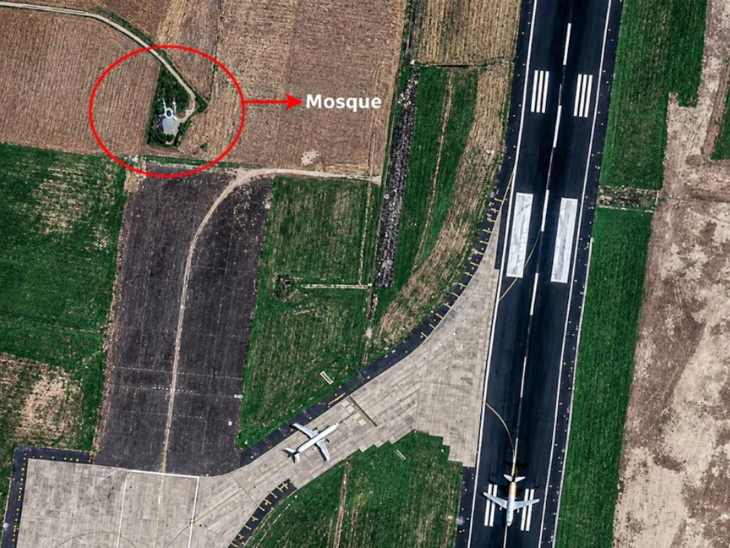
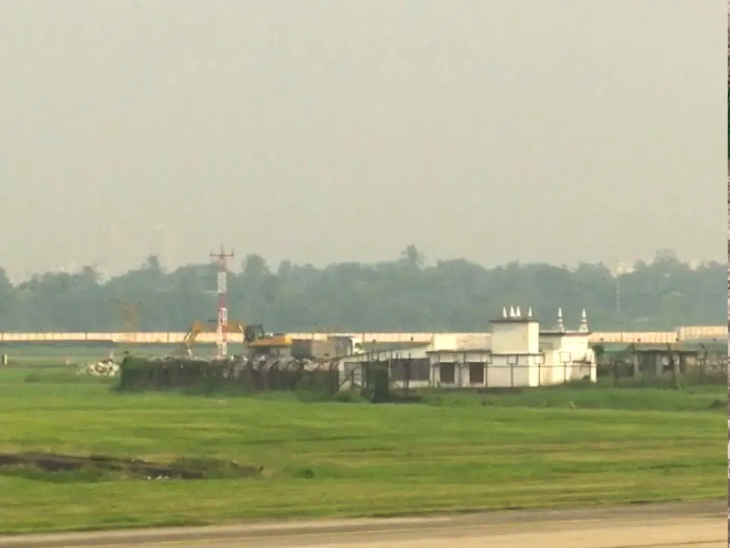
The 136-year-old Gauripur Jama Masjid, popularly known as the Bankra Mosque, has become the centre of a major controversy after authorities at Kolkata’s Netaji Subhas Chandra Bose International Airport stopped public access to the mosque and suspended prayers, citing security concerns. The Centre has also revived a long-pending proposal to relocate the mosque outside the airport premises.
Why does the government want to relocate it?
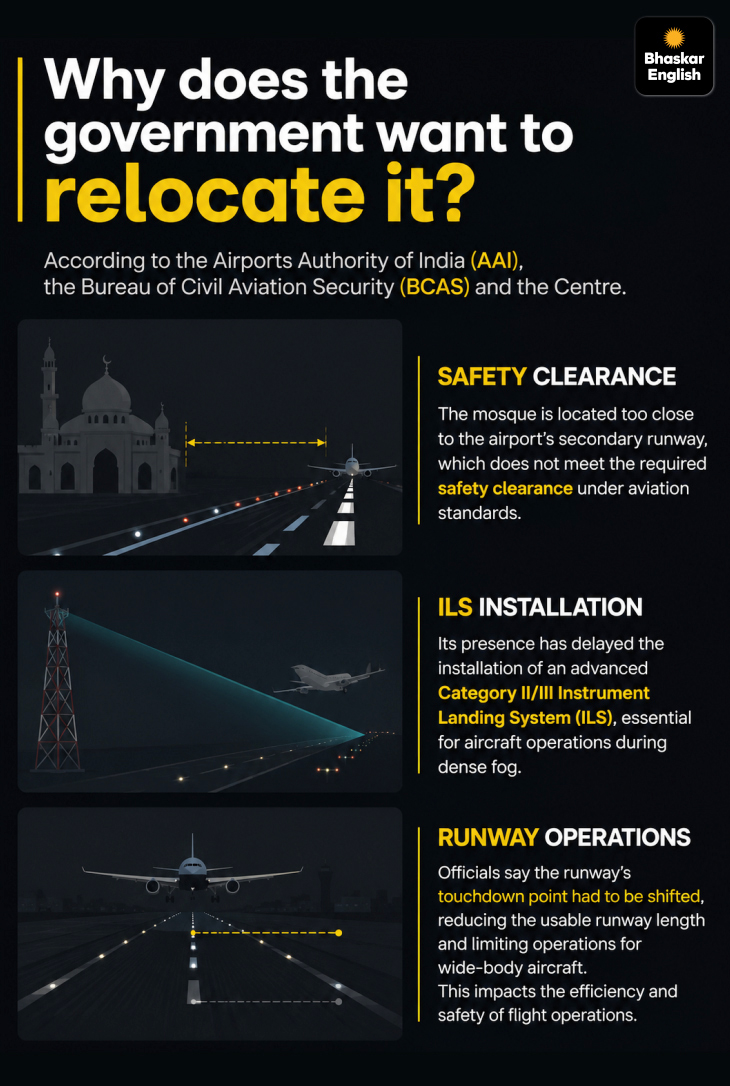
According to the Airport Authority of India (AAI), the Bureau of Civil Aviation Security (BCAS) and the Centre:
- The mosque is located around 165 metres from the airport’s secondary runway, while aviation standards prescribe a 240-metre safety clearance.
- Its location has delayed the installation of an advanced Category II/III Instrument Landing System (ILS), essential for aircraft operations during dense fog.
- Officials say the runway’s touchdown point had to be shifted, reducing the usable runway length for wide-body aircraft such as the Boeing 787 and Airbus A330.
The government says relocating the mosque would allow airport expansion and safety upgrades while offering to build a larger replacement mosque outside the airport with a rehabilitation package.
Why is the mosque’s history important?
The mosque was built around 1890, nearly 34 years before the British established the Dum Dum Aerodrome in 1924.
When the airport expanded in the 1950s, the surrounding Gauripur village was acquired and its residents were relocated, but the mosque was deliberately left untouched, reportedly after local assurances that it would continue to remain at its original site. Over the decades, airport expansion gradually brought the mosque within the airport’s restricted operational area.
Why wasn’t it relocated earlier?
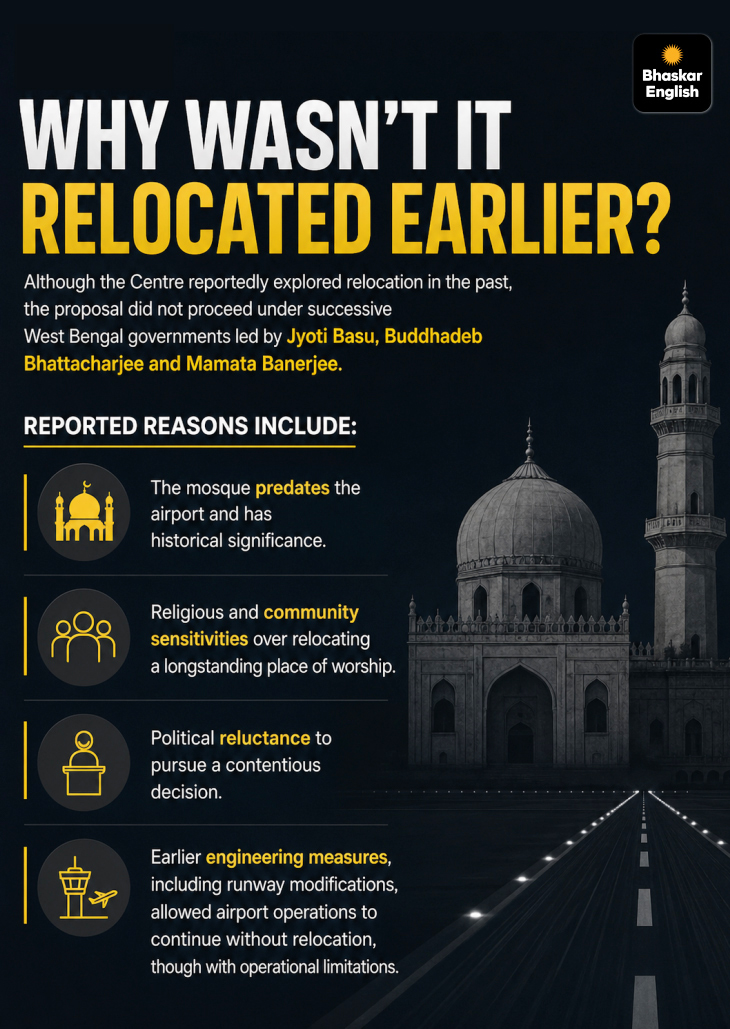
Although the Centre reportedly explored relocation in the past, the proposal did not proceed under successive West Bengal governments led by Jyoti Basu, Buddhadeb Bhattacharjee and Mamata Banerjee.
Reported reasons include:
- The mosque predates the airport and has historical significance.
- Religious and community sensitivities over relocating a longstanding place of worship.
- Political reluctance to pursue a contentious decision.
- Earlier engineering measures, including runway modifications, allowed airport operations to continue without relocation, though with operational limitations.
What has happened now?
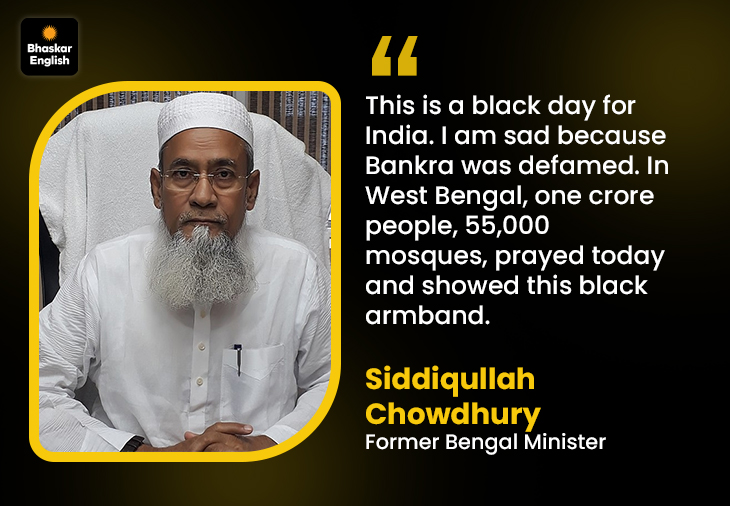
Following the suspension of access to the mosque, Jamiat Ulema-e-Hind (West Bengal) president Siddiqullah Chowdhury called for a peaceful protest. On Friday, worshippers at thousands of mosques across West Bengal wore black armbands during prayers as a symbolic protest. Heavy security was deployed around the Bankra Mosque to prevent any law-and-order issues.
Chowdhury described the day as a “black day” and criticised the restrictions, while also stating that he had never called for a large gathering at the mosque.
Why is the issue significant?
The dispute is no longer simply about a mosque inside an airport. It has become a debate over how India should balance aviation safety, infrastructure development and national security with the protection of historical and religious heritage. The final decision on relocation is likely to have implications beyond Kolkata, as it could influence how similar heritage-versus-development disputes are handled in the future.
(Graphics by Maddiwar Ajit Kumar & Aayushi Jain)