


8 minutes agoAuthor: Samira Siddiqui
Elon Musk’s SpaceX called off the launch of its Starship Flight 13 rocket at the last moment after an issue occurred during engine ignition. The countdown was halted less than a second before liftoff, just as Super Heavy began firing its 33 Raptor engines. The engines briefly ignited before shutting down, triggering an automatic launch abort.
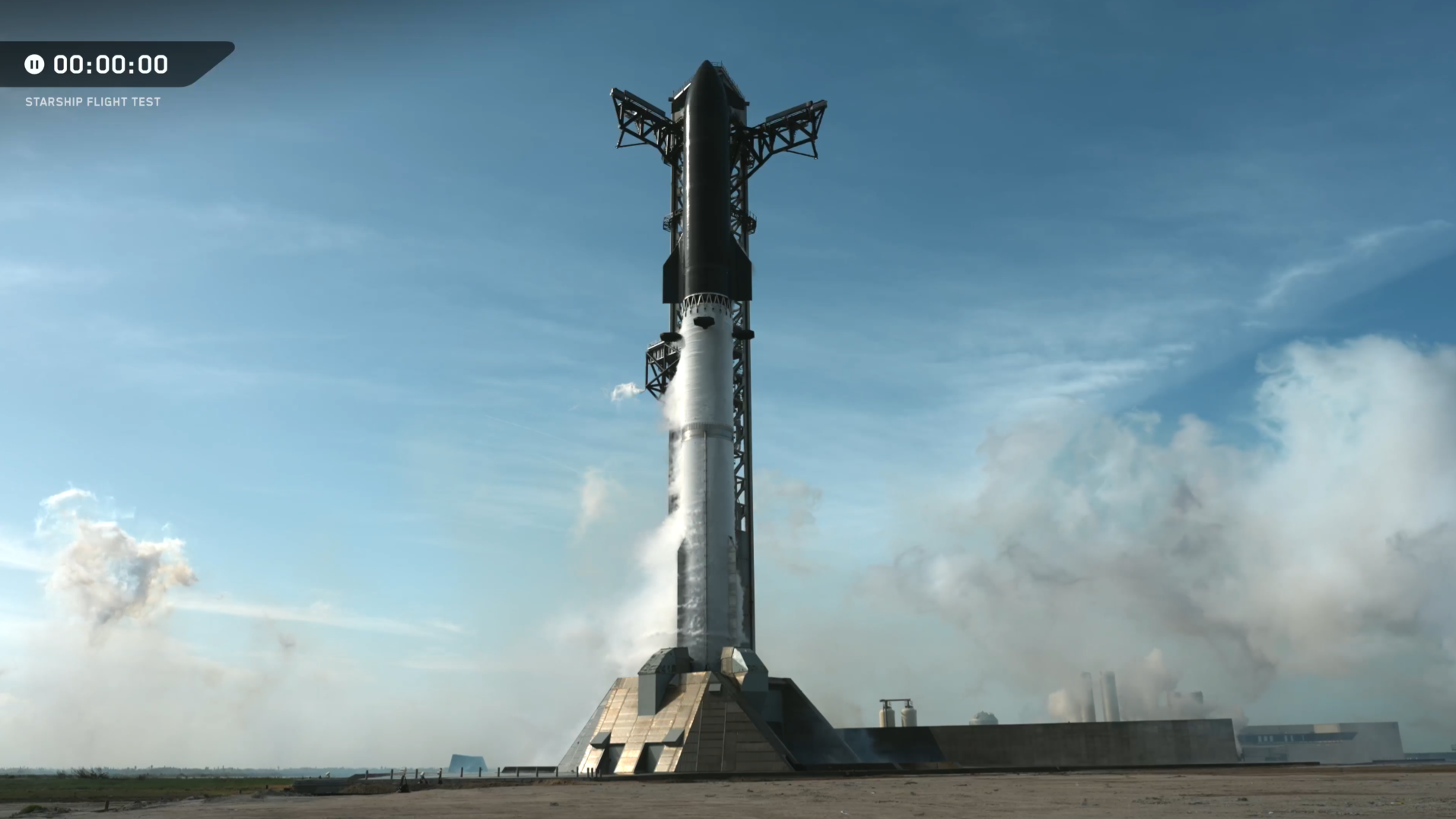
SpaceX’s second V3 Starship vehicle tries to launch on July 17, 2026. The attempt was aborted at the last second. (Image credit: SpaceX)
The company has postponed the mission by at least 24 hours and is now safely draining millions of pounds of liquid methane and oxygen from the rocket while engineers investigate the cause of the scrub.
Explaining the reason, SpaceX founder Elon Musk said:

Some of the engines didn’t start, triggering an automatic launch abort. Now offloading propellant. Next launch attempt hopefully in a few days.
During the company’s livestream, SpaceX spokesperson Dan Huot said, “We did trigger a hold on the booster that aborted our liftoff as we were starting to light those Raptor engines. We’ll take some time, dig into what triggered that abort once the booster was igniting to launch, and then we’ll figure out what our path forward is going to be.”
Because the launch was stopped so late in the countdown, SpaceX could not recycle the rocket for another attempt on Thursday, making an immediate Friday launch unlikely. The company will announce a new launch date after completing its investigation into the engine issue.
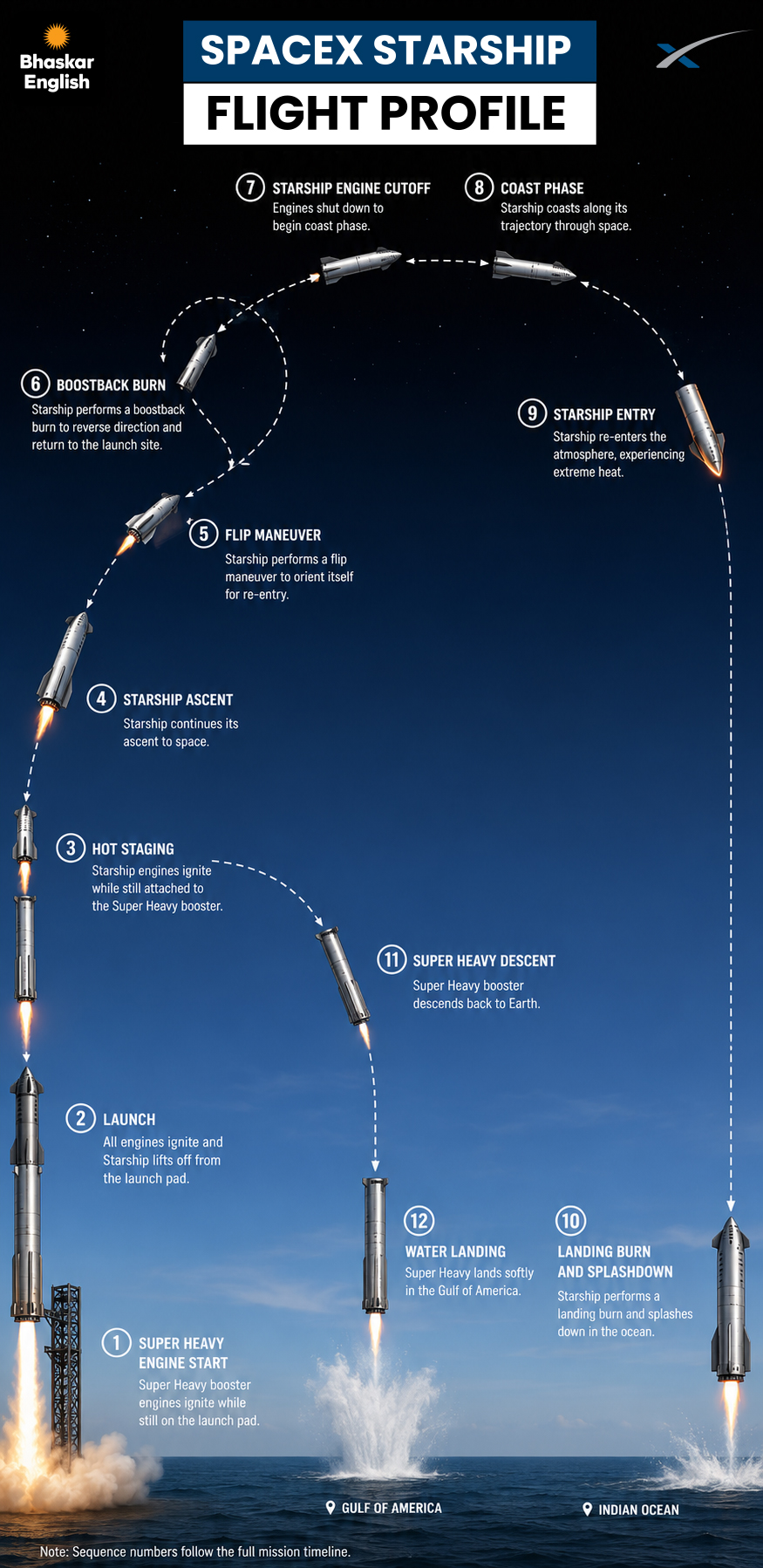
Mission profile of SpaceX’s Starship Flight 13
How is Flight 13 different from previous launches?
Unlike earlier missions, Flight 13 is not just another test flight. It introduces several firsts:
1. First Starlink V3 satellite deployment
This will be the first time Starship carries 20 Starlink Version 3 satellites, which are larger, more powerful and capable of delivering faster internet speeds than earlier versions.
2. Testing Starship as an operational launcher
Previous flights mainly focused on testing the rocket itself.
Flight 13 also evaluates Starship’s ability to deploy real payloads into space.
3. Heat shield inspection
Six satellites onboard will photograph Starship’s heat shield after deployment.
The images will help engineers study how the protective tiles perform during flight and prepare for future re-entry missions.
4. Improved systems
Following issues encountered during Flight 12, SpaceX has updated both software and hardware to improve engine performance and flight stability.

SpaceX’s Journey: From Startup to Starship Flight 13

While the launch was called off at the last moment, it is not being treated as a mission failure. The automatic abort system worked as designed to prevent a risky liftoff. SpaceX is investigating the issue and is expected to announce a new launch date in the coming days.




