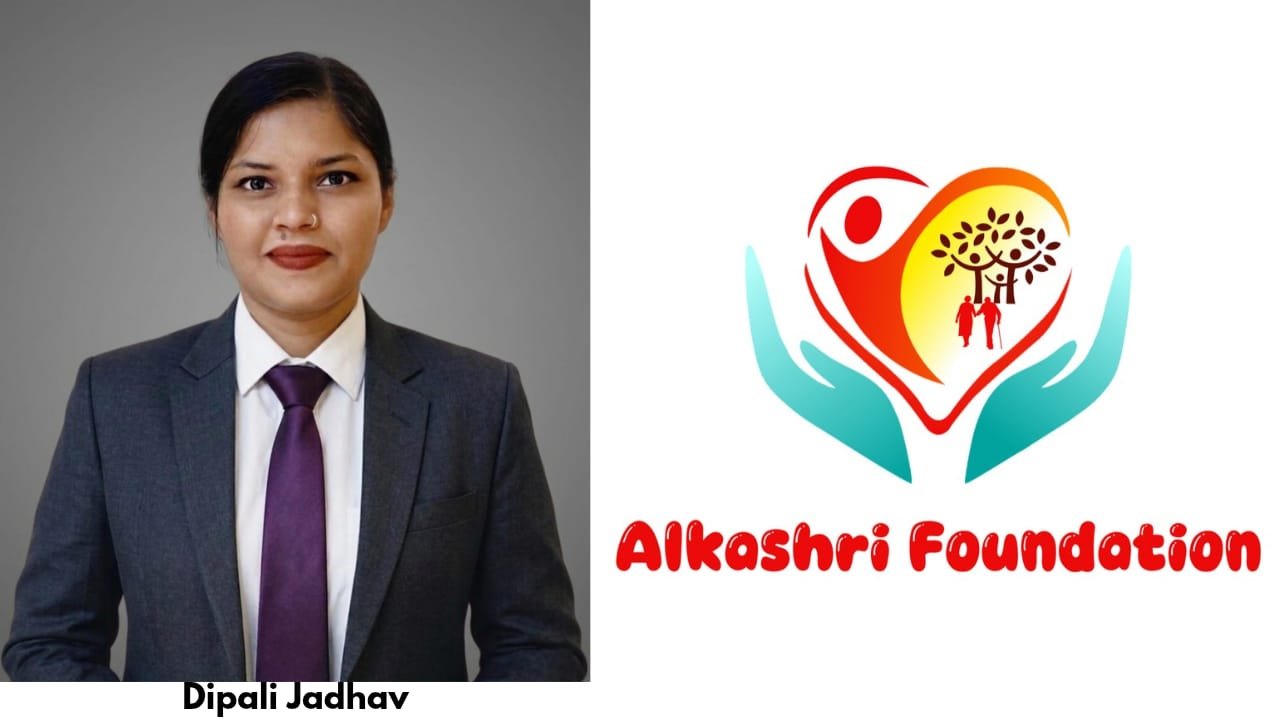

PUNE/BEED: From helping children stay in school to supporting elderly people, women, families in distress and animals in need, the Alkashri Foundation is building a wide-ranging social welfare network with a focus on practical, on-ground support.
Founded as a registered charitable organisation in Maharashtra, Alkashri Foundation traces its service legacy to 1987 and was formally registered as a Society in 2019. While its roots are in Majalgaon, Beed district, the foundation’s social work is being taken forward across India, with education, healthcare, women’s empowerment, child welfare, elder care and community support forming key areas of its work.
The foundation is led by Dr. Kiran Shriram Khalge, who serves as its chairman. According to the organisation’s profile, his work has focused on humanitarian service and community development for several decades. Dipali Jadhav, the foundation’s authorised representative, also plays a key role in managing its activities, including donor outreach, fundraising coordination and community engagement.
The organisation’s approach is built around a simple idea: assistance should reach people directly and with dignity.
Education at the centre of the mission
Education remains one of the foundation’s prominent areas of intervention. For children from financially weaker families, the cost of uniforms, shoes, school bags and stationery can become a serious barrier to regular education.
The foundation provides school kits and study material to children who need support. It also works with residential ashram schools, where children live away from their families for much of the year.
One such initiative highlighted by the organisation involved Matoshri Ramai Ambedkar residential school, where volunteers distributed school materials and shoes to students. The foundation also supports children through yearly education sponsorship programmes.
The child-welfare programme goes beyond classroom requirements. Ration kits, clothing, bedding, hygiene products and nutrition support are among the assistance provided to children in residential institutions. The foundation also organises celebrations and community activities, recognising that emotional well-being is an important part of child development.
Focus on women and girls
Women’s health and empowerment are another important part of the foundation’s agenda.
Its programmes include the distribution of sanitary pads and hygiene kits, along with awareness sessions on menstrual health and hygiene. Such initiatives are particularly relevant in communities where menstruation can still be surrounded by stigma and a lack of information.
The foundation also lists skill development, self-help groups and legal-awareness programmes among its activities for women. The larger objective is to help women gain knowledge, confidence and greater economic independence.
Standing with senior citizens
Elder care is another area where the organisation has maintained a long-term presence.
Through support to old-age homes and visits to elderly people, volunteers provide monthly ration supplies, clothing, bedding and basic medical assistance. The foundation also conducts companionship visits and celebrates birthdays and festivals with senior citizens.
The organisation describes elder care as part of its service legacy dating back to 1987, making it one of the longer-running themes in its humanitarian work.
Taking relief closer to communities
The foundation also conducts food and ration distribution among vulnerable families. Its outreach programmes include door-to-door delivery of groceries, clothing and daily essentials in slum communities.
The organisation says it also stands with farmers and families affected by suicide, while undertaking sanitation and tree-plantation activities.
Animal welfare has also become part of its community outreach. Volunteers feed stray dogs, arrange treatment for injured animals and conduct vaccination and sterilisation drives. The foundation also provides fodder and care at gaushalas.
Emphasis on accountability
As its activities expand, the foundation has also highlighted its legal registrations and compliance credentials. Its published documents list registration under the Societies Registration Act, Public Trust registration, PAN registration, Income Tax 12A registration, 80G approval and NGO Darpan registration.
The foundation has also documented local media coverage of its education initiatives. Its brochure records newspaper coverage of the June 2025 school-material and shoe-distribution programme at Matoshri Ramai Ambedkar residential school.
With Dr. Kiran Shriram Khalge providing leadership and Dipali Jadhav helping manage coordination, outreach and engagement, Alkashri Foundation is positioning itself as a grassroots organisation working across multiple areas of social welfare.
Its work reflects a broader understanding of charity — one that goes beyond one-time donations and focuses on regular engagement with communities.
Whether it is a child receiving school shoes, a girl receiving hygiene supplies, an elderly resident receiving monthly essentials, a family receiving food or an injured animal receiving treatment, the foundation’s programmes are centred on immediate needs while aiming for longer-term dignity and self-reliance.
From its roots in Maharashtra to its wider work across India, Alkashri Foundation is seeking to turn its long service legacy into sustained community action.