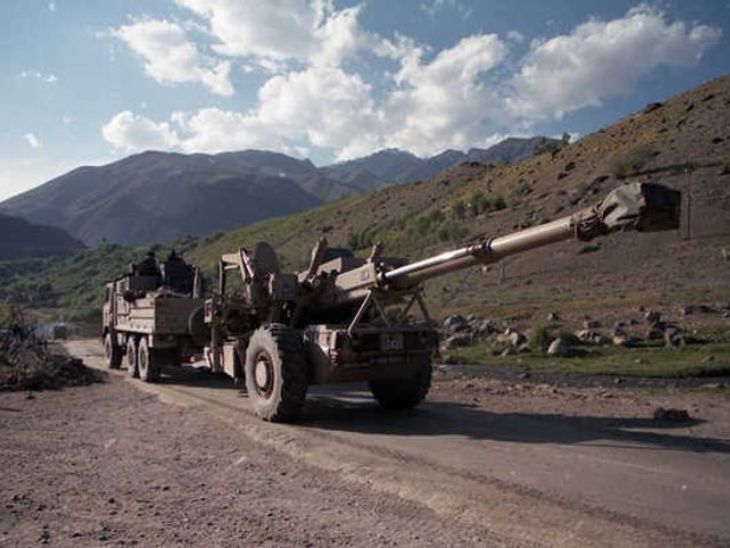
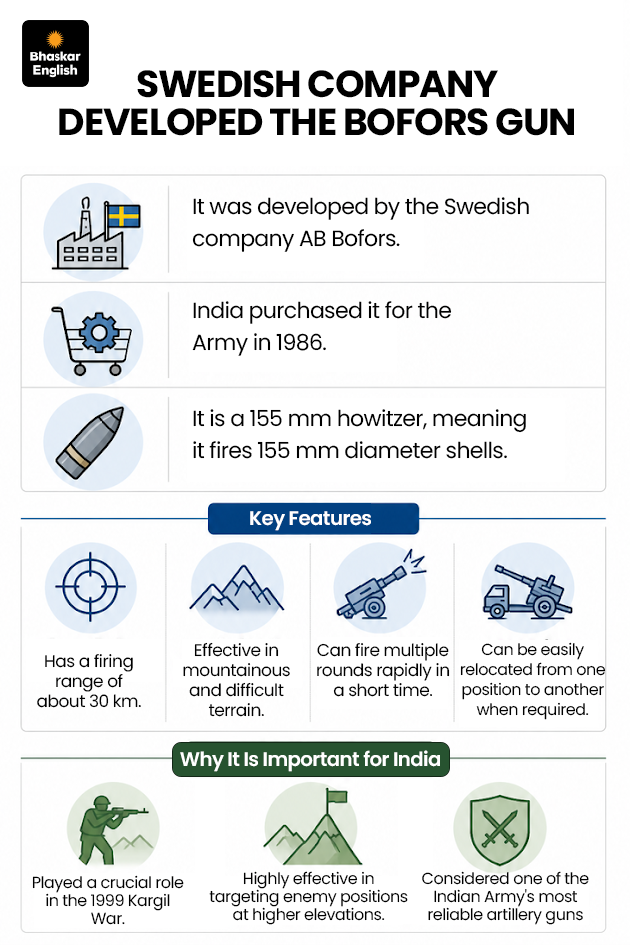
In 1986, India had struck a deal with the Swedish company AB Bofors for 400 155 mm howitzer guns
The Supreme Court on Thursday brought an end to the nearly four-decade-old Bofors scam case by dismissing the last pending petition related to the controversial defence deal.
A bench of Justices JB Pardiwala and K. Vinod Chandran said there was no need for further proceedings and refused to entertain the plea challenging the 2005 Delhi High Court order that had acquitted the Hinduja brothers and Bofors company.
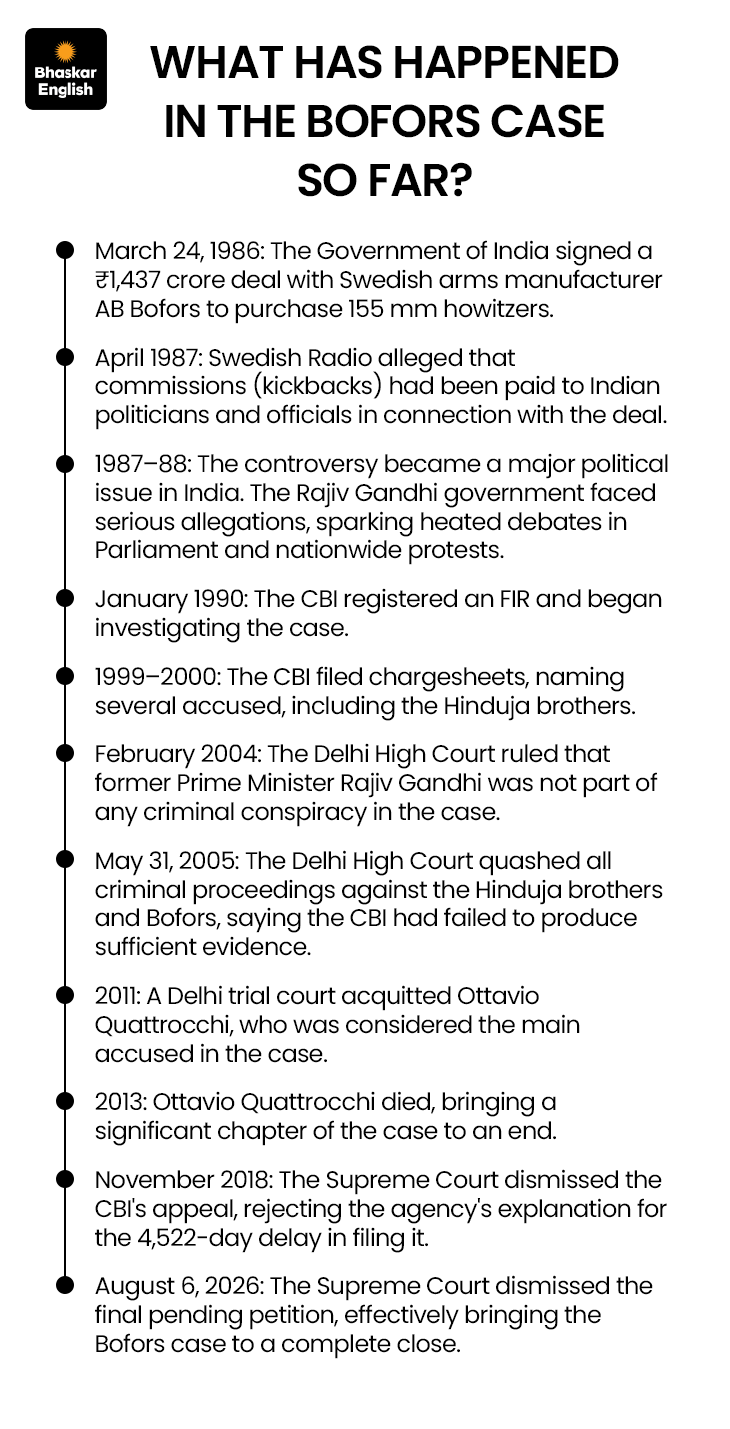
The case dates back to a 1986 defence deal in which India purchased 155 mm howitzers worth ₹1,437 crore from Swedish arms manufacturer AB Bofors.
In 1987, allegations surfaced that illegal commissions were paid to secure the contract, turning the deal into one of India’s biggest political scandals.
What was the Bofors scam?
The controversy began after Swedish Radio reported in 1987 that bribes had allegedly been paid to Indian officials and middlemen in connection with the Bofors gun deal.
The allegations triggered a major political storm for the then Rajiv Gandhi-led Congress government.
The issue became a key factor in the 1989 general elections, with the opposition accusing the government of corruption. Rajiv Gandhi, who had initially projected an image of a clean administration, faced intense criticism over the controversy.
Why did the case collapse in court?
Despite years of investigation and legal battles, the case failed to establish criminal wrongdoing due to lack of conclusive evidence.
Lack of direct evidence
The Delhi High Court, in its 2005 judgment, observed that the CBI failed to present sufficient evidence linking the accused with the alleged payments.
While allegations of corruption were made, investigators could not establish a direct connection between the accused and the alleged kickbacks.
Foreign documents faced legal hurdles
The CBI relied heavily on documents obtained from Sweden during the investigation. However, the court questioned the authenticity and verification of several documents, stating that unverified material could not be the basis for prosecution.
Money trail could not be established
Although allegations of commission payments were made, investigators could not prove that the money was directly connected to the Bofors contract or reached any of the accused persons.
Delay weakened the investigation
The long delay in investigation and court proceedings affected the case. Over the years, evidence became difficult to verify, and several important witnesses and accused persons were no longer available.
CBI’s final effort before closure
Before the Supreme Court’s decision, the CBI attempted to gather fresh information related to American investigator Michael Hershman, who had claimed in 2017 that the Bofors investigation was influenced by the government of that time.
The agency sought documents and records related to Hershman and also approached Interpol and US authorities.
However, no information emerged. In 2025, the CBI moved to seek assistance from the United States through a Letter Rogatory to examine his claims.
CBI’s investigation also faced criticism
The investigating agency itself came under scrutiny during the long-running case.
The CBI reportedly spent around ₹250 crore on the investigation, but failed to secure evidence strong enough to prove the allegations.
In 2018, the Supreme Court noted that the agency had delayed filing an appeal against the High Court order by nearly 12 years, or 4,522 days.
The courts questioned the reliance on incomplete and unverified documents during the investigation.
The inability to establish the allegations beyond doubt gradually weakened the prosecution’s case.
Political impact of the Bofors controversy

The Bofors controversy had a major impact on Indian politics in the late 1980s. The allegations became a major opposition campaign issue against the Rajiv Gandhi government.
The Congress suffered a major setback in the 1989 Lok Sabha elections, and Rajiv Gandhi’s government lost power. Although the case remained active in courts for decades, no accused was ultimately convicted.