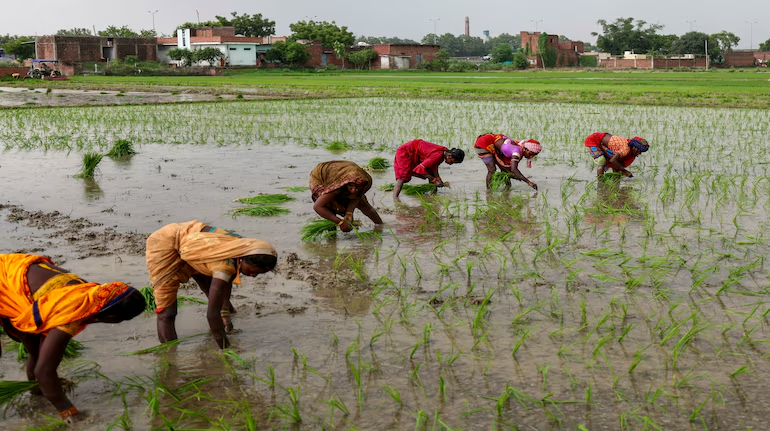

The Indian government is preparing contingency measures for the upcoming rabi crop season amid concerns over rainfall and water availability in parts of the country. Agriculture authorities have been discussing ways to protect crops and improve preparedness before winter sowing begins. The rabi season is particularly important for Indian agriculture. Crops such as wheat, mustard, gram and several other winter crops are generally sown after the monsoon and harvested during the following months.
The amount and distribution of rainfall can influence soil moisture, irrigation requirements and crop planning. A shortage of water at the beginning of the season can create additional pressure on farmers, particularly in regions that depend heavily on rainfall. According to a report by the Times of India, Union Agriculture Minister Shivraj Singh Chouhan held discussions on contingency planning for the rabi season in response to concerns about deficient rainfall. The discussions included crop monitoring, water budgeting and coordination between central and state authorities.
The focus on data-driven planning reflects the importance of preparing before agricultural problems become severe. Instead of waiting for crop stress to develop, authorities can monitor rainfall, reservoir levels, soil conditions and sowing patterns to identify vulnerable areas. Water budgeting is another important part of the planning process. Agriculture uses a significant amount of water, and efficient allocation becomes especially important when rainfall is uneven. Farmers also need timely information about crop choices, irrigation and fertiliser use. Decisions taken before sowing can influence production throughout the season.
Balanced fertiliser use is therefore part of the wider agricultural planning process. Excessive or inappropriate use of fertilisers can raise input costs and affect soil quality, while inadequate nutrient management can reduce crop productivity. The government has also emphasised regular crop monitoring. Weekly assessments can help authorities understand whether changing weather conditions are affecting sowing and crop growth.
The issue is important because agriculture remains closely connected with food prices in India. Changes in the production of major crops can influence supplies and, depending on market conditions, prices for consumers. Wheat, pulses and oilseeds are particularly important for household consumption. A strong rabi season can contribute to stable supplies, while weather-related crop losses can create additional pressure on markets. Rainfall patterns this year have already attracted attention. Reuters reported earlier that India had been facing expectations of a weaker monsoon season, with concerns about its possible effect on agriculture and inflation.
However, the agricultural impact is not uniform across the country. Different states have different irrigation facilities, rainfall patterns, crop choices and water resources. Farmers with access to reliable irrigation may be better positioned to manage periods of limited rainfall than those who depend primarily on rain-fed agriculture. This makes state-level planning particularly important.
Agricultural departments can support farmers by providing timely weather information, crop advisories and information about suitable sowing practices. Local authorities can also play a role in monitoring water availability and coordinating relief measures when required. The rabi season also comes at a time when farmers are making decisions about seeds, fertilisers, irrigation and crop selection. Clear information can help reduce uncertainty and allow farmers to plan their expenditure more effectively.
For the wider Indian economy, the agricultural outlook matters because rural incomes influence consumption, employment and demand across several sectors. A healthy crop season can support rural markets, while weather-related difficulties can place additional financial pressure on farming households.
The government’s current focus on contingency planning is therefore not limited to agriculture alone. It is connected to food security, rural incomes, inflation management and overall economic stability.
As the rabi sowing period approaches, rainfall conditions, reservoir levels and soil moisture will remain important indicators. Regular monitoring will help authorities respond more quickly if particular regions experience water stress. For farmers, the coming weeks will be an important period for planning. The combination of weather information, water availability and local agricultural advice can influence decisions about what to sow and how to manage resources. India’s rabi season is still ahead, but preparations are already gaining attention. With weather conditions remaining uneven across the country, careful planning and timely information will be central to protecting crop production during the winter agricultural cycle.