
18 minutes agoAuthor: Samira Siddiqui
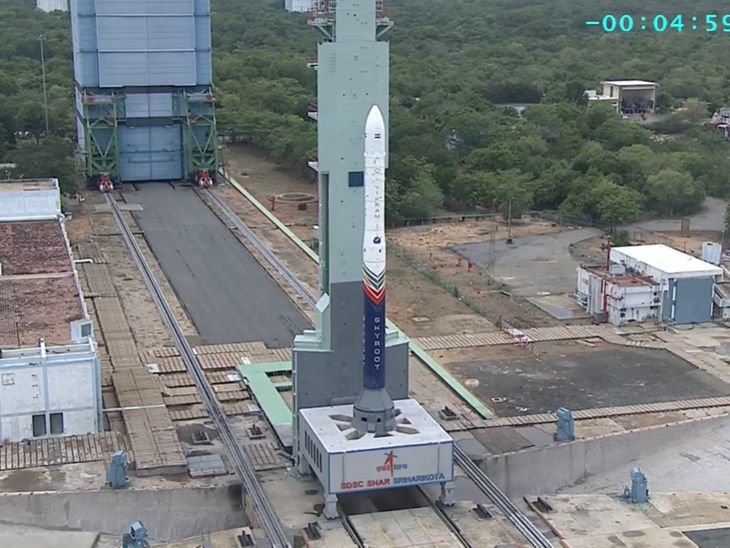
India’s private space sector is set for a defining moment today as Skyroot Aerospace prepares to launch Vikram-1, the country’s first privately developed orbital-class rocket. Following a brief internal hold during the countdown, the liftoff has been rescheduled for 12:05 pm IST from the Satish Dhawan Space Centre (SDSC-SHAR) in Sriharikota, Andhra Pradesh.
If successful, Vikram-1 will become the first orbital rocket built by an Indian private company to place payloads into space, marking a major milestone for India’s rapidly growing commercial space industry.
Besides carrying multiple technology demonstration payloads, the rocket will also take a commemorative postcard signed by Prime Minister Narendra Modi bearing the words “Vande Mataram”, along with hundreds of handwritten messages from scientists, innovators, and well-wishers.
Ahead of the launch, Prime Minister Modi hailed Vikram-1 as a ‘historic new frontier’ in India’s space journey, saying the mission reflects the talent, innovation, and entrepreneurial spirit of the country’s youth. The mission is also expected to validate several key technologies that could pave the way for future commercial satellite launches by Indian private companies.
Stay with us for minute-by-minute live updates as we bring you the countdown, liftoff, key mission milestones, official announcements, expert reactions, and the final outcome of Skyroot Aerospace’s historic Vikram-1 mission.
Live Updates
Indian astronaut Shubhanshu Shukla was seen smiling and applauding as Mission Aagaman achieved a historic success.
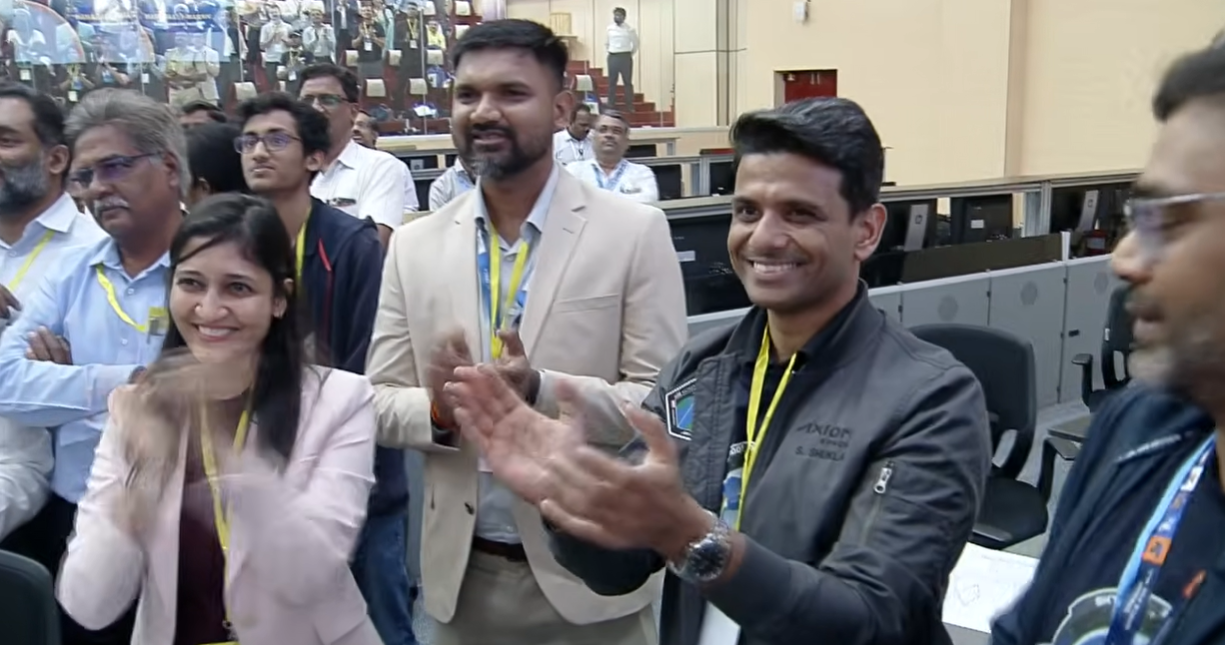
Image credit: Skyroot
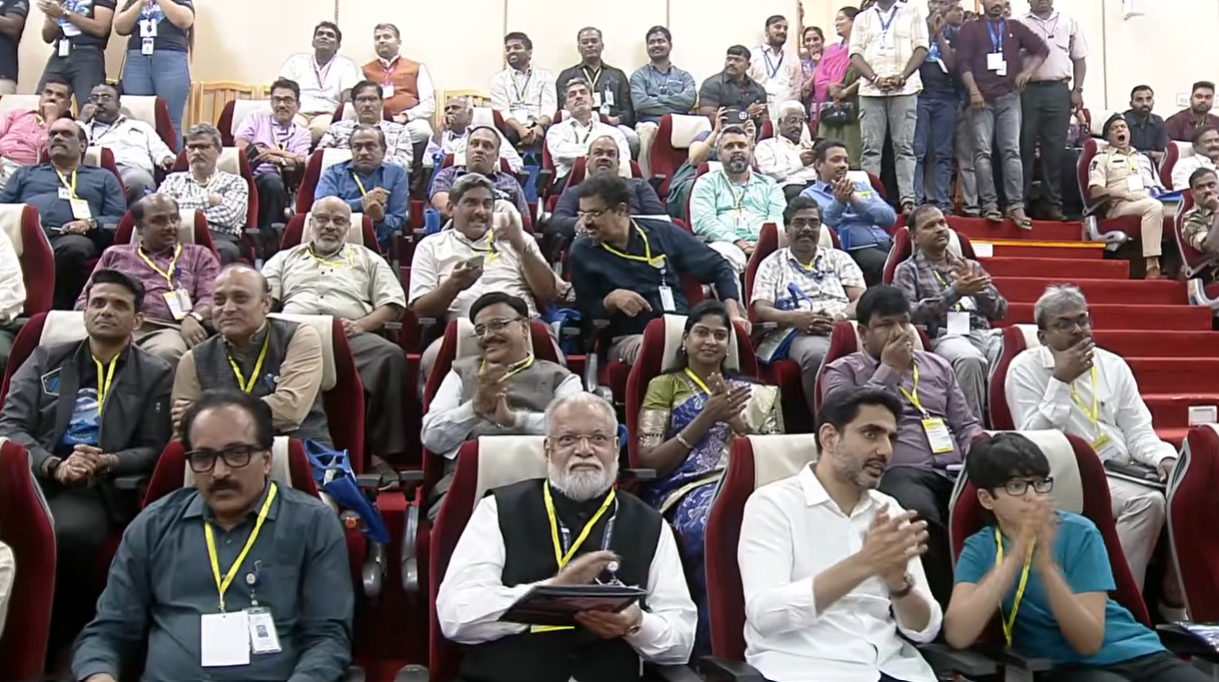
Mission Aagaman has been declared a grand success, marking a historic milestone for India’s private space sector. With Vikram-1 successfully completing its maiden mission, the launch paves the way for a new era of privately built orbital rockets in the country.
Vikram-1 has successfully completed payload separation at the designated point in its flight. The milestone confirms that the rocket followed its planned trajectory and released the payloads as intended, keeping Mission Aagaman on track.
Skyroot Aerospace’s Vikram-1 has completed all four stages of its maiden flight in under 10 minutes, marking another major achievement for India’s first privately developed orbital rocket. The vehicle crossed the speed of sound, passed through Max-Q, entered space, and carried out all planned stage separations.
Skyroot Aerospace’s Vikram-1 has successfully reached space, marking another historic milestone for India’s private space sector. The rocket has also completed payload separation as planned, with its trajectory remaining on track.
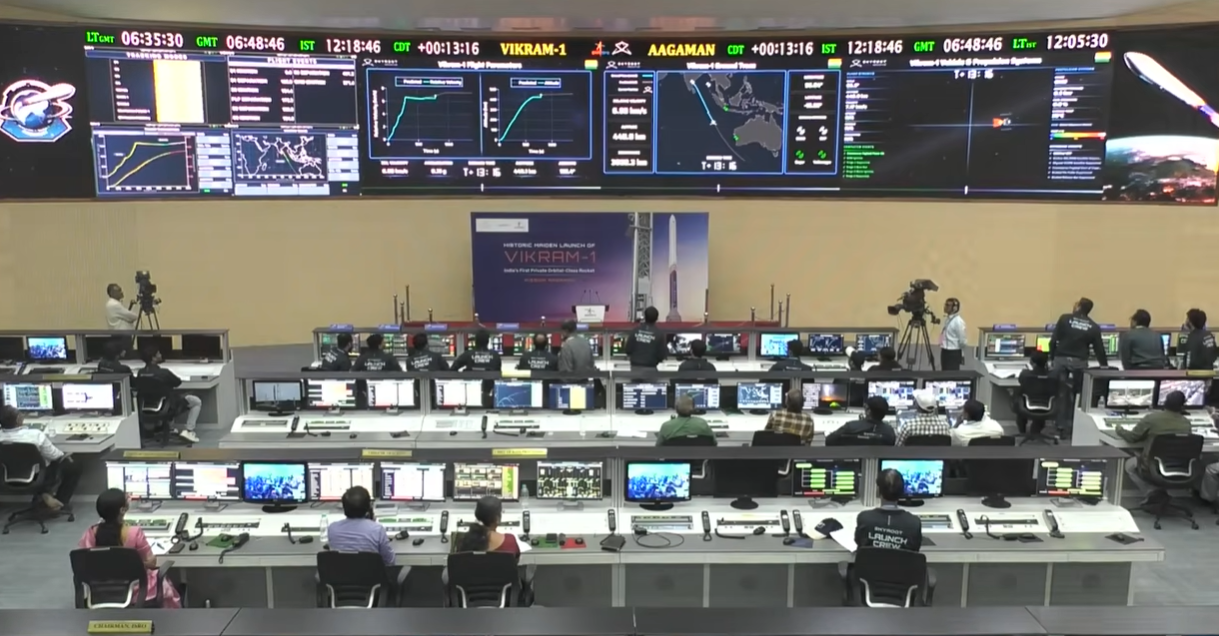
Skyroot Aerospace’s Vikram-1 has successfully completed payload separation, marking another major milestone in Mission Aagaman. The payloads have been deployed as planned, demonstrating the rocket’s ability to carry and release satellites in orbit. The successful separation brings India one step closer to establishing a strong private launch capability.
Skyroot Aerospace’s Vikram-1 has successfully lifted off, creating history as India’s first privately developed orbital rocket. The milestone launch marks a major breakthrough for the country’s private space industry and demonstrates India’s growing capabilities in commercial spaceflight. With Mission Aagaman now underway, all eyes are on the rocket as it progresses through its planned flight milestone
Engineers are carrying out final checks on Vikram-1’s vital systems to ensure the rocket is ready for liftoff. These routine inspections help verify that all onboard systems are functioning normally before the final launch clearance is given.
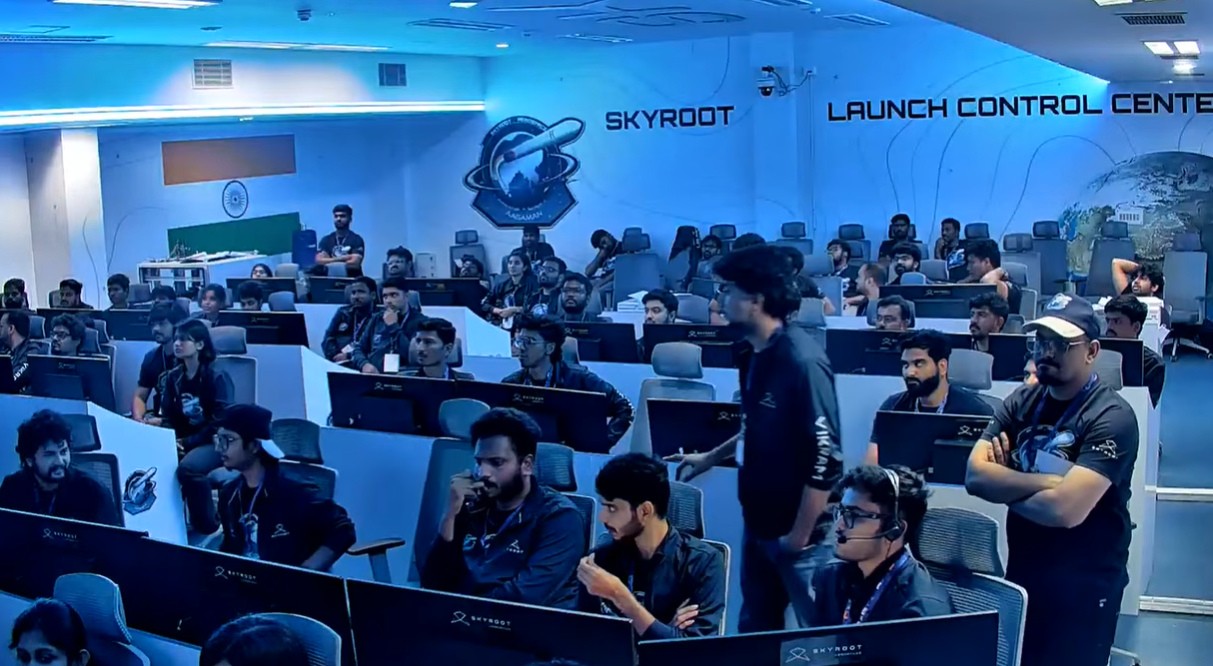
Following a short internal hold, Skyroot Aerospace’s Vikram-1 is now scheduled to lift off at 12:05 pm from Sriharikota. The countdown has resumed, and all systems are being closely monitored as the rocket prepares for its maiden flight under Mission Aagaman.
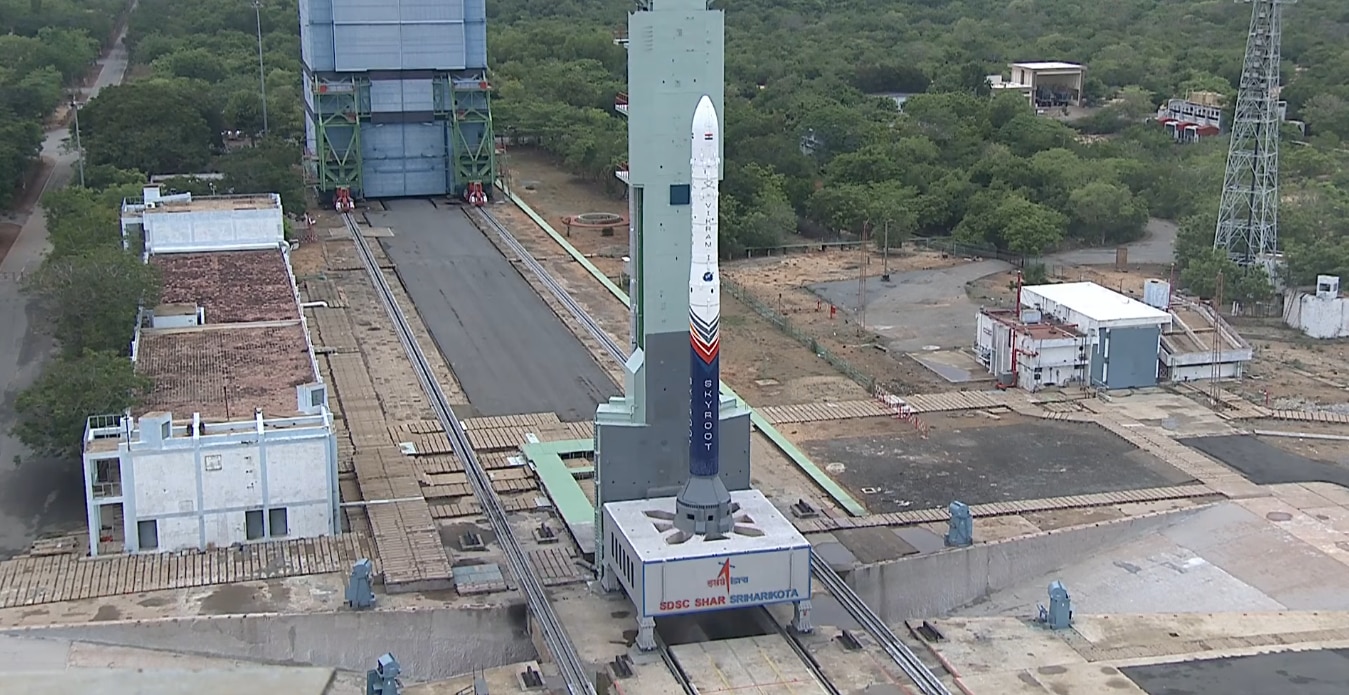
After completing the final pre-launch checks, Skyroot Aerospace is set to begin the launch sequence for Vikram-1 shortly. All eyes are now on Sriharikota as India’s first privately developed orbital rocket prepares to lift off on its historic mission.
Vikram-1’s liftoff, originally scheduled for 11:30 am, has been delayed by a few minutes. The launch team is carrying out final checks before giving the green signal. A revised liftoff time is expected shortly.
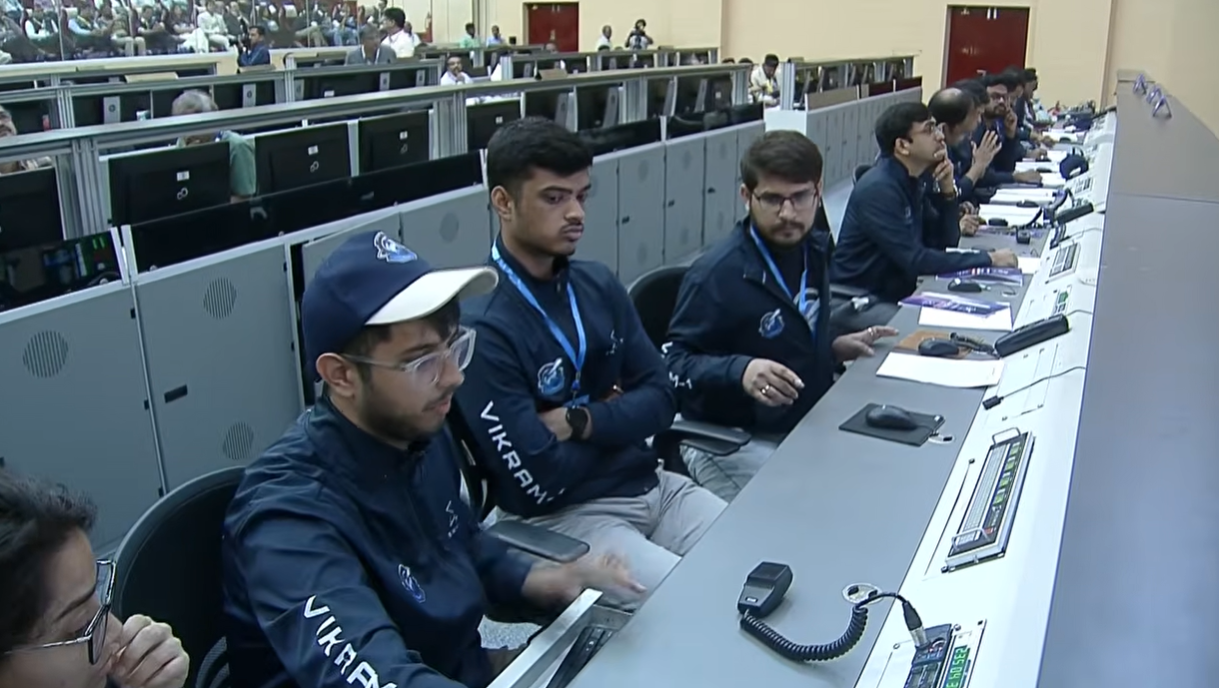
Image credit: Skyroot
Skyroot Aerospace has placed the Vikram-1 launch under an internal hold as final checks are being carried out before liftoff. Such planned holds are a normal part of the countdown process and allow engineers to verify that all systems are functioning properly. Once the checks are complete and everything is cleared, the countdown will resume.
The payload fairing, or the rocket’s nose cone, protects the satellites from extreme heat, strong winds and intense vibrations during launch.
Once Vikram-1 reaches space, the fairing splits into two halves and separates, allowing the satellites to be deployed safely into orbit.
Skyroot Aerospace recently became India’s first space unicorn after raising nearly $60 million in fresh funding, taking its valuation to $1.1 billion. The funding round was co-led by Sherpalo Ventures and GIC, with support from existing investors, giving a major boost to the company’s commercial space ambitions.
Here is the YouTube link to watch the live.
Skyroot Aerospace has successfully completed the Guidance, Navigation and Control (GNC) checks for Vikram-1. With all key systems performing as expected, the rocket has cleared another critical milestone ahead of liftoff, bringing it one step closer to launch.
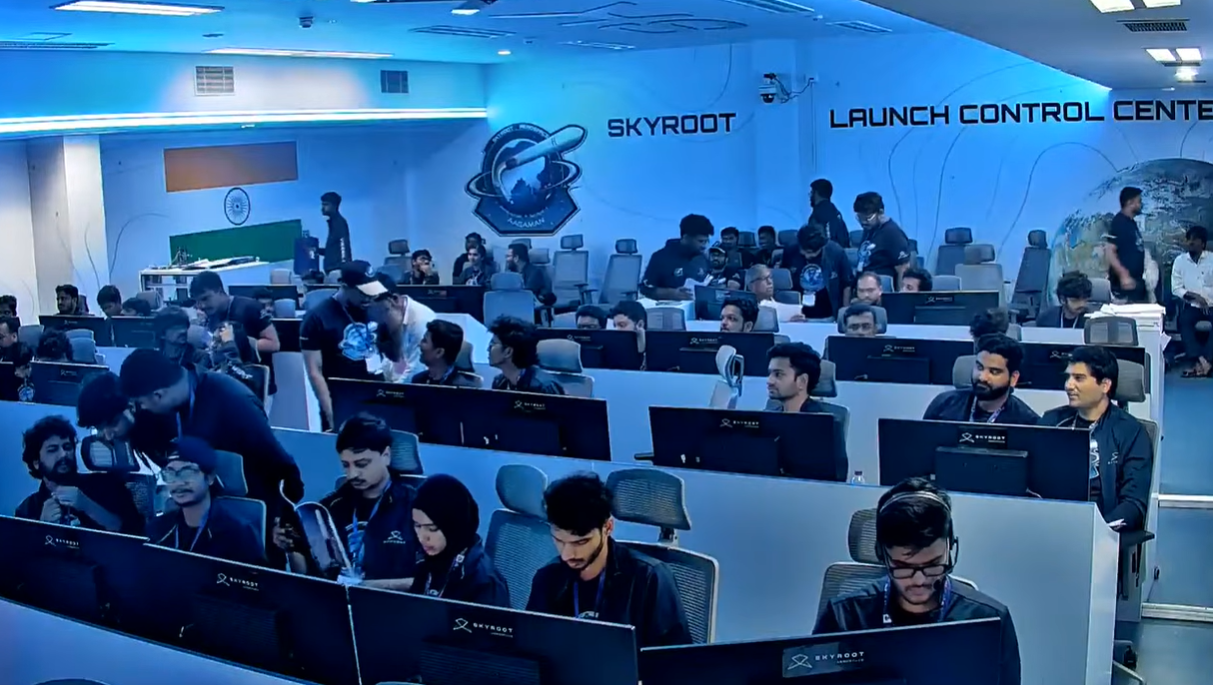
Image credit: Skyroot
As the countdown continues, the chairman of IN-SPACe has joined the chorus of support for Skyroot Aerospace.
Pawan Goenka wished the Skyroot team success in a post on X, calling Vikram-1 a “historic milestone” and saying the nation is eagerly awaiting the outcome of India’s first privately developed orbital rocket launch.
Skyroot Aerospace founders Pawan Chandana and Naga Bharath Daka, both former ISRO engineers, say a successful liftoff itself would be a major achievement, with the primary goal being to gather valuable flight data.

Pawan Chandana and Naga Bharath Daka
Former ISRO Chairman S. Somanath has extended his best wishes to the Skyroot Aerospace team ahead of the historic Vikram-1 launch. He described the mission as a significant milestone for India’s rapidly growing private space sector and wished the team success for Mission Aagaman.
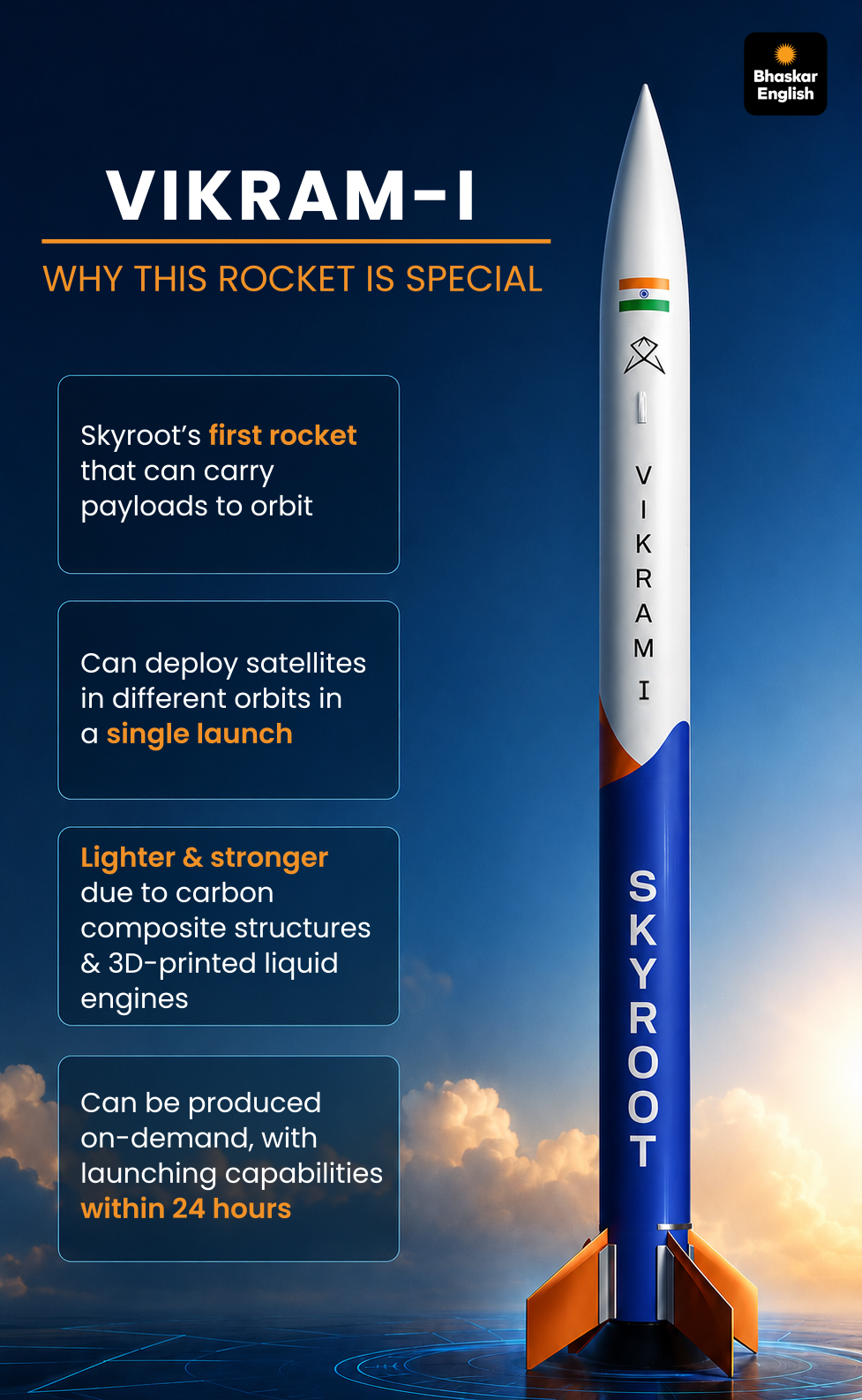
Vikram-1 will attempt to place multiple technology demonstration payloads into a 450-km Low Earth Orbit (LEO). The rocket can carry payloads of up to 350 kg and is powered by 3D-printed engines and high-thrust solid rocket motors, showcasing Skyroot Aerospace’s advanced in-house technology.
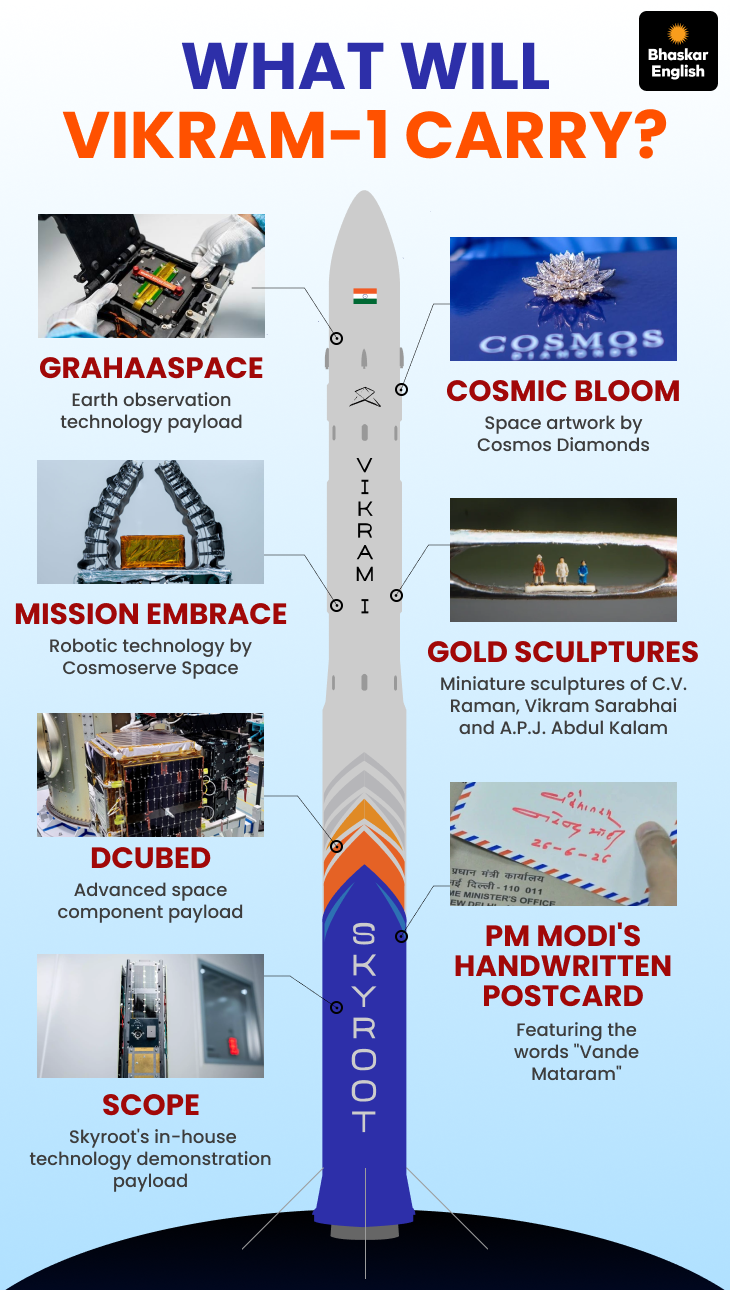
The rocket will carry several technology demonstration payloads from Indian and international companies. Understand from the infographic give below.
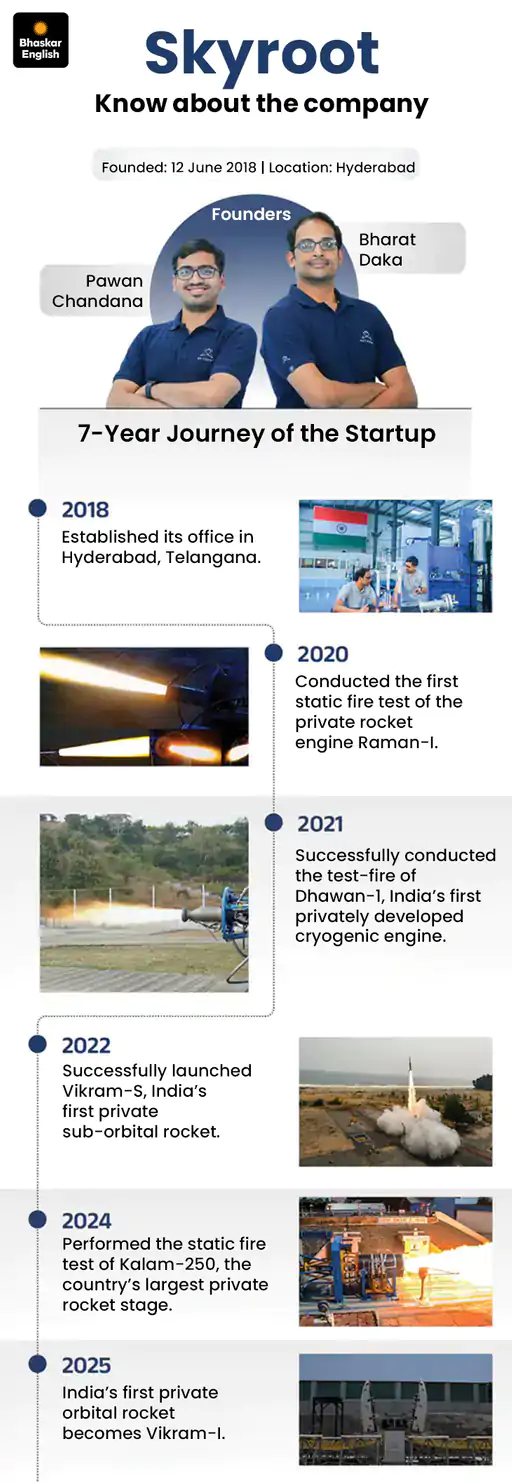
Hyderabad-based Skyroot Aerospace is one of India’s leading private space startups. The company made history in 2022 with the successful launch of Vikram-S, India’s first privately built rocket to reach space. With Vikram-1, Skyroot is now aiming to achieve its first orbital mission and open a new chapter for India’s private space industry.
Andhra Pradesh HRD Minister Nara Lokesh is travelling to Sriharikota with his son, Devaansh, to witness the historic launch of Skyroot Aerospace’s Vikram-1. Calling it a dream years in the making, he said the mission reflects India’s growing confidence that a private company can build rockets and help shape the country’s future in space.
Along with its technology demonstration payloads, Vikram-1 will carry a handwritten postcard by Prime Minister Narendra Modi bearing the words “Vande Mataram.”
Ahead of Vikram-1’s historic launch, every member of the Skyroot Aerospace team signed the rocket, leaving behind a personal mark on India’s first privately built orbital launch vehicle. As Mission Aagaman lifts off, the signatures symbolize the dedication and hard work of the engineers and technicians who helped turn the mission into reality.
Mission Aagaman is the maiden test flight of Skyroot Aerospace’s Vikram-1 rocket. The mission aims to validate the rocket’s performance and test its key technologies under real flight conditions.
Vikram-1 is India’s first privately built orbital rocket, developed by Hyderabad-based Skyroot Aerospace. Under Mission Aagaman, it will carry multiple small satellites into low-Earth orbit while testing the rocket’s performance, paving the way for future commercial space missions.
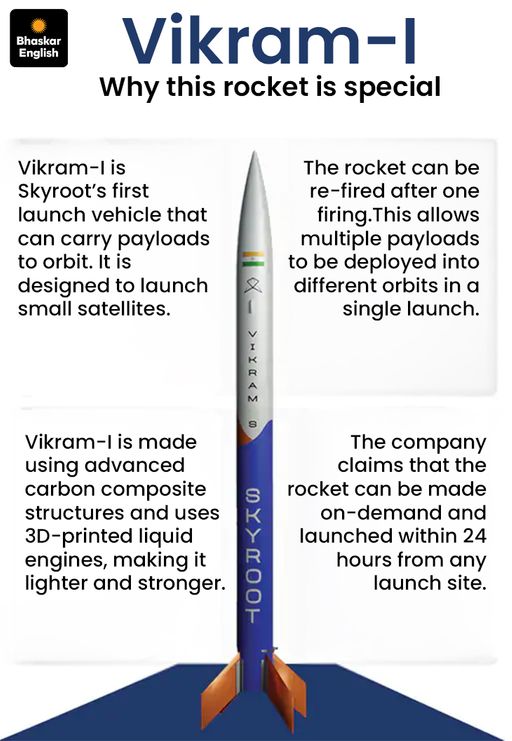
Hyderabad-based Skyroot Aerospace is set to launch its Vikram-1 rocket from Sriharikota today. Named Mission Aagaman, it aims to become the first privately built Indian rocket to place satellites into orbit, marking a major milestone for India’s private space sector.