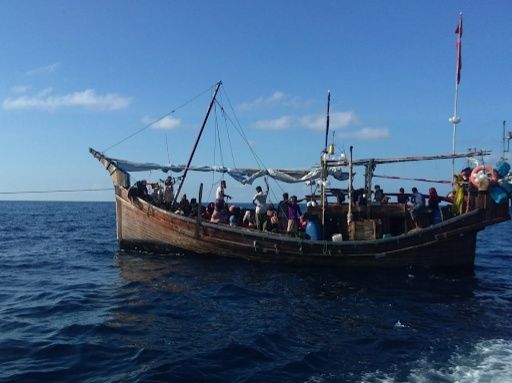

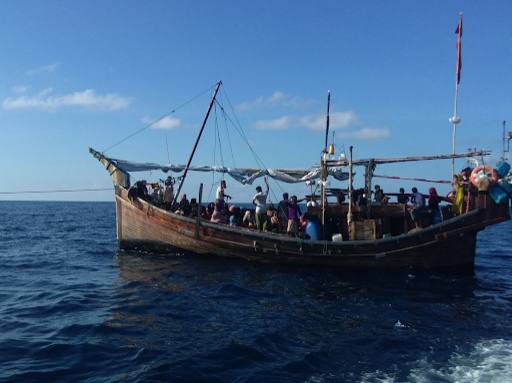
Thousands of Rohingya travel from Myanmar and Bangladesh every year in search of a better life in other countries. (File photo)
More than 500 people fleeing violence in Myanmar are feared to be missing at sea after two boats disappeared in bad weather off the country’s coast, according to two United Nations agencies. Most of those on board were from the Rohingya community.
The International Organisation for Migration (IOM) and the UN Refugee Agency (UNHCR) said in a joint statement that both boats left Myanmar’s western Rakhine State at the end of June.
The first boat was carrying around 250 people and lost contact shortly after departing. The second boat, with about 280 people on board, is believed to have sunk near Myanmar’s Ayeyarwady coast on 8 July.
Rohingya people have no citizenship
The Rohingya are a Muslim minority community from Myanmar’s Rakhine State. For decades, they have faced persecution, violence and discrimination.
Myanmar’s Buddhist-majority government and many local people do not recognise the Rohingya as one of the country’s indigenous communities. They claim the Rohingya are illegal immigrants who arrived from Bangladesh, then part of Bengal, during British rule, and officially refer to them as “Bengalis”.
The Rohingya community says its people have lived in the Rakhine region since the eighth century or even earlier and are indigenous to the area.
In 1982, Myanmar denied the Rohingya citizenship, leaving them stateless. As a result, they have been deprived of basic rights, including access to education, healthcare, freedom of movement and marriage.
Around 1.2 million Rohingya are currently living in refugee camps in Bangladesh after fleeing violence by the Myanmar military. In recent years, food rations in these camps have also been reduced because of cuts in foreign aid from the United States and other countries.
Rohingya refugees have no safe way to return to Myanmar. In 2017, the Myanmar military was accused of carrying out widespread violence against the Rohingya, which many countries have described as genocide.
Those who remain in Myanmar continue to face severe restrictions, with many forced to live in detention camps.
Taking deadly risks to reach Malaysia
The Rohingya usually avoid travelling by sea during the monsoon because conditions are extremely dangerous.
However, ongoing violence in Myanmar and poor living conditions in overcrowded refugee camps in Bangladesh have forced many to risk dangerous journeys by sea to countries such as Malaysia, Indonesia and Thailand in old wooden boats.
Thousands of Rohingya, including newborn babies, children and pregnant women, have lost their lives while attempting these journeys.
The United Nations has also said that, in some cases, local maritime authorities have failed to assist boats in distress.
One of the world’s deadliest sea routes
According to the United Nations, around 900 Rohingya refugees were killed or went missing in the Andaman Sea and the Bay of Bengal in 2025, making it one of the world’s deadliest sea routes for refugees and migrants.
The IOM and UNHCR said this latest incident highlights that there is still no lasting solution to the Rohingya crisis. They urged the international community to increase support for refugees living in camps in Bangladesh.
The agencies also called for stronger search and rescue operations, better asylum arrangements and tougher action against human trafficking networks to prevent further loss of life.
According to the UNHCR, more than 6,500 Rohingya attempted to flee by sea in 2025. Of these, around 900 died or went missing, making it the deadliest year on record for Rohingya sea crossings and the highest death rate on any major refugee sea route in the world.