
Union Road Transport and Highways Minister Nitin Gadkari has dismissed claims that E20 fuel damages vehicles, saying there is no evidence to support such allegations.
In an exclusive interview with Dainik Bhaskar, Gadkari said ethanol has been blended with petrol in India since 2004 and questioned reports linking it to vehicle damage.
‘No evidence that E20 damages vehicles’
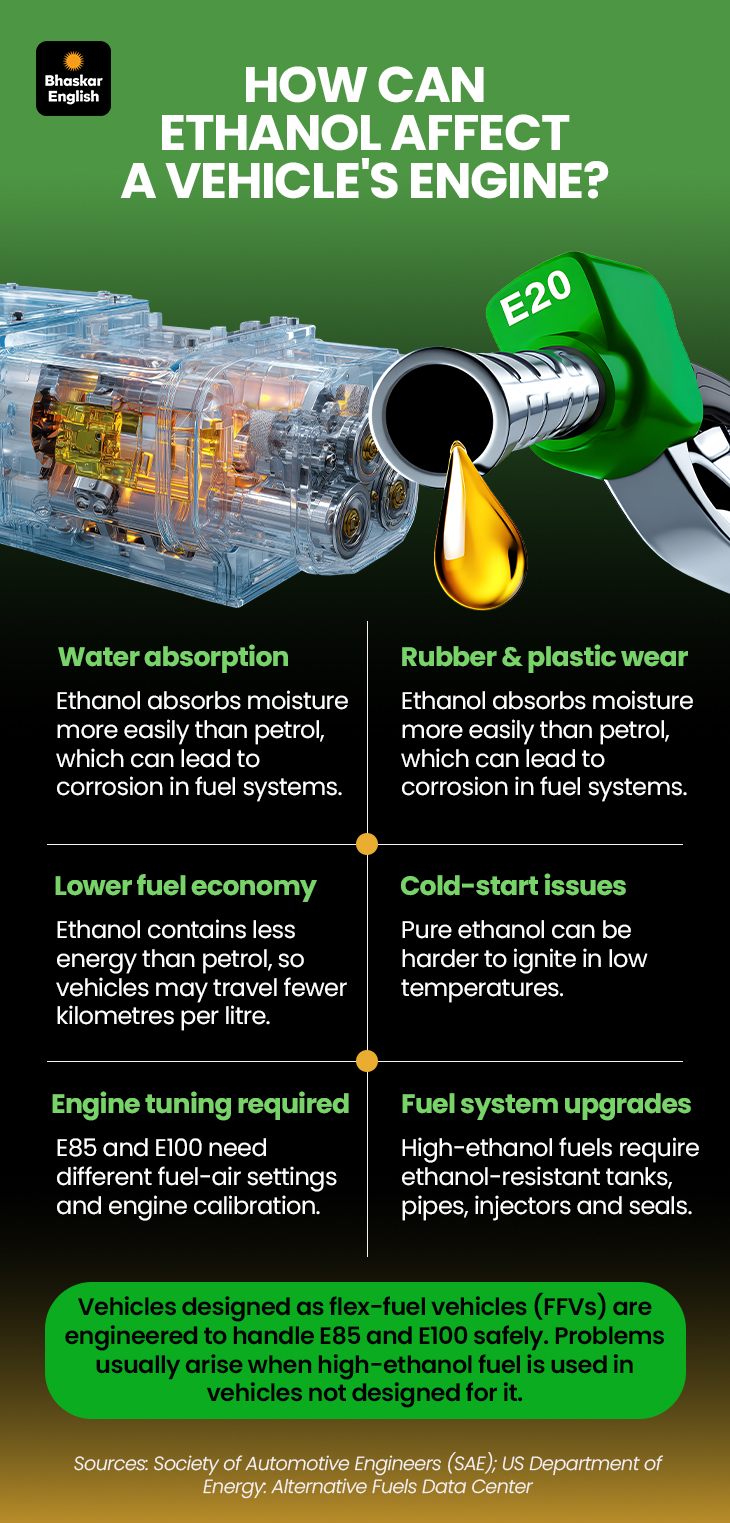
“There is no proof. We have been blending ethanol with petrol since 2004. Has any problem occurred so far? Tell me the name of even one person whose vehicle was damaged because of ethanol,” Gadkari said.
He said every fuel undergoes four years of testing before implementation, with global automobile companies and Indian technical institutions conducting evaluations before certification. The ministry finalises standards only after these tests.
Gadkari also rejected claims circulating on social media, including allegations that ethanol attracts ants and flies to fuel tanks.
‘My focus is on all alternative fuels’
Responding to criticism that he focuses excessively on ethanol, Gadkari said he is working on multiple alternative fuels, including electric, hydrogen, bio-CNG and methanol.
“I am the Transport Minister. It is my responsibility to set automobile engineering standards. The final decision on which fuel is used lies with the Petroleum Ministry,” he said.
Gadkari said he has been working on alternative fuels for farmers’ welfare for the past 25 years, with the aim of reducing pollution, increasing farmers’ income, creating jobs and cutting petroleum imports.
India has enough ethanol production capacity
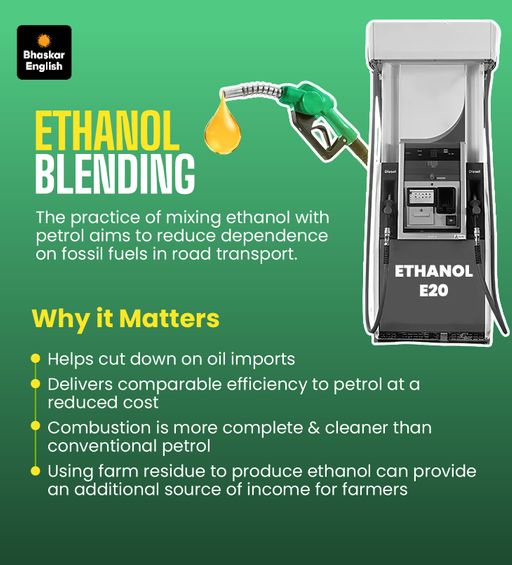
Gadkari said India requires around 1,450 crore litres of ethanol annually, while its production capacity stands at 1,750-1,800 crore litres.
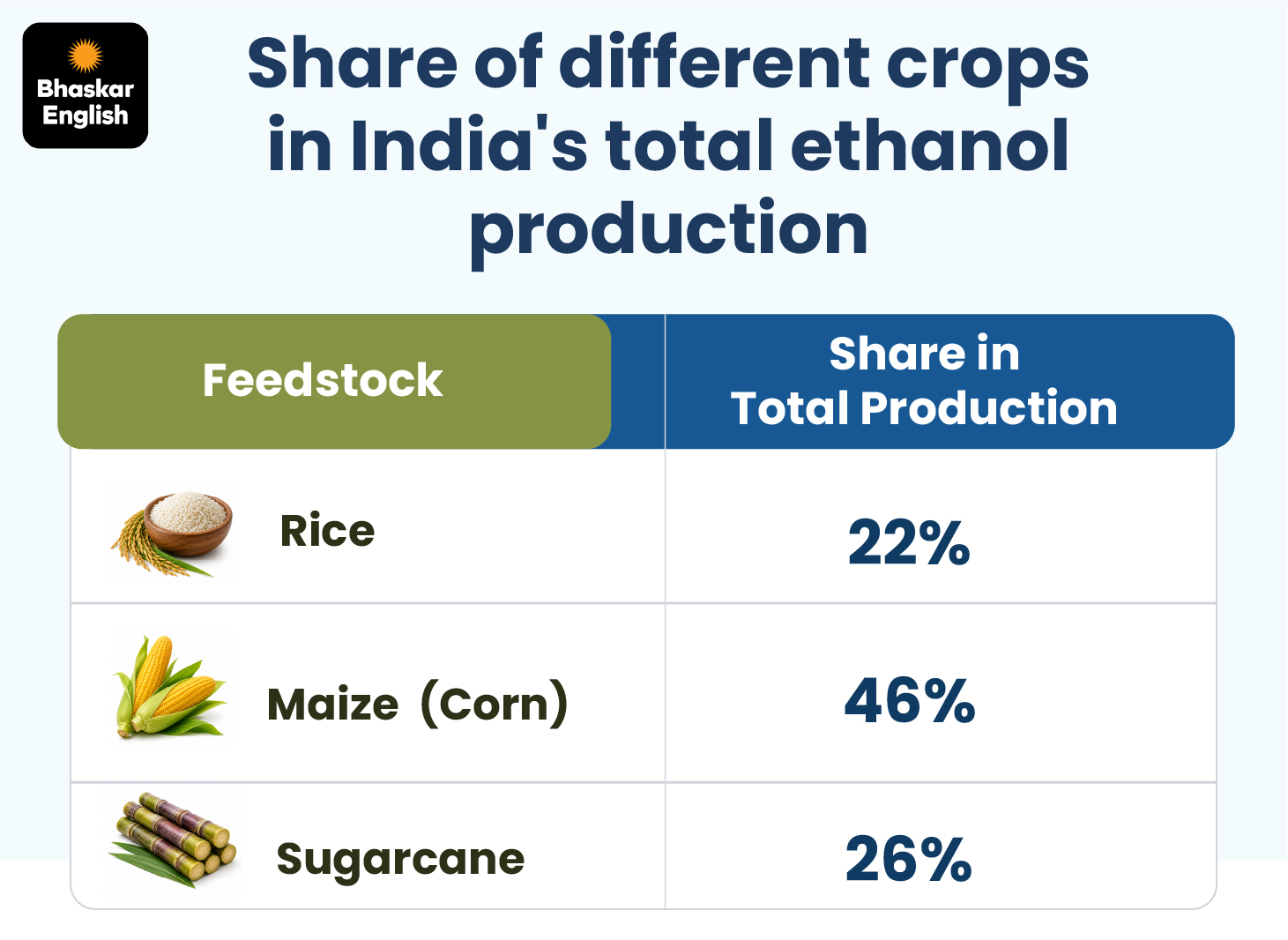
He said ethanol is produced not only from sugarcane but also from molasses, maize, broken rice, crop residue and bamboo. According to him, ethanol has helped save imports worth ₹2 lakh crore, reduced pollution and improved farmers’ incomes.
‘Mileage may vary slightly’
Addressing concerns over fuel efficiency, Gadkari said mileage depends on road conditions and traffic.
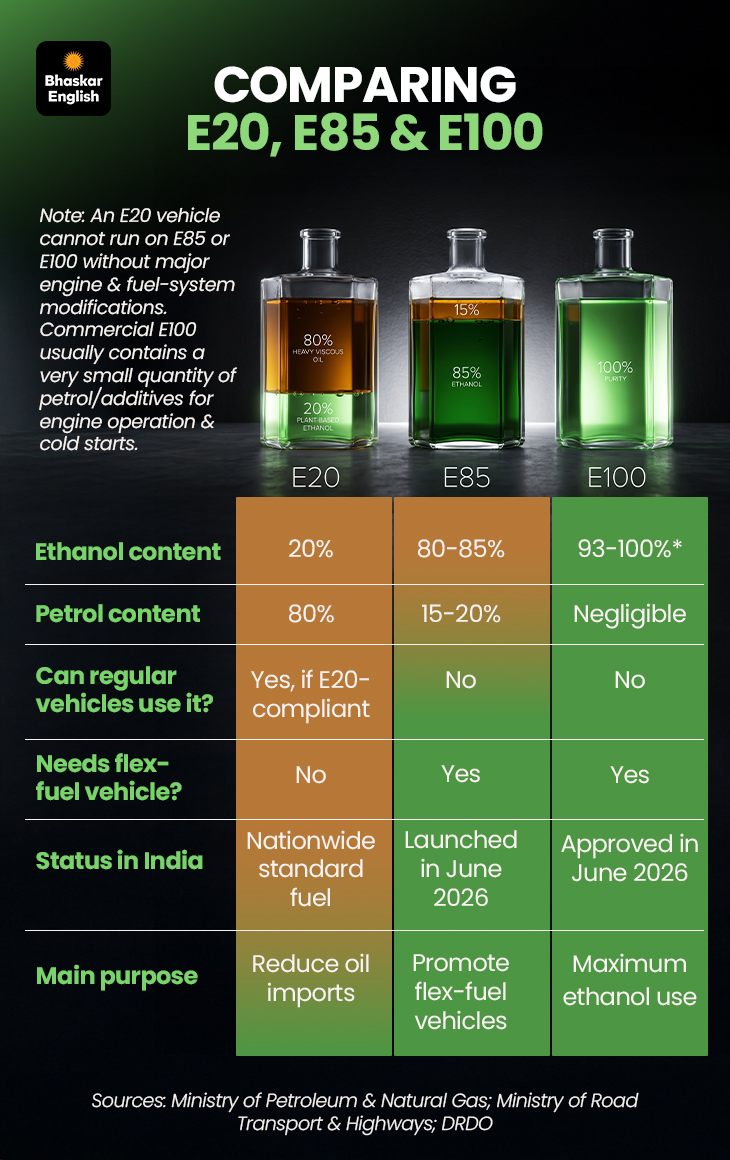
He acknowledged that ethanol has a slightly lower calorific value than petrol, meaning mileage could differ marginally under some conditions. However, he said ethanol is cheaper and cleaner, adding that flex-fuel engines would further reduce this difference.
‘Every country has different fuel policies’
On why India does not offer both E20 and 100% petrol like some other countries, Gadkari said every country frames its policy according to its own circumstances.
He cited Brazil, where 100% ethanol has been used since the 1970s and multiple fuel options are available at fuel stations. India, he said, is not yet at that stage.
Fuel prices are decided by petroleum ministry
Asked why petrol prices have not fallen despite ethanol being a cheaper fuel, Gadkari said fuel pricing is outside his jurisdiction.
“Even when crude oil is at $80 per barrel, the government keeps prices stable. Reducing fuel prices is the responsibility of the Petroleum Ministry,” he said.
Water use and 2G ethanol
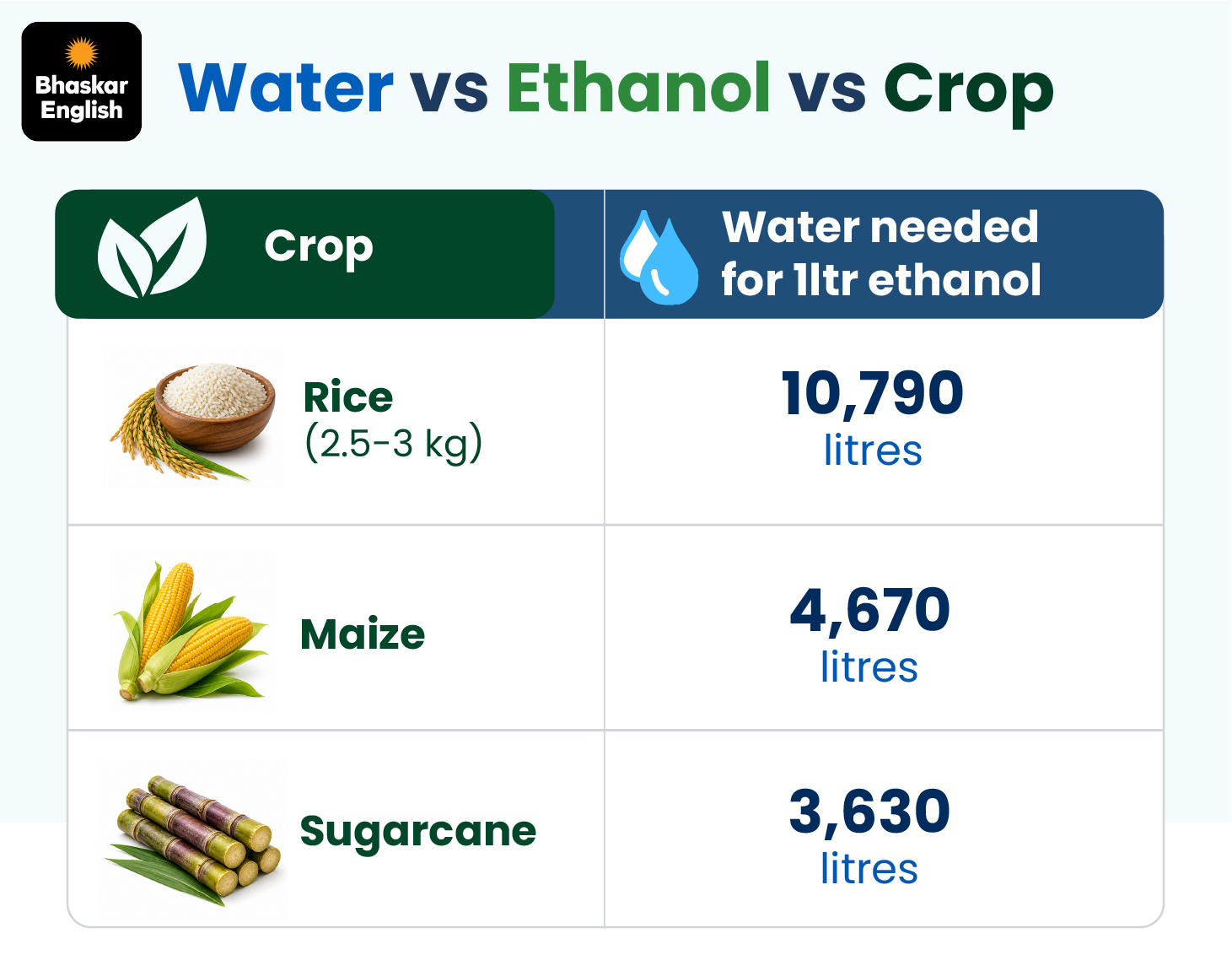
On concerns over water consumption in ethanol production, Gadkari said water is recycled during the process and stressed the need for better water management.
Speaking on second-generation (2G) ethanol made from crop residue and waste, he said the technology still faces challenges due to high capital costs but remains the future direction.
Plans for road safety and highway quality
Gadkari said India records around 5 lakh road accidents and 1.8 lakh deaths every year, including 30,000 deaths linked to not wearing helmets.
He said the government is working on road engineering, vehicle safety, stricter laws and behavioural change, while black spots have been improved and new safety standards introduced.
On complaints about potholes on national highways, he said digital monitoring has been introduced, contractors are being rated, and companies failing quality standards have been blacklisted.
‘Politics is about principles’
On whether speaking candidly has ever cost him politically, Gadkari said he believes in politics based on principles rather than convenience.
“I entered politics not for power but for social and economic transformation and nation-building,” he said.
‘Alternative fuels are about more than cost’
Asked whether ethanol would remain viable if crude oil prices stayed below $70 per barrel, Gadkari said lower crude prices could reduce ethanol’s economic advantage after a certain point.
However, he said India’s objective is not only cost savings but also energy security, lower pollution and higher income for farmers, making alternative fuels essential for an Atmanirbhar Bharat.