
37 minutes agoAuthor: Anjali Rajgovind
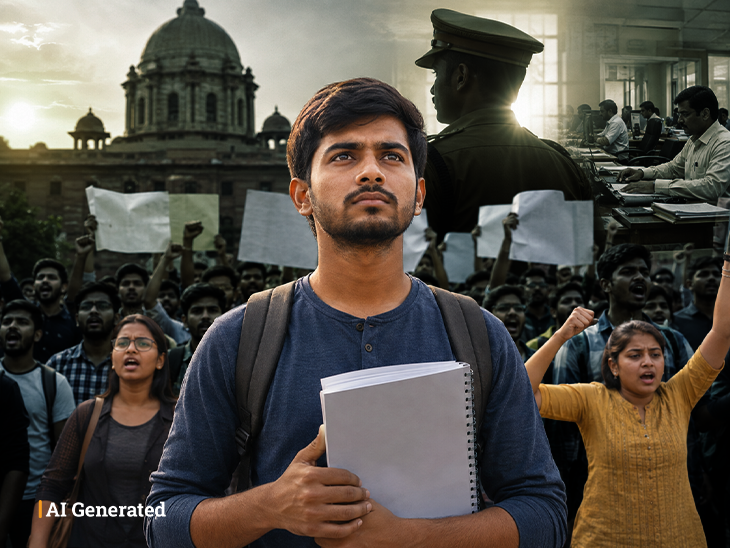
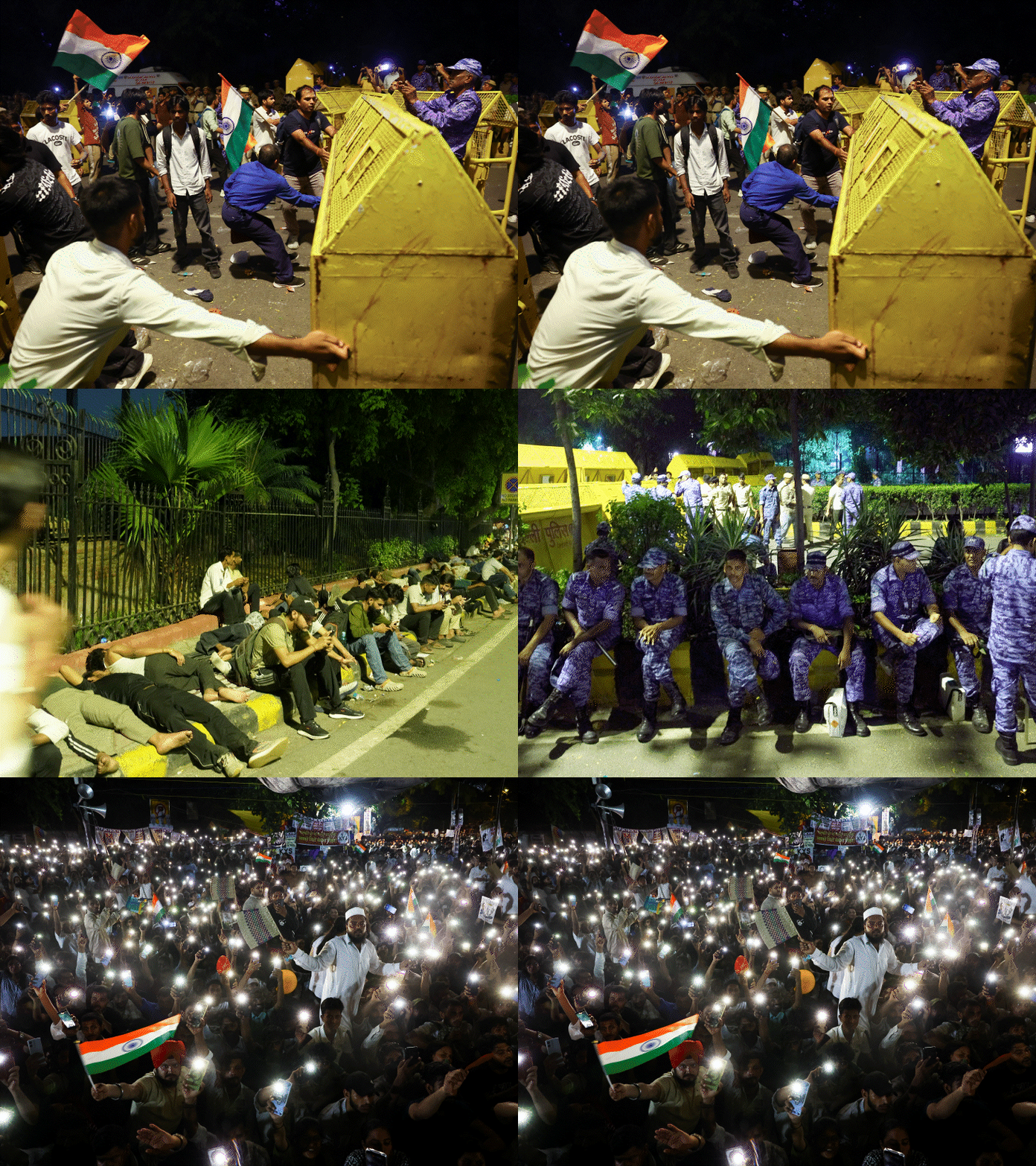
Jharkhand is witnessing protests over alleged irregularities and delays in public service recruitment, with aspirants saying their trust in the selection process has been shaken.
But the anger over JPSC raises a bigger question.
Why do government jobs remain such a powerful career dream when recruitment exams across India have repeatedly faced paper leaks, delays, cancellations and court battles?
Coaching centres remain full. Families continue spending lakhs on preparation. And engineers, doctors and MBA graduates also enter the race despite having other career options.
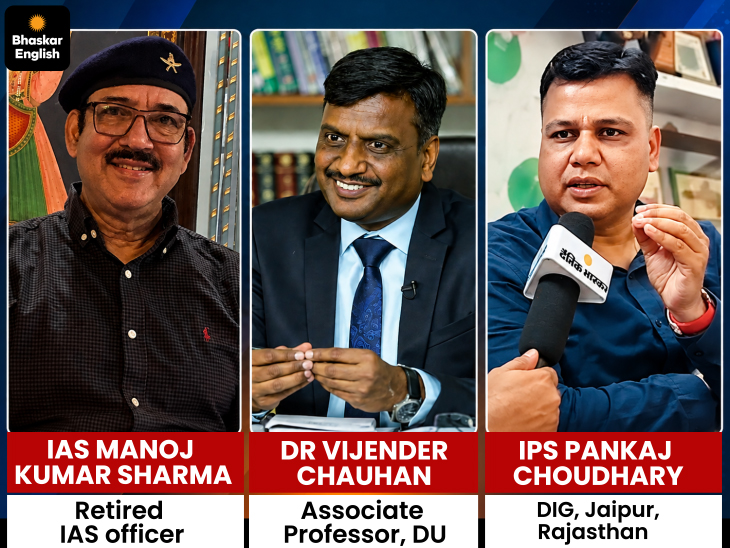
To understand why the government-job dream refuses to fade, we spoke to:
Here is what we found.
JPSC is not the first recruitment controversy
- Jharkhand is not alone in seeing protests over public service recruitment.
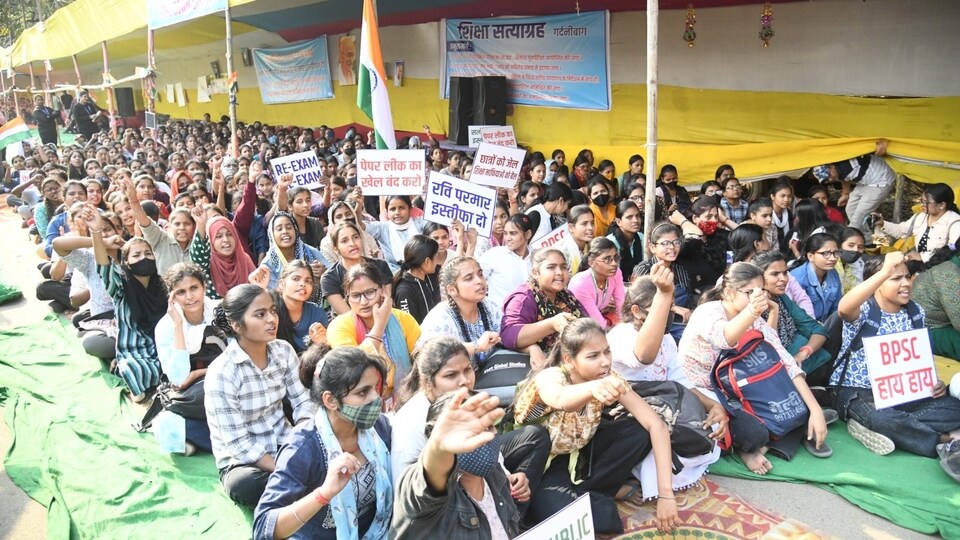
In Bihar, the 70th BPSC examination faced protests after irregularities were alleged at an examination centre. The Commission later conducted a re-examination for candidates of the affected centre.
- In Rajasthan, the RPSC Senior Teacher Grade-II examination was cancelled in 2022 after the question paper was allegedly leaked before the test. The state’s 2021 RPSC Sub-Inspector recruitment examination also faced a major legal challenge over alleged irregularities.
- In Uttar Pradesh, thousands of UPPSC aspirants protested in Prayagraj in November 2024 against the proposed multi-shift PCS preliminary examination and its normalisation system. The PCS exam had more than six lakh candidates.
The controversies are different, but the fear is similar:
What happens if years of preparation are wasted because the recruitment system fails? Why is a government officer still seen as ‘success’?
For many Indian families, a government job is more than a source of income.
It represents security, status, authority and social mobility.
IAS Manoj Kumar Sharma says government service combines responsibility with social recognition.
The attraction is particularly strong in smaller cities and towns, where a senior government officer can enjoy considerable social standing.
Dr Vijender Chauhan says this prestige also has a historical dimension. He says,

India inherited a powerful administrative structure from the colonial period. After Independence, the bureaucracy remained central to the functioning of the state.
But social status is only one part of the story.
Security is perhaps the bigger attraction.
Why choose a government job over a private career?
Private-sector jobs can offer higher salaries and faster growth.
But they can also mean layoffs, changing employers, performance pressure and uncertain career paths.
Government employment is seen as more predictable.
- A survey of banking and government-job aspirants found that job stability was the biggest attraction for 44.3% of respondents. Nearly 79% of those surveyed were from Tier-2 and Tier-3 cities.
- This matters because the government-job preference is often strongest where alternative white-collar opportunities are limited.
- For a graduate in a smaller city, a government job can offer a stable career without necessarily requiring permanent migration to a major metro.
Dr Chauhan puts the issue in a broader context:
A government post is often seen as protection from economic insecurity and social powerlessness.
So the question is not always:
“Why don’t they take a private job?”
Sometimes it is:
“What makes a private job less attractive?”
Why do engineers, doctors and MBAs also prepare for PSC exams?
The PSC race is no longer limited to traditional humanities graduates.
Professionals with engineering, medical and management backgrounds also enter competitive examinations.
One reason is the nature of public service itself.
- An engineer may have a specialised career. A doctor may work primarily in healthcare. An MBA graduate may enter finance or management.
- Civil and administrative services offer something different: variety and wider decision-making responsibility.
- An officer can work across areas such as revenue, law and order, welfare, education, health and disaster management.
IAS Manoj Kumar Sharma says:
Civil service offers wider responsibility and decision-making power across departments.
IPS Pankaj Choudhary also points to the variety and influence associated with these posts. He explains,
Diversity of work and the influence associated with the service attract many professionals.
For some professionals, therefore, the attraction is not simply job security.
It is the possibility of having a broader public role.

How much does the government-job dream cost?
The application fee is the smallest part of the expense.
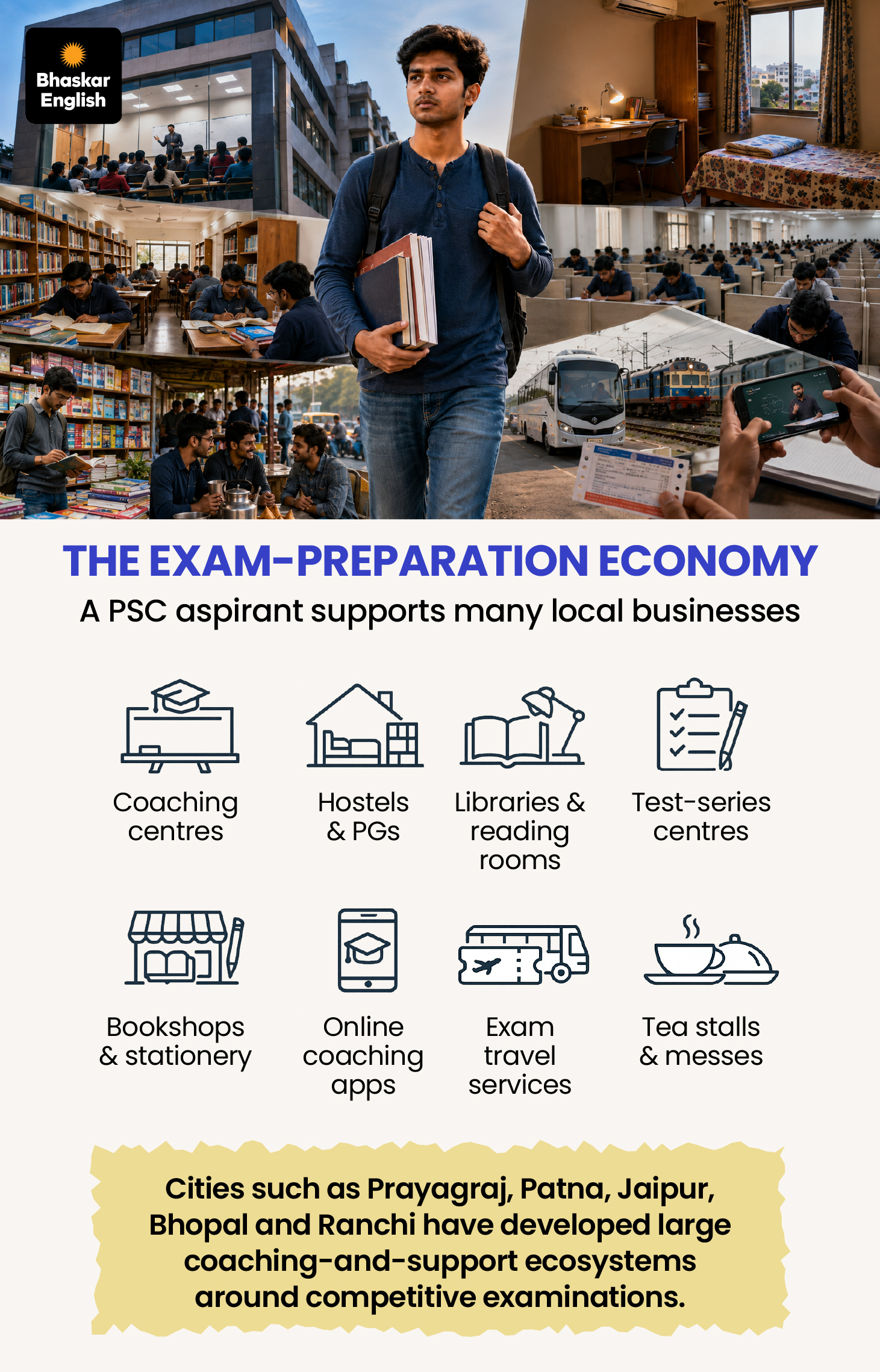
For a student preparing in a coaching city, a typical year can involve:
- Coaching: ₹60,000–₹1.5 lakh
- Hostel/PG: ₹3,000–₹10,000 a month
- Food: ₹2,500–₹6,000 a month
- Books and test series: ₹10,000–₹30,000
- Travel for examinations: ₹5,000–₹20,000
Over two or three years, the cost can run into several lakh rupees.
But there is another cost that cannot be seen on a receipt.
Lost income.
- A graduate preparing full-time may postpone a job, higher education, business plans or another career.
- That is why one failed attempt can mean much more than another examination fee.
- It can mean another year of life.
When preparation becomes an aspiration trap
The first attempt usually begins with optimism.
Then comes the second.
Then the third.
By this point, the candidate has already invested money, time and emotional energy. Leaving preparation can feel like admitting that all those years were wasted.
Dr Vijender Chauhan calls this an aspiration trap.
When lakhs compete for a few posts, the problem is larger than individual success or failure.
The emotional cost can also grow.
Candidates may postpone relationships, income and other career decisions, telling themselves:
“I will decide after I clear the exam.”
The examination slowly becomes an identity.
That is why delays and controversies hurt so deeply.
Why do recruitment controversies trigger such strong protests?
For an aspirant, a recruitment delay is not just an administrative problem.
- It can mean another year of preparation.
- A paper leak can mean starting again.
- A court case can mean uncertainty over whether a selection will stand.
- And a change in examination rules can make candidates feel that the goalposts have moved after they have already invested years.
IPS Pankaj Choudhary says timely recruitment and transparency are crucial.
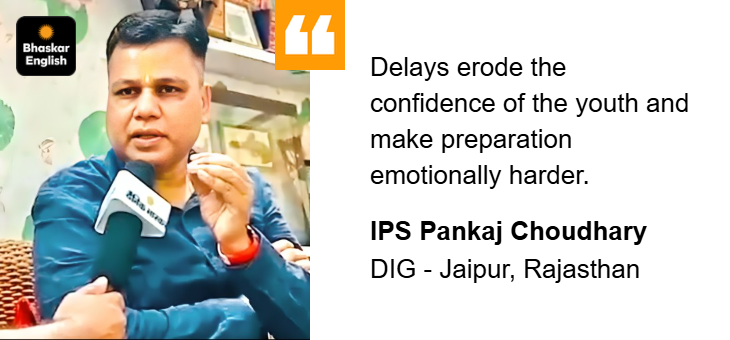
This explains why protests such as those in Jharkhand and Uttar Pradesh can become intense so quickly.
- The candidates are not only fighting over an examination.
- They are fighting over years of their lives.
So, why does the PSC dream refuse to fade?
Because for millions of young Indians, a government job represents four things at once:
- Security for the individual.
- Respect for the family.
- Authority for the officer.
- And social mobility for the household.
That is also why the JPSC controversy matters beyond Jharkhand.
If young people continue to prefer government jobs despite repeated recruitment controversies, the question is not only about examinations.
It is also about the wider Indian job market.
Are enough alternative careers offering young people the same combination of stability, dignity, income and social respect?
Until the answer changes, the government-job dream is unlikely to disappear.
The anger over recruitment failures does not necessarily mean young people have stopped believing in public service.
In many cases, it means the opposite.
The dream matters so much that they are demanding a system they can trust.
And as IAS Manoj Kumar Sharma puts it:
An exam should not become your entire identity; always keep backup plans ready.
Because a government job can change a person’s life.
But no single examination should be allowed to decide the value of that life.
Graphics: Anas Shakir