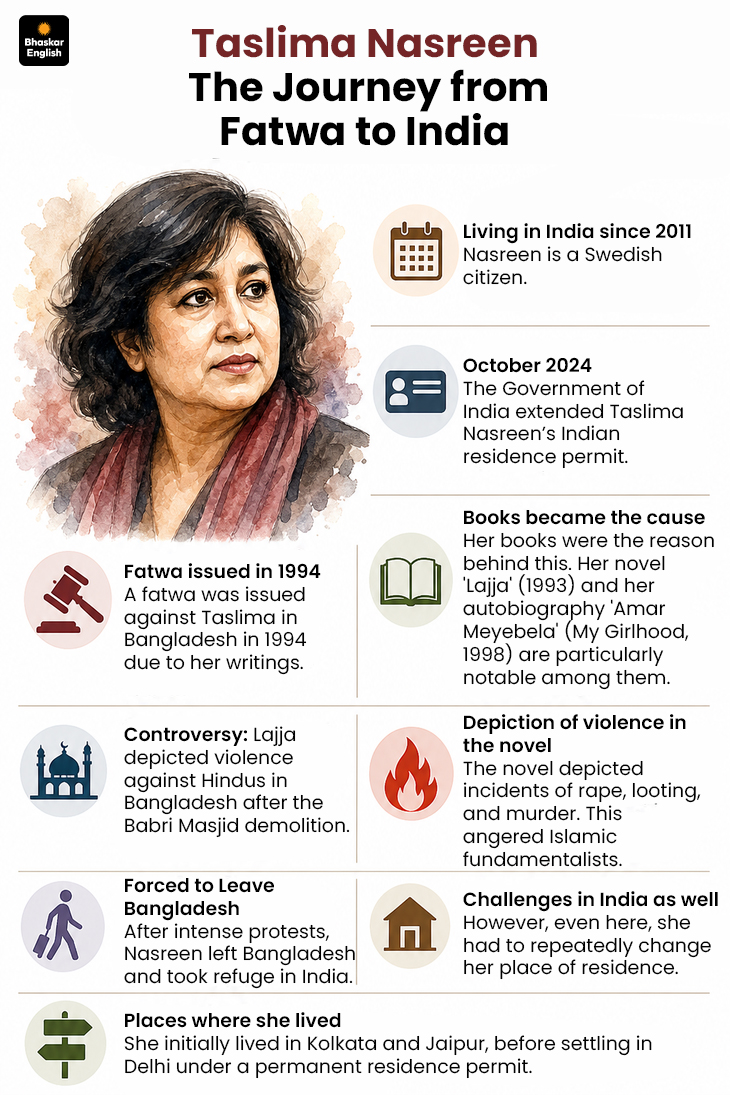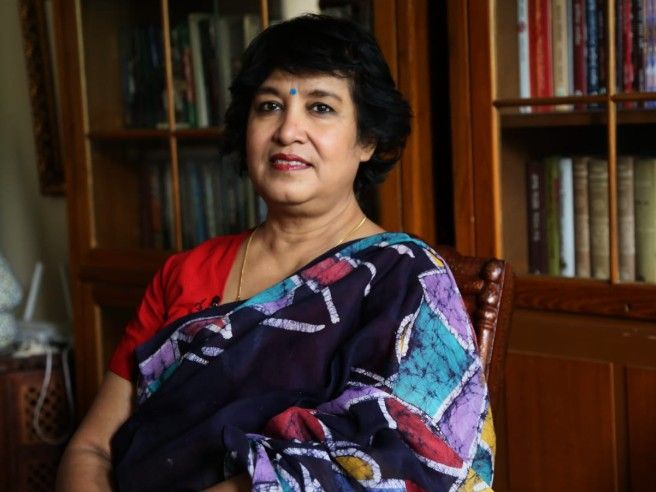

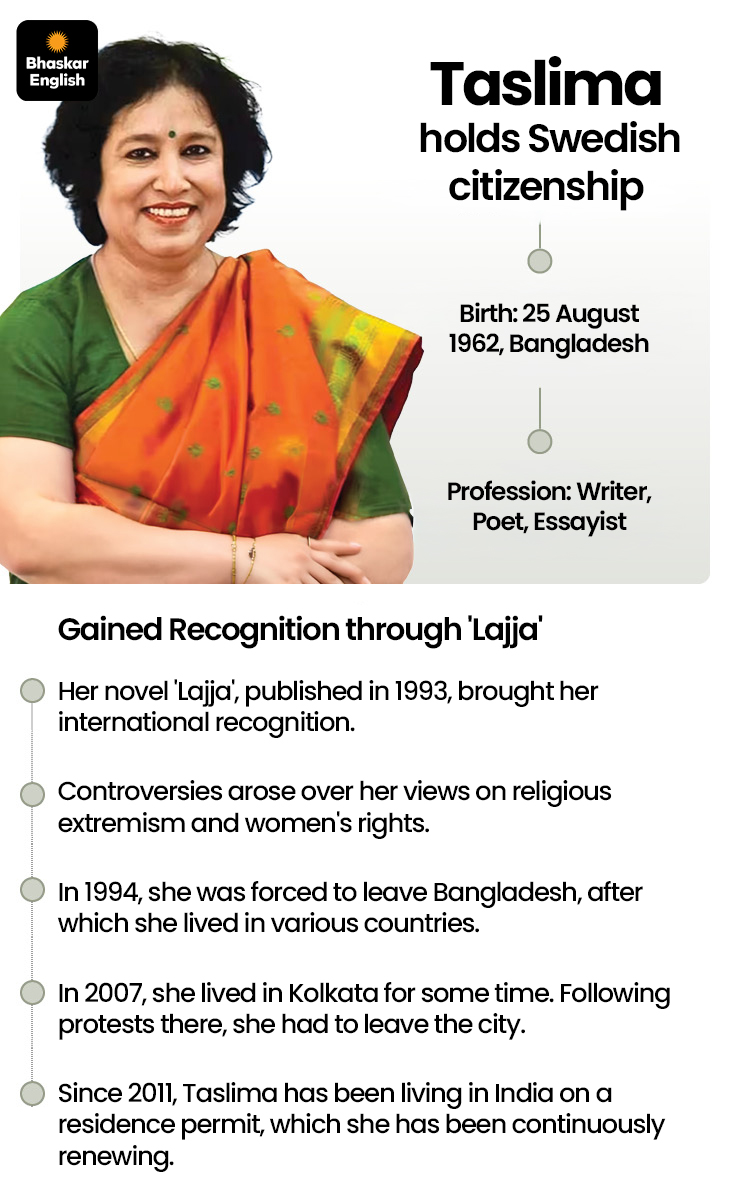
Exiled Bangladeshi author Taslima Nasreen arrived in Kolkata on Friday afternoon, marking her return to the city after 19 years.
Describing the visit as “like returning to my own country”, Nasreen said she feels as though she has come back home.
She is scheduled to attend an event on 1 August, where West Bengal Chief Minister Suvendu Adhikari and author Shirshendu Mukhopadhyay are also expected to be present.
Had to leave Kolkata in 2007
Taslima Nasreen will make a public appearance in Kolkata for the first time since 2007. In 2003, the West Bengal government banned her book Dwikhandito, accusing her of hurting Muslim sentiments.
She left Kolkata in 2007 following protests. She had made the city her home after leaving Bangladesh in 1994 and had been living in Kolkata for about a decade.
She once said, ‘Bengal was never divided in my heart’
Speaking to PTI, Taslima said Kolkata is more than just a place to live, it is a city that gives people a sense of belonging.
“In my heart, Bengal was never divided by borders or barbed wire. The doors of East Bengal are closed to me, so for now, this part of Bengal is my home,” she said.
She added that she is returning to Kolkata with a mix of joy and sorrow.
A return symbolising freedom of expression
Taslima Nasreen described her return as more than a personal homecoming, calling it part of a writer’s enduring struggle for freedom of expression.
“Speaking publicly in Kolkata after 19 years feels surreal. This is the return of a voice that fundamentalists tried to silence. My presence proves that fatwas and threats may exile a writer for a time, but they cannot erase their ideas,” she said.
Expressed gratitude to the government and organizers
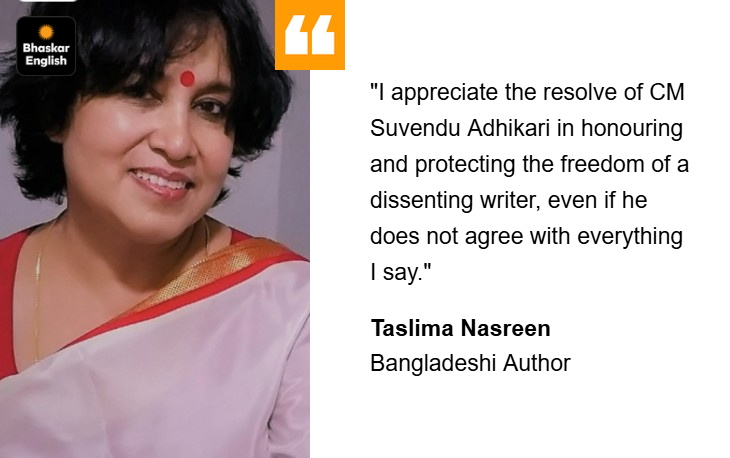
The author expressed gratitude to the organizers for making her journey possible and to the government for providing security. She said, ‘I appreciate CM Suvendu Adhikari’s willpower in respecting and protecting the freedom of a dissenting writer, even if he doesn’t agree with everything I say.’
Challenges increased by technology
Taslima said that technology has given writers new opportunities to speak, but it has also created new ways of intimidation.
She said that in Bangladesh, space for secular thought and religious criticism has dangerously diminished. She added that in South Asia, religious fundamentalism has adopted new political power and methods of propaganda.
Appealed to youth to ask questions
Taslima urged young readers and writers to question established ideas and defend intellectual freedom. She said, ‘My message is to question everything. Question religion, tradition, authority, and politics. Don’t make someone else’s prejudices your own perception.’
She expressed hope that this visit would not remain a one-time event and that she would be able to return to Kolkata whenever she wished.