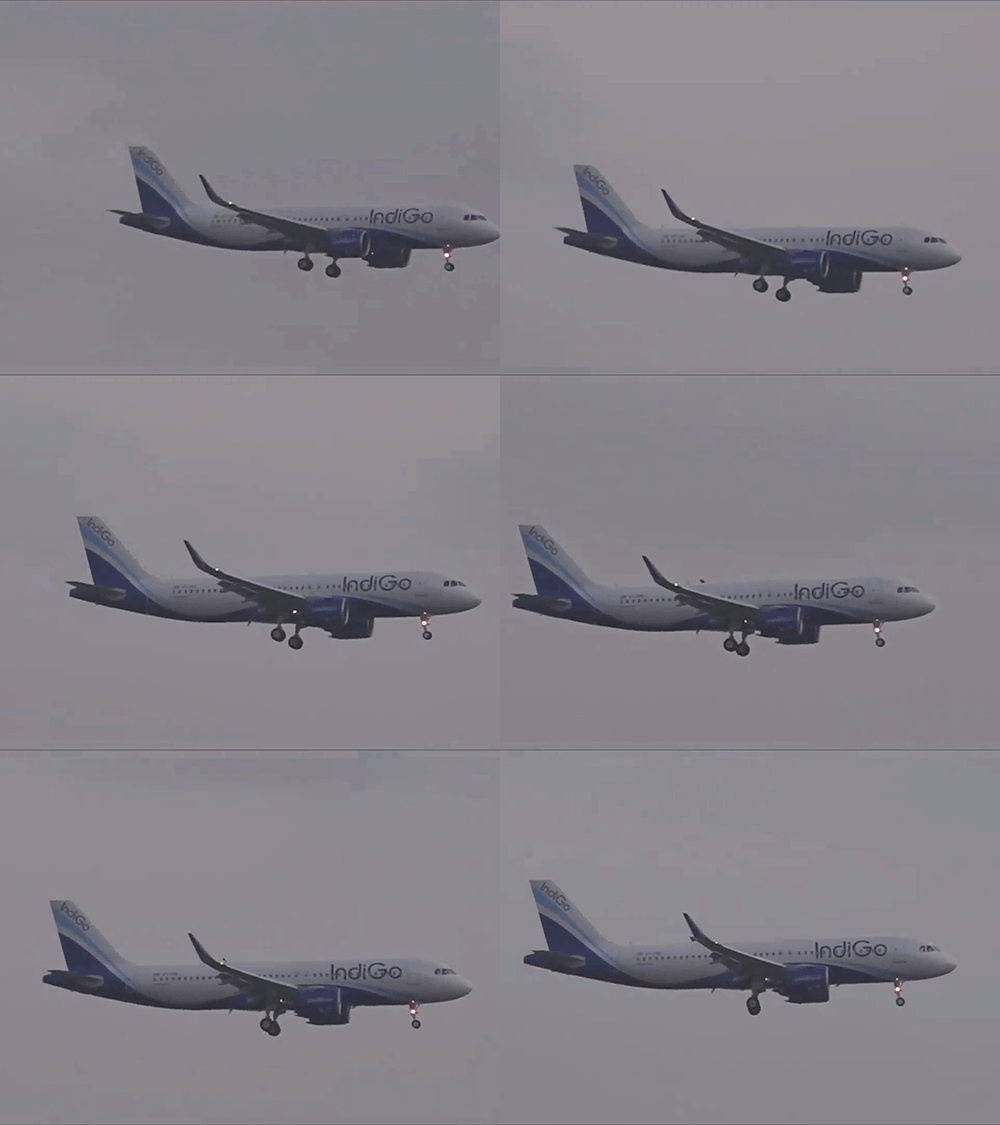

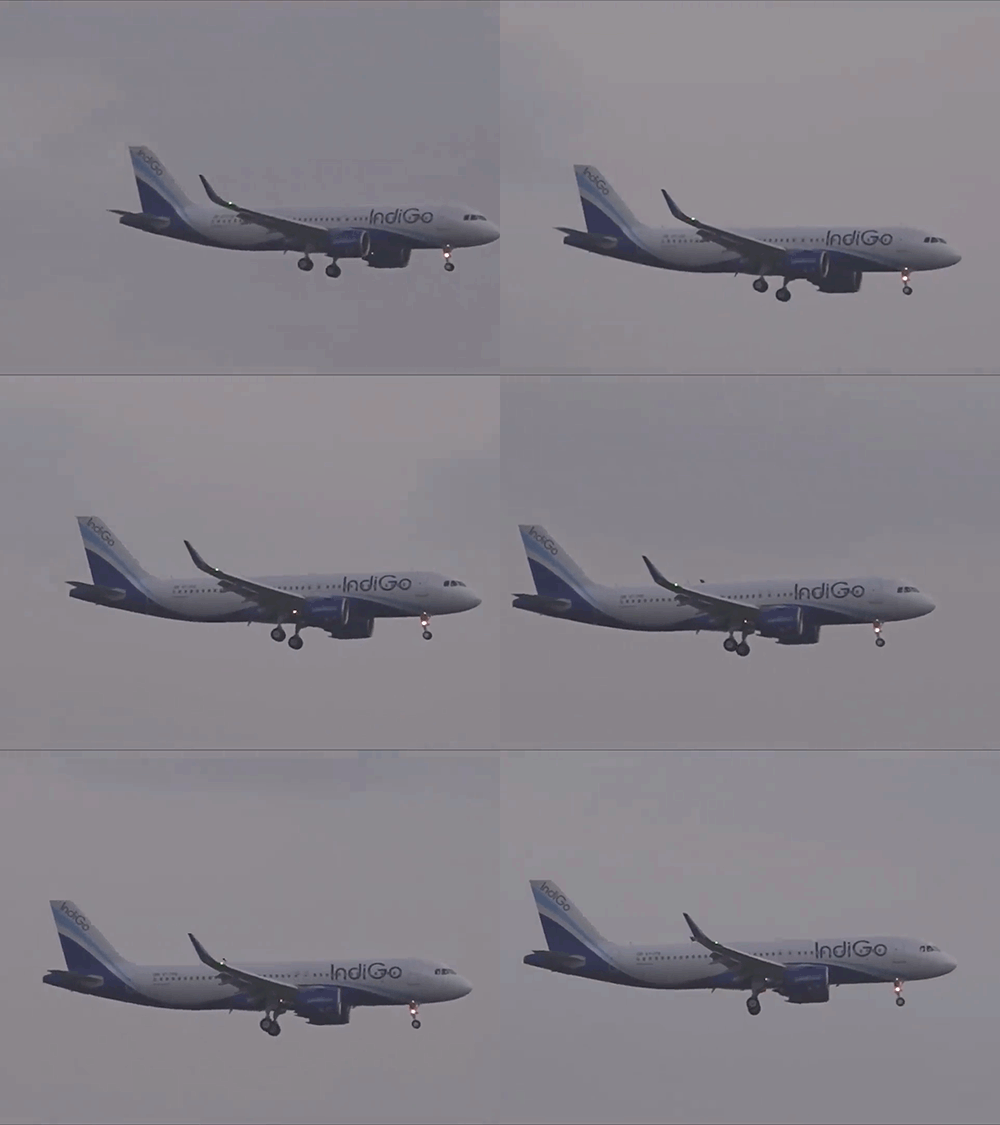
An IndiGo flight from Hyderabad to Jaipur remained in a holding pattern for around 44 minutes on Wednesday after heavy rain and strong winds prevented it from landing.
The aircraft had to abort its initial landing after touching the runway and climb back into the air. Once weather conditions improved, it landed safely at Jaipur Airport. Around 120 passengers were on board.
Flight 6E-913 was scheduled to land at Jaipur Airport at about 1:45 pm. The pilot began the landing approach at around 1:40 pm as planned. However, heavy rain and strong winds around the airport made landing conditions unsafe.
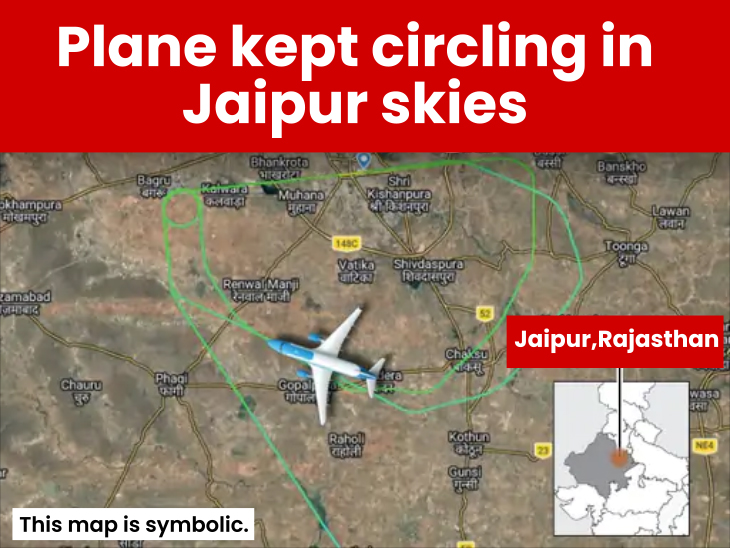
Aircraft held in air
Prioritising safety, the pilot carried out a go-around, abandoning the landing attempt and taking the aircraft back to a higher altitude. Following instructions from Air Traffic Control (ATC), the aircraft was placed in a holding pattern over the Jaipur region, where it continued circling while awaiting clearance to land.
The aircraft remained in the holding pattern for 44 minutes.
As the plane continued circling, passengers became increasingly anxious. Several were seen looking out of the windows at the changing weather and noticing the aircraft repeatedly flying over the same area. Throughout the delay, the pilot and cabin crew closely monitored the situation and kept passengers calm.

Weather improves, flight lands safely
At around 2:14 pm, after the weather improved and the intensity of the rain eased, Air Traffic Control cleared the aircraft for another landing attempt. The pilot successfully landed the aircraft safely on the second attempt at Jaipur Airport, bringing relief to the passengers on board.
According to aviation experts, a go-around is a standard and completely safe procedure used when weather conditions, poor visibility or strong crosswinds make landing unsafe.
If a pilot believes a landing cannot be completed safely, the aircraft is climbed back to a safe altitude until weather conditions improve or a safer opportunity to land becomes available. The same procedure was followed in this case, eliminating any unnecessary risk.
Expert explains typical go-around duration
Aviation expert Sohan Singh Nathawat said a go-around typically lasts between 10 and 30 minutes. If the delay extends beyond that, flights are often diverted to an alternate airport because of the possibility of fuel constraints.
However, he said that in exceptional situations involving extremely poor weather, the aircraft may remain in contact with Air Traffic Control and attempt another landing at the same airport once conditions improve.
He added that there is no fixed rule governing the duration of a go-around. The key factors are the aircraft’s fuel level and conditions at the airport. If fuel becomes a concern, the aircraft is diverted to an alternate airport to avoid any emergency. If conditions at the destination airport are expected to improve within a short time, Air Traffic Control generally tries to facilitate a safe landing there instead.