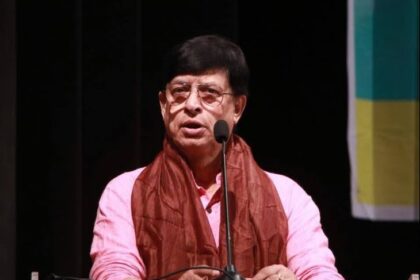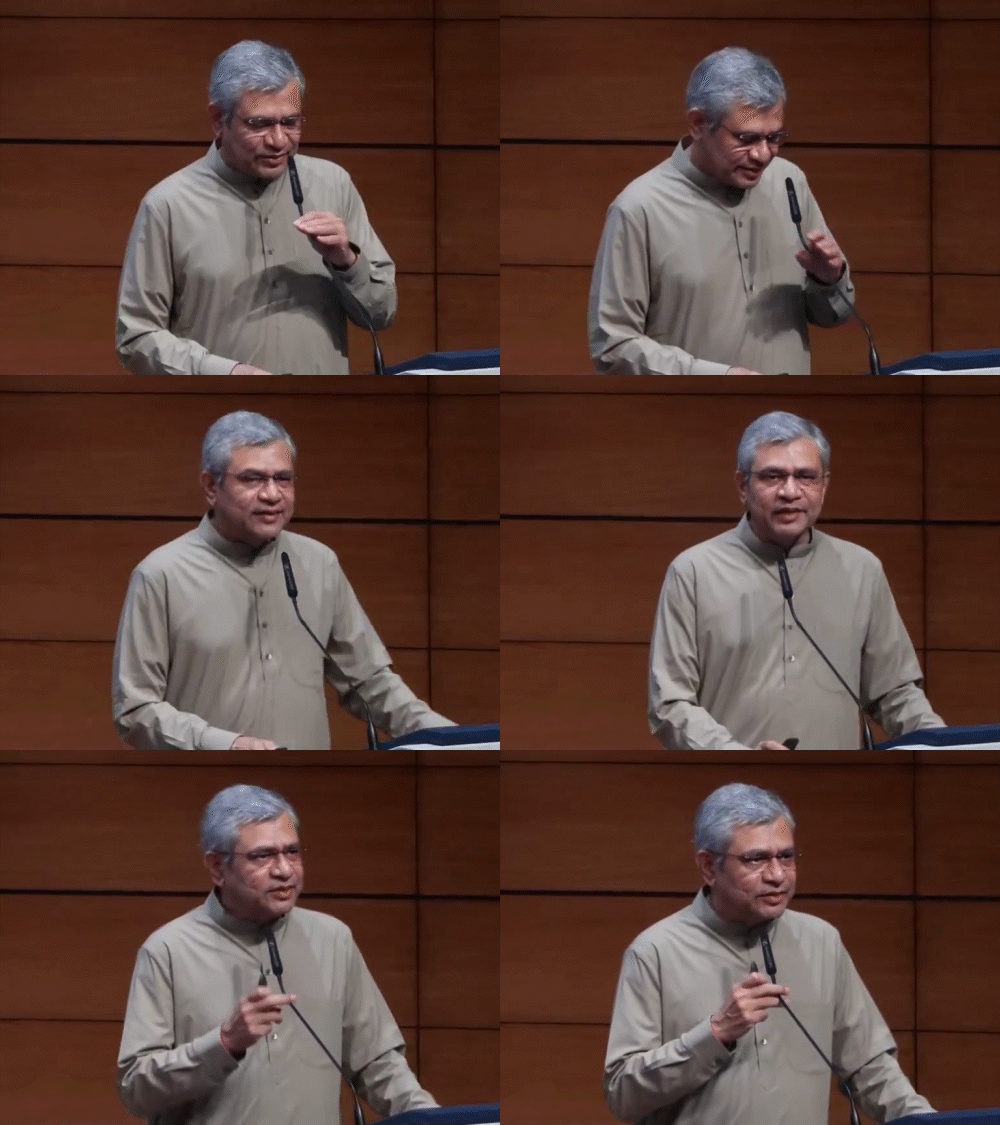

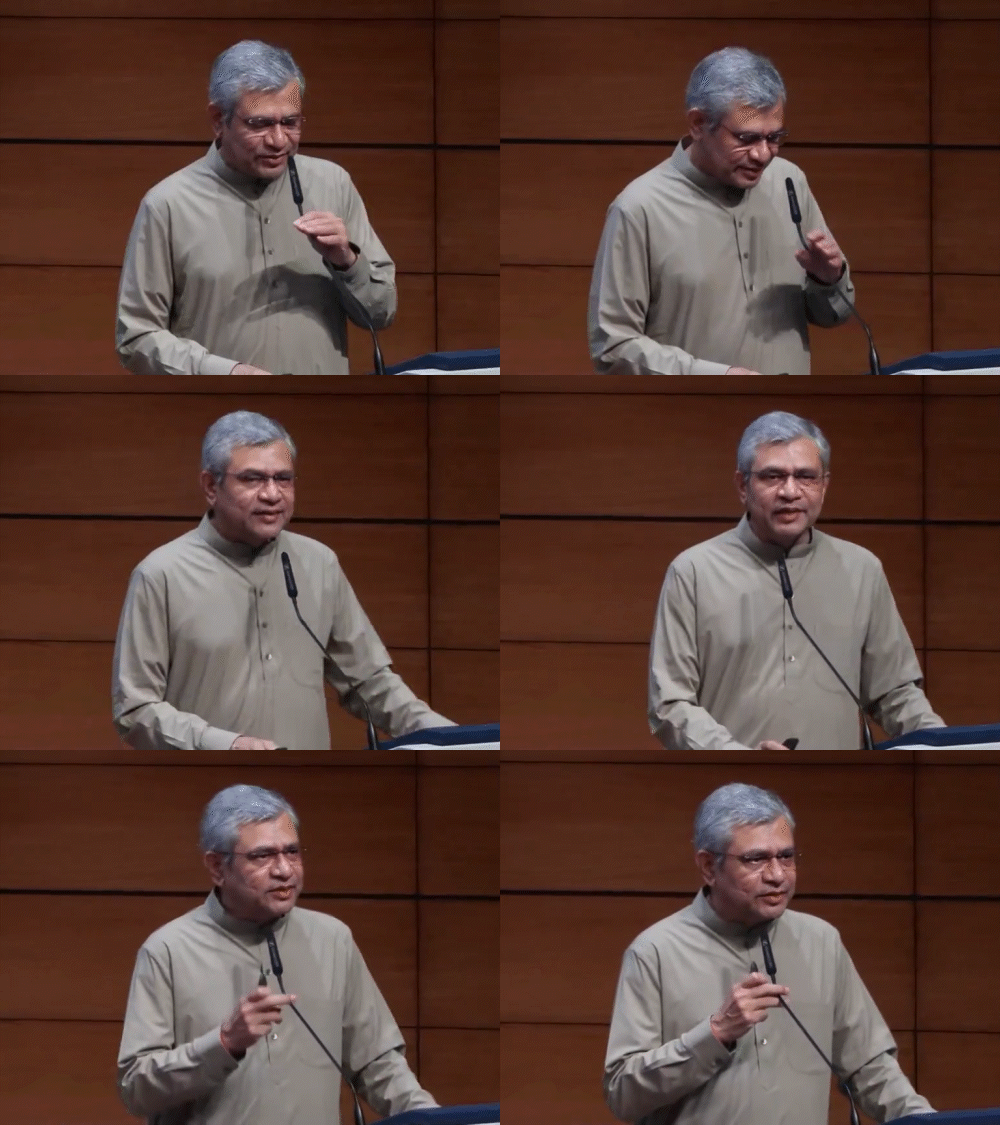
Union Minister Ashwini Vaishnaw briefed media after Cabinet meeting. Big paper leak reforms announcement was expected.
Vaishnaw announced that the Cabinet has approved railway projects in Karnataka and Andhra Pradesh. The Cabinet has also approved a new ₹3,030-crore scheme for the critical chemicals sector.
It has cleared a multi-tracking railway project spanning three districts in Karnataka and Andhra Pradesh, which will expand the existing Indian Railways network by nearly 46 km.
After announcing the Cabinet decisions, Vaishnaw declined to answer questions during the media briefing. When asked about the proposed Bill on paper leaks, he simply responded, “Next.” He gave the same one-word reply to every question from reporters.
Earlier in the day, the Union Cabinet approved amendments to the anti-paper leak bill, i.e., the Public Examinations (Prevention of Unfair Means) Act, 2024. The meeting was chaired by Prime Minister Narendra Modi in Parliament on Friday, news agency ANI reported, citing sources.
The report said the Bill is likely to be taken up for consideration and passing in Parliament on Monday.
Earlier, on Thursday midnight, PM Modi released a video message for students. He said that the government will make a law to provide strict punishment against paper leaks.
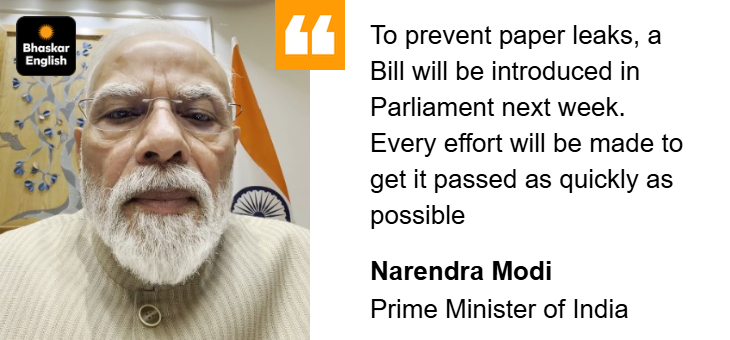
The Prime Minister said that the Cabinet would discuss the draft legislation today and take key decisions. Once approved, the Bill will be introduced in Parliament next week, and the government will try to get it passed at the earliest.
PM Modi posted a 2-minute 56-second video message on his X handle. He said:

Paper leaks are not a minor issue. They are deeply painful for millions of students and their parents. Over the past two and a half months, we have taken several steps against paper leaks. The culprits have been arrested and are in jail. It was our responsibility to ensure that students did not lose an academic year, so we conducted the examination for 2.2 million students in a short time. The results were also declared on July 19.
He added:
We are not satisfied with just this. That is why I have directed the creation of fast-track courts. The departments sent me the draft late last night. It includes provisions for fast-track courts and stringent punishment. The Cabinet will discuss it on Friday.
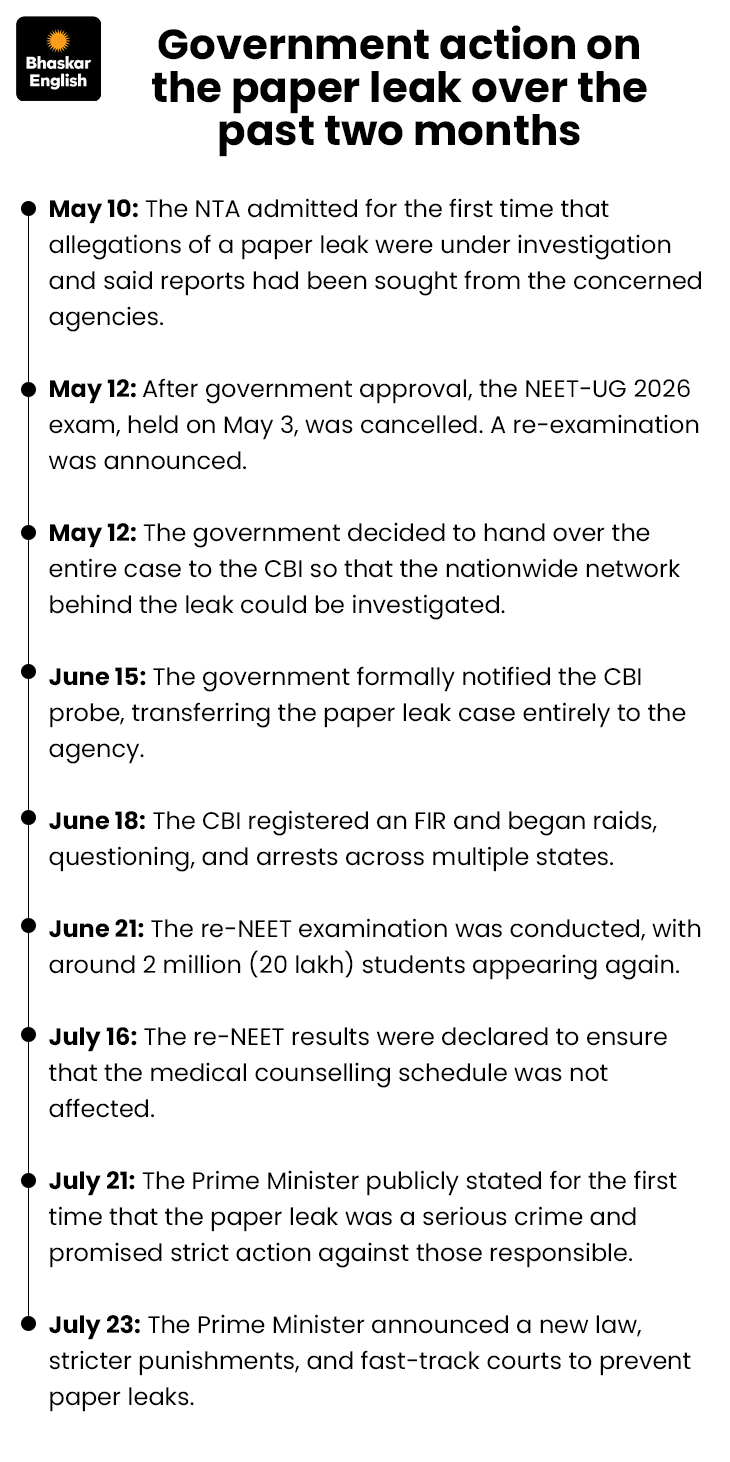
Earlier on Thursday, PM Modi had also spoken about setting up Fast Track Courts to deal with paper leak cases. The announcement comes in the wake of the alleged NEET-UG paper leak on May 3.
The Cockroach Janata Party (CJP) has been protesting at Delhi’s Jantar Mantar over the alleged leak for the past month. Activist Sonam Wangchuk observed a 26-day hunger strike, while Opposition MPs have been raising the issue in Parliament.
The case is currently being investigated by the CBI, which has carried out searches and inquiries in several states, including Maharashtra, Rajasthan, and Delhi. So far, 13 people have been arrested, and the agency is expected to file its chargesheet soon.
2 key reactions to PM Modi’s video
1. Rahul Gandhi: “Don’t insult students’ intelligence, remove Pradhan”: After PM Modi released the video, Rahul Gandhi termed it a “useless midnight video” in a post on X.
He wrote, “Mr Modi, our students are demanding Dharmendra Pradhan’s resignation. Don’t insult their intelligence with this useless midnight video. Remove Pradhan, punish those who assaulted the students, and apologise.”
2. Cockroach Janata Party: “Removing Pradhan would be the strictest action”: The Cockroach Janata Party (CJP) said the strongest action the government can take over the alleged exam irregularities is to remove Union Education Minister Dharmendra Pradhan.
CJP national spokesperson Ashutosh Ranka said, “Modi ji, remove Dharmendra Pradhan tomorrow itself. That would be the strictest action you can take.”
PM Modi’s 2 Statements on the Paper Leak in the Past 4 Days
21 July: “Paper leaks are a grave sin”
Addressing the NDA Parliamentary Party meeting, PM Modi said paper leaks are a “grave sin”. He said the government acted immediately after receiving information about the alleged leak and that 13 accused had been arrested so far. He assured strict punishment for those responsible and appealed to states to cooperate in preventing such incidents in the future.
23 July: Fast Track Courts to be set up for paper leak cases
In a post on X, the Prime Minister said the welfare and future of the country’s youth remain the government’s top priority. He announced that Fast Track Courts would be set up to ensure the speedy trial of paper leak cases and swift punishment for those found guilty.
He added that the concerned departments had been instructed to take the necessary steps and asserted that those who play with the future of the youth “will not be spared.”
Govt replaces both secretaries in Education Ministry
Meanwhile, amid the alleged NEET-UG paper leak and the ongoing Cockroach Janata Party (CJP) protest at Delhi’s Jantar Mantar, the government has continued to take administrative action. On Thursday, it announced the transfer and promotion of 17 senior officers in a major bureaucratic reshuffle.
The most significant changes were made in the Education Ministry. Naresh Pal Gangwar, a 1994-batch IAS officer of the Rajasthan cadre, has been appointed Secretary of the Department of Higher Education, replacing Vineet Joshi. Joshi has been transferred as Secretary of the Ministry of Panchayati Raj.
In another key appointment, TK Anil Kumar, a 1995-batch IAS officer, has been promoted and appointed Secretary of the Department of School Education and Literacy.
Delhi HC sets up fast-track court for paper leak cases
The Delhi High Court has constituted a Fast Track Court at the Rouse Avenue Court to hear cases under the Public Examinations (Prevention of Unfair Means) Act, 2024, along with related offences. All such cases will now be transferred to this court.
The High Court has also transferred Judge Anu Grover Baliga, who was heading the Mediation Centre at Tis Hazari Court, to the Rouse Avenue Court as Special Judge.
What is the Public Examinations (Prevention of Unfair Means) Act, 2024?
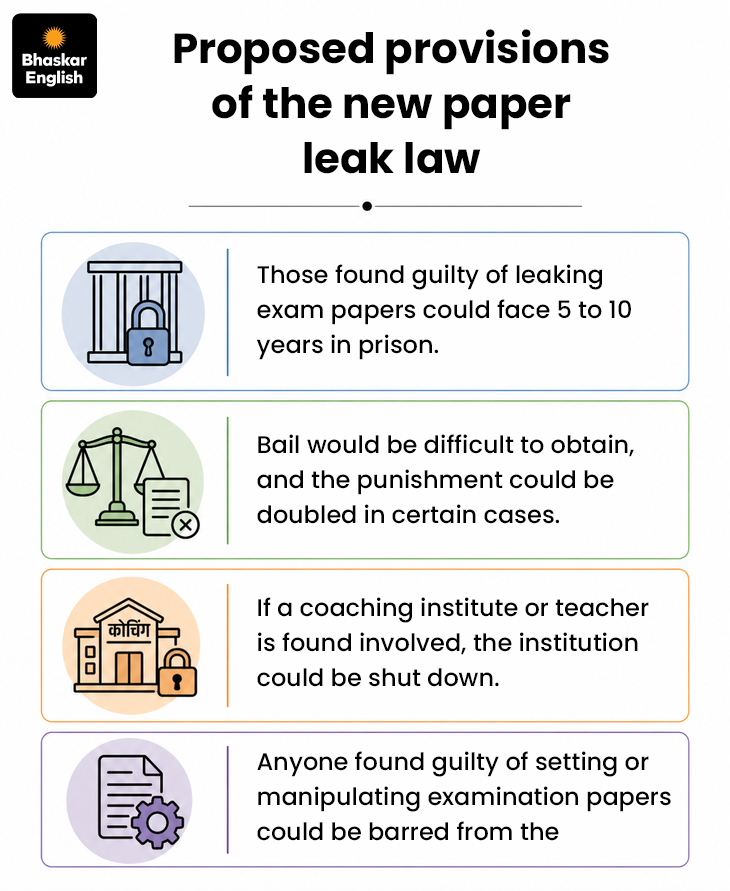
The Public Examinations (Prevention of Unfair Means) Act, 2024 is India’s first central anti-paper leak law. It received Presidential assent on February 12, 2024, and came into force nationwide on June 21, 2024. The law aims to curb paper leaks, cheating, and organised examination fraud in public entrance and recruitment exams.
Key provisions of the Act include:
Individuals convicted of leaking examination papers face three to five years’ imprisonment and a fine of up to ₹10 lakh.
If an organised syndicate is involved, the punishment increases to five to 10 years’ imprisonment along with a fine of up to ₹1 crore.
If the examination-conducting agency is found complicit, it can face a ₹1 crore fine, recovery of the entire examination cost, and a four-year ban on conducting examinations.
Offences under the Act are non-bailable, cannot be settled through compromise, and must be investigated by a Deputy Superintendent of Police (DSP) or an officer of higher rank.