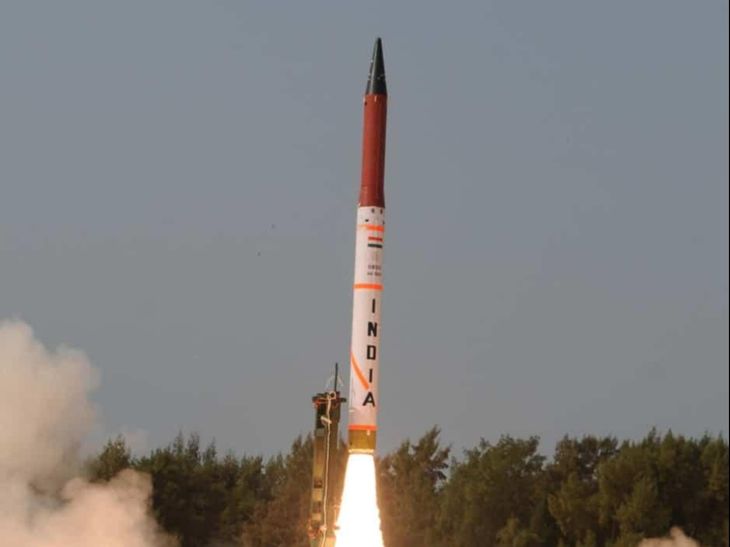

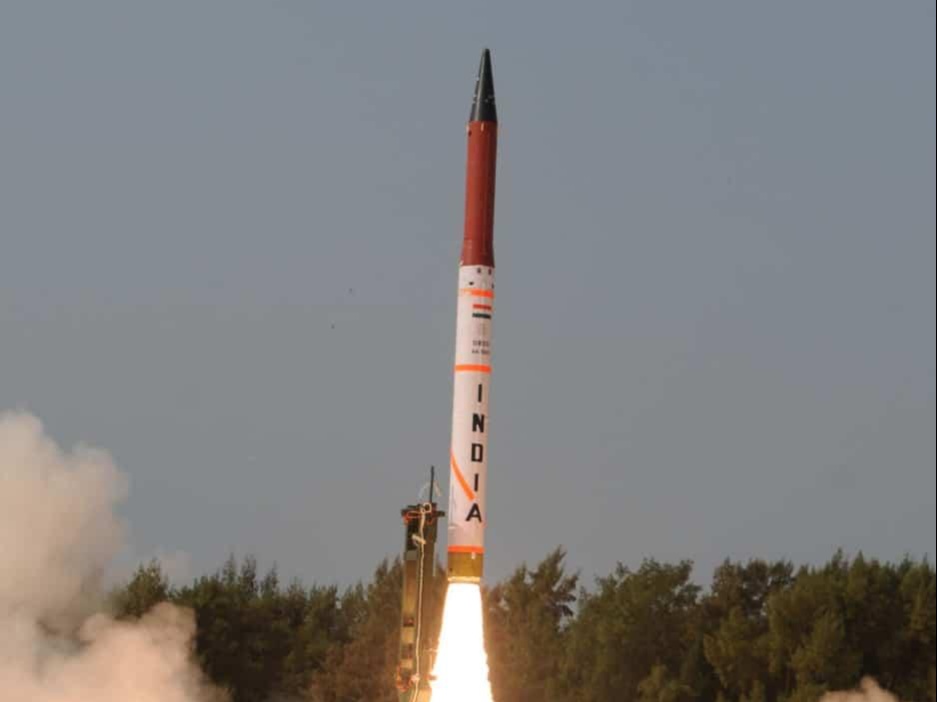
File photo
India successfully test-fired the medium-range Agni-4 ballistic missile from the Integrated Test Range in Chandipur, Odisha, on Thursday, the Ministry of Defence said.
According to the ministry, the launch successfully validated all operational and technical parameters of the missile. The test was conducted under the supervision of the Strategic Forces Command.
The Agni-4 is an indigenously developed medium-range ballistic missile (MRBM) designed to strengthen India’s strategic deterrence. Equipped with advanced avionics and a digital control system, it is capable of delivering precision strikes at long range.
Built with indigenous technology
According to the Defence Research and Development Organisation (DRDO), the Agni-4 incorporates several indigenous technologies, including a composite rocket motor, a ring laser gyro-based inertial navigation system, a digital control system and a high-performance onboard computer. These features enhance the missile’s accuracy, reliability and manoeuvrability.
The Agni-4 also bridges the capability gap between the Agni-2 and Agni-3 in India’s ballistic missile arsenal.
History of Agni-4
The Defence Research and Development Organisation (DRDO) began developing the Agni-4 missile in 2007 as part of efforts to build a ballistic missile with a strike range of around 5,000km. In 2011, the upgraded Agni-II Prime, developed at DRDO’s Advanced Systems Laboratory in Hyderabad, was officially redesignated as the Agni-4.
Since its development, India has carried out several successful Agni-4 trials. On 20 January 2014, the missile was successfully test-fired from a road-mobile launcher. During the test, it reached an altitude of around 850km and travelled nearly 4,000km before accurately striking its designated target in the Indian Ocean.